Five people have been killed in Israeli air strikes on southern Lebanon, including three emergency responders who rushed to help victims of an earlier blast, according to Lebanese officials.
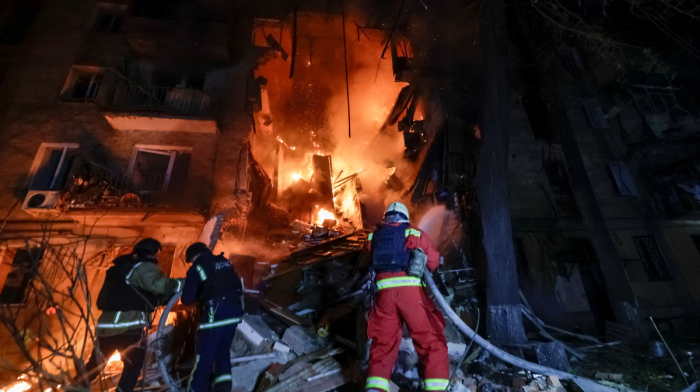
The strikes targeted a building in the town of Majdal Zoun on Tuesday. Authorities said the second strike followed shortly after the first, hitting as rescue teams were already at the scene.
A spokesperson for the Lebanese Civil Defence said the three rescuers were caught in the second strike. They were initially trapped beneath collapsed concrete and were later declared dead.
The Lebanese Armed Forces reported that two soldiers were also injured in the same strike, while there was no immediate response from the Israel Defense Forces when asked for comment.
Meanwhile, a Lebanese soldier and his brother were killed in an Israeli strike in Bint Jbeil in southern Lebanon, the Lebanese army said on Wednesday.
It said the pair were on a motorcycle, travelling from the soldier's post to his home when the strike occurred.
The Israeli military said it was looking into the report.
Separately, the Israeli military said a contractor working for an engineering company on behalf of Israel's defence ministry was killed on Tuesday in southern Lebanon in a drone attack claimed by Hezbollah.
The group fired two rockets into Israel on Wednesday, one of which was intercepted, the military said. There were no reports of casualties.
'War crime'
Lebanon’s Prime Minister, Nawaf Salam, criticised the strikes, describing them as “a new and blatant war crime committed by Israel.”
The United Nations Human Rights Office said last month that Israeli air strikes affecting civilians in Lebanon, including medical workers, could potentially be classified as war crimes.
Ongoing strikes amid a fragile ceasefire
The latest incident reflects ongoing tensions between Israel and Lebanon, where cross-border violence has intensified in recent months.
Since early March, more than 2,500 people have reportedly been killed in Israeli strikes across Lebanon, including medics, women and children.
The escalation followed attacks by the Iran-backed group Hezbollah on Israeli positions, triggering a broader Israeli military response involving both air and ground operations.
A ceasefire supported by the U.S. has reduced the overall level of fighting. However, both Israel and Hezbollah continue to accuse each other of breaching the agreement.
Israeli troops remain stationed in parts of southern Lebanon and have warned civilians not to return. Air strikes have also been reported outside this zone, including the latest attack on Majdal Zoun.
Last week, a Lebanese journalist was killed in a separate strike in the south. Lebanese officials and media groups said continued bombardment had delayed rescue teams trying to reach the site.
Hezbollah has continued to launch drones and rockets towards Israeli troops in Lebanon and areas in northern Israel.
Earlier on Tuesday, the Israeli military said it had located and dismantled tunnels in southern Lebanon that it said were used by Hezbollah.









What is your opinion on this topic?
Leave the first comment