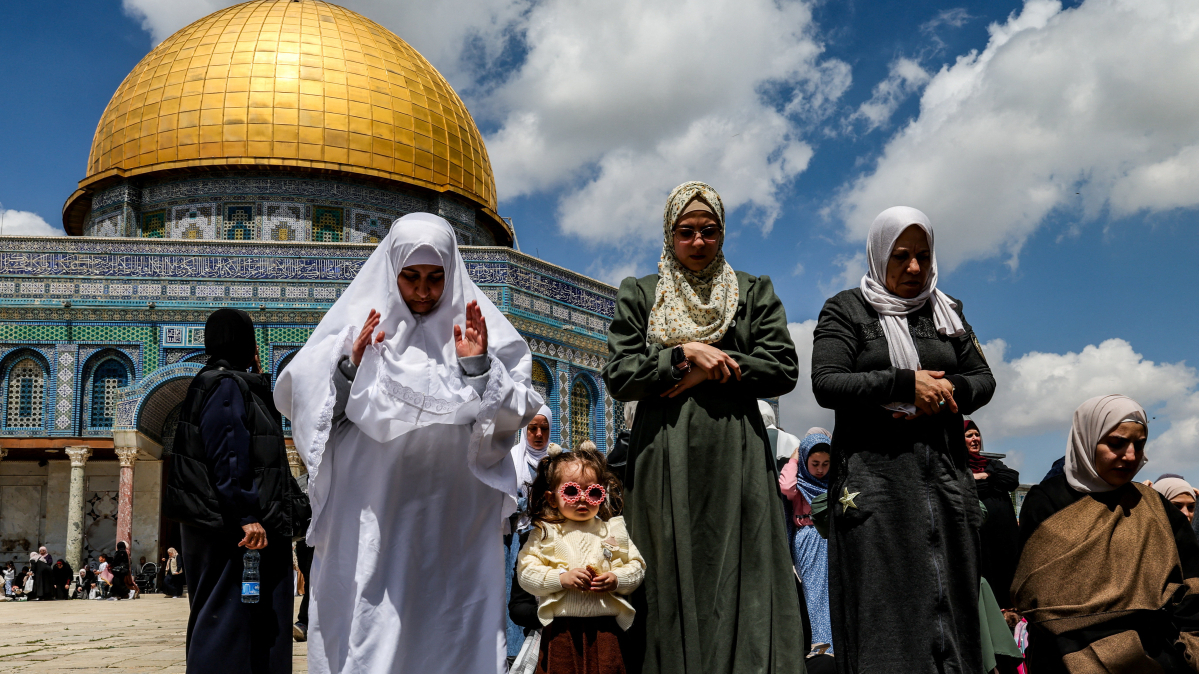
Thousands of Palestinians returned to pray at Al-Aqsa Mosque in East Jerusalem after Israel lifted a 40-day ban that had left one of Islam’s holiest sites largely closed.
In the early hours of Thursday morning, around 3,000 worshippers passed through the gates of Al-Aqsa Mosque for the first time in weeks. Footage showed families and individuals streaming into the compound at dawn, many visibly emotional as they gathered for prayers.
For many, the moment carried deep personal significance. Some were seen in tears, while others bowed in prostration in the courtyards, expressing relief at being able to worship again after weeks of restriction.
The mosque had been closed since 28 February, when Israel imposed sweeping security measures following the outbreak of a regional conflict involving the U.S. and Iran.
Access restricted
During that period, access to key religious sites in Jerusalem - including Muslim, Christian and Jewish locations - was either heavily restricted or entirely prohibited. Only a small number of staff and officials were allowed into Al-Aqsa, leaving ordinary worshippers to pray elsewhere.
The Islamic Waqf Department, the Jordanian-affiliated authority responsible for administering the site, confirmed that the compound reopened at dawn but did not provide further details. In the hours leading up to the reopening, volunteers and caretakers were seen preparing the grounds and prayer areas to receive worshippers once again.
Israeli authorities said the decision followed updated security guidance, with a heavy police presence deployed across the Old City. Officers and border guards were stationed along narrow streets and at key access points, which officials said was to ensure the safety of visitors.
Israeli settlers in compound
However, tensions quickly resurfaced. Later on Thursday, reports indicated that Israeli settlers entered the compound under police protection and carried out religious rituals. According to Palestinian officials, the time windows during which such visits are permitted have now been extended.
The weeks-long closure has had a wider impact on religious life in Jerusalem. Major observances, including Ramadan, Lent and Passover, were subdued as access to sacred sites remained tightly controlled.
This year, Palestinians were also prevented from holding Eid al-Fitr prayers at Al-Aqsa - a restriction not seen since Israel’s occupation of East Jerusalem in 1967.
The reopening comes just days before Orthodox Christians mark Easter, raising cautious hopes that access to religious sites may remain open, at least in the short term.











What is your opinion on this topic?
Leave the first comment