Iran’s Foreign Minister Abbas Araghchi spoke by phone with his Pakistani counterpart Mohammad Ishaq Dar and was briefed on Islamabad’s efforts to halt the Israel–U.S. war, official sources said on Monday (30 March).
Meanwhile, several Iranian parliamentarians have tabled two urgent draft bills calling for withdrawal from the Non-Proliferation Treaty (NPT) and for an excise tax on shipping services in the strategic Strait of Hormuz, according to local media.
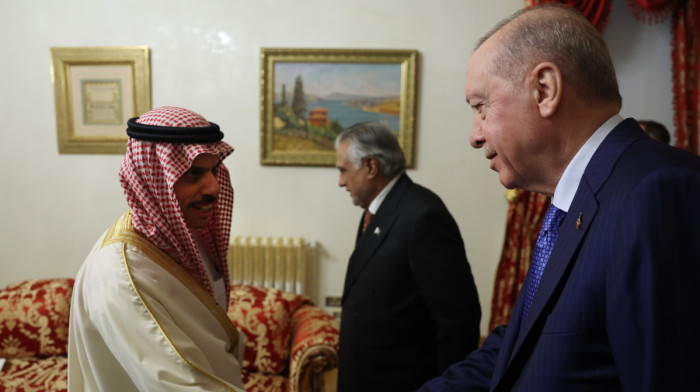
As the war entered its 31st day, the state-run IRNA news agency reported that Pakistan’s deputy prime minister and foreign minister informed Iran’s top diplomat about the outcome of a meeting in Islamabad involving the foreign ministers of Pakistan, Türkiye, Egypt and Saudi Arabia aimed at ending the war and restoring regional peace and security.
Ending hostilities
Pakistan said the quadrilateral meeting backed its initiative to end hostilities between Iran and the U.S., and expressed Islamabad’s readiness to host meaningful talks between Tehran and Washington.
Earlier on Saturday, President Masoud Pezeshkian spoke by phone with Pakistani Prime Minister Shahbaz Sharif, welcoming Pakistan’s diplomatic initiative.
“Attacks on infrastructure and assassinations of Iranian leaders and high-ranking officials by the aggressors showed that they cannot be trusted,” he was quoted as saying by the President’s Office.
Amid dim prospects for rapid de-escalation as the war entered its second month, two urgent draft bills were submitted to Iran’s parliament over the weekend for discussion in plenary sessions.
According to local media citing MPs, the first draft proposes Iran’s withdrawal from the NPT, invoking provisions that allow such a move under serious threats.
The second draft bill, concerning shipping security in the Strait of Hormuz, proposes environmental pollution levies and guidance service fees, while Iran has blocked the transit of adversaries’ oil and gas tankers through the waterway.
In a separate development, Parliament Speaker Mohammad-Bagher Ghalibaf, marking the 30th day of the Israel–U.S. war, dismissed Washington’s 15-point ceasefire proposal as a “wish list.”
Seeking diplomacy
“These days, different words and statements are heard from enemy officials about negotiations. U.S. is expressing its desires and announcing what it has not achieved in the war as a list of 15 points and seeking it in diplomacy,” he said, according to IRNA.
Also, Foreign Ministry Spokesman Esmaeil Baghaei in an interview on Sunday said that U.S. proposals that reached Iran through mediators are “very illogical”.
"Those proposals are very radical and illogical. Talking about matters that are part of the inherent rights of Iranians is not a sign of good faith or seriousness in any diplomacy. They have tried this before,” he added.















What is your opinion on this topic?
Leave the first comment