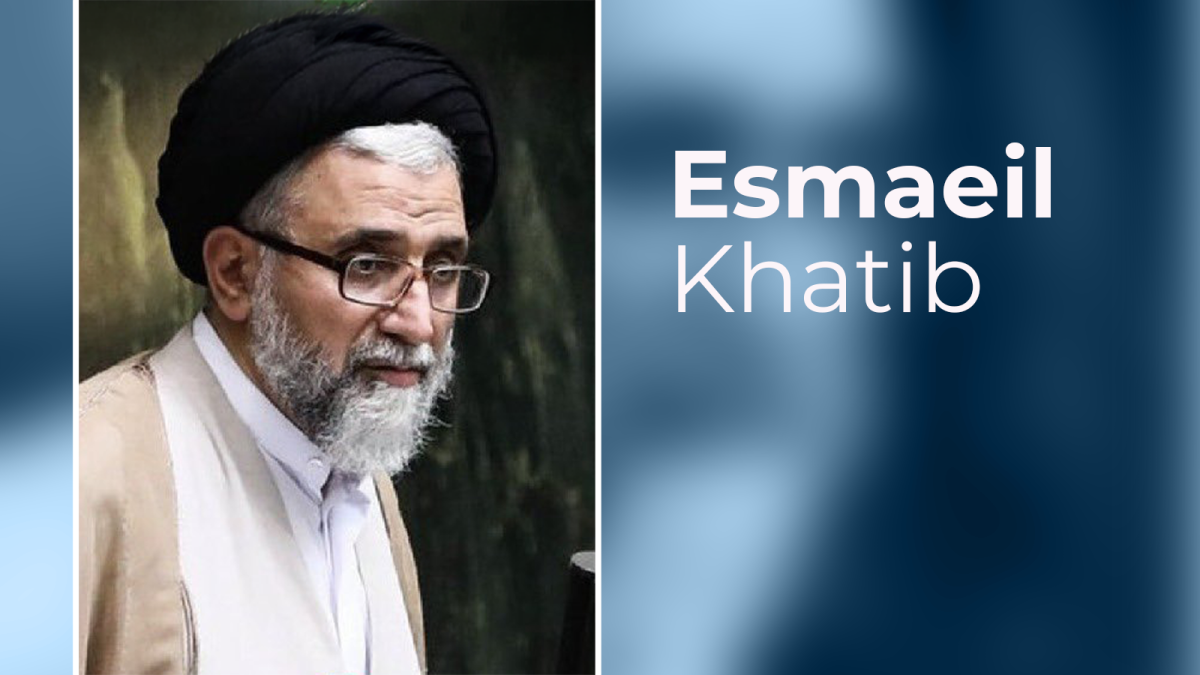
Iran’s intelligence chief, Esmail Khatib, has been killed in an Israeli missile strike carried out overnight, according to Iranian state media. He was a longstanding figure within Iran’s tightly controlled leadership.
In a post on X, Iran’s president, Masoud Pezeshkian, condemned the killings. He said: “The cowardly assassination of my dear colleagues Ismail Khatib, Ali Larijani, and Aziz Nasirzadeh, alongside some of their family members and accompanying team, has left us in deep mourning. I extend my condolences to the great people of Iran for the martyrdom of two cabinet members, the secretary of the Shura, and the military and Basij commanders. I am certain their path will continue more steadfastly than before.”
Role in unrest across Iran
Khatib served as Iran’s Minister of Intelligence, having been appointed in 2021. In this role, he oversaw the organisation responsible for internal security operations, including the response to widespread unrest.
A year into his tenure, the so-called “hijab protests” occurred following the death of Mahsa Amini. His ministry - alongside Iranian security forces and the Islamic Revolutionary Guard Corps (IRGC) - was involved in crackdowns across multiple regions, during which protesters were fired upon.
Khatib had longstanding ties to Iran’s intelligence and security apparatus. However, there is no widely verified record that he served as commander-in-chief of the IRGC between 1985 and 1991. He is known to have held senior intelligence roles, including leading the Ministry of Intelligence’s Qom branch in 1999 and later serving in a security role within the office of Supreme Leader Ayatollah Ali Khamenei from 2010.
Close to Iran's leadership
Khatib was widely seen as a staunch defender of Iran’s supreme leadership. Human rights groups have accused Iranian security institutions of involvement in the suppression and killing of Kurdish dissidents in the early 1980s, though specific allegations directly linking Khatib remain difficult to independently verify.
During the fallout from the 1988 mass executions - which were criticised by Ayatollah Hossein Ali Montazeri - Montazeri was placed under house arrest. Reports from that period describe raids and arrests of his associates, though Khatib’s direct role is not clearly documented in reliable public records.
Khatib was seen as a defender of the supreme leadership of the country and would kill and destroy anything or anyone challenging the regime. He has been accused of killing and oppression of Kurdish dissidents in the early 1980s. When Ayatollah Montazeri rallied against supreme leader-endorsed mass executions in 1988, he was put under house arrest with Khatib raiding his properties, beating and arresting his people.
While within Iran’s security structures, Khatib is believed to have worked closely with figures aligned with the leadership, including those connected to Mojtaba Khamenei, the son of the Supreme Leader.
Although there is no confirmed public evidence that Khatib personally coordinated missile and drone strikes against Israeli or U.S. targets, Iran’s broader security and intelligence apparatus has been linked to such operations.














What is your opinion on this topic?
Leave the first comment