U.S. President Donald Trump warned Iran to expect further strikes on Saturday (7 March). In a post on social media, he said Iran would be 'hit very hard'. His comments came a week into the conflict with Iran, which has spread across the Middle East.
⦿ 16:53 GMT | UPDATE
The live blog is now closing
Thank you for following today. You can find a wrap-up of the key events that took place in the article below.
U.S. has destroyed 42 Iranian ships, President Trump says
Reuters
U.S. President, Donald Trump, has said the U.S. has knocked out 42 ships belonging to the Iranian navy in three days. He made the remarks at an event in Miami, Florida on Saturday (7 March).
⦿ 14:54 GMT | UPDATE
Thousands of Americans evacuated from Middle East, U.S. says
Reuters
The U.S. has completed over a dozen charter flights and evacuated thousands of Americans from the Middle East since last week, the U.S. State Department said on Saturday (7 March).
One of the flights arrived at Dulles International Airport in Dulles, Virginia from Abu Dhabi on Saturday.
Reuters
Family members wait for their relatives to arrive on an evacuation flight from Abu Dhabi, at Dulles International Airport, in Dulles, Virginia, U.S., March 5, 2026.
Reuters
⦿ 14:36 GMT | UPDATE
Anti-war protesters march in London, UK
Reuters
Protesters waving Iranian flags and holding photos of Iran's late Supreme Leader, Ali Khamenei, have marched through central London. The demonstration, organised by the Stop The War Coalition, is set to end at the U.S. Embassy.
Protesters hold signs, an image of Iran's late Supreme Leader Ali Khamenei, and Iranian flags during a march in London, Britain, March 7, 2026.
Reuters
⦿ 14:20 GMT | UPDATE
UN peacekeeping solider seriously injured after shelling, says Lebanon Foreign Ministry
X
A Ghanaian UN peacekeeping soldier in Lebanon was seriously injured after the town of Al-Qozah came under shelling on Friday night (6 March), the Lebanese Foreign Ministry has said.
Writing on X, the Foreign Ministry confirmed that two other peacekeeping soldiers were injured in the attack. It called the assault "a serious violation of international law" and said investigations were ongoing to establish more about the circumstances.
⦿ 12:36 GMT | UPDATE
Residents in northern Israeli city should 'evacuate immediately', says Hezbollah
Reuters
Lebanese Shi'ite militant group Hezbollah has warned residents of Kiryat Shmona, which is located near the border with Lebanon, to head southwards at once.
"Warning. All residents of Kiryat Shmona are asked to evacuate immediately. Head south," it said in a statement.
Hezbollah did not specify what action, if any, it planned to take against the city of around 20,000 people.
⦿ 12:21 GMT | UPDATE
Iran will be 'hit very hard' today, U.S. President Trump says
Truth Social
In a social media post, U.S. President Donald Trump has said Iran will be "hit very hard" today (7 March). President Trump added that he was considering widening "the areas and groups of people" targeted, as a result of Iran's "bad behaviour."
"Iran is no longer the 'Bully of the Middle East,' they are, instead, 'THE LOSER OF THE MIDDLE EAST,' and will be for many decades until they surrender or, more likely, completely collapse!," he continued.
⦿ 11:55 GMT | UPDATE
Azerbaijan completes evacuation of diplomatic staff from Tabriz
Agencies
Baku has completed its evacuation of staff from the Azerbaijan Consulate General in Tabriz, while most employees from the Azerbaijan Embassy in Tehran have also returned. Chimnaz Shahlar has the details from Astara, Azerbaijan.
United Arab Emirates has detected 16 ballistic missiles so far today
X
The UAE's Ministry of Defence (MOD) said it had intercepted and destroyed 15 of the missiles, while one fell in the sea.
In a post on X, the UAE MOD added: "Air defence systems also detected 121 UAVs [drones], of which 119 were intercepted, while two fell within the territory of the UAE."
⦿ 10:11 GMT | UPDATE
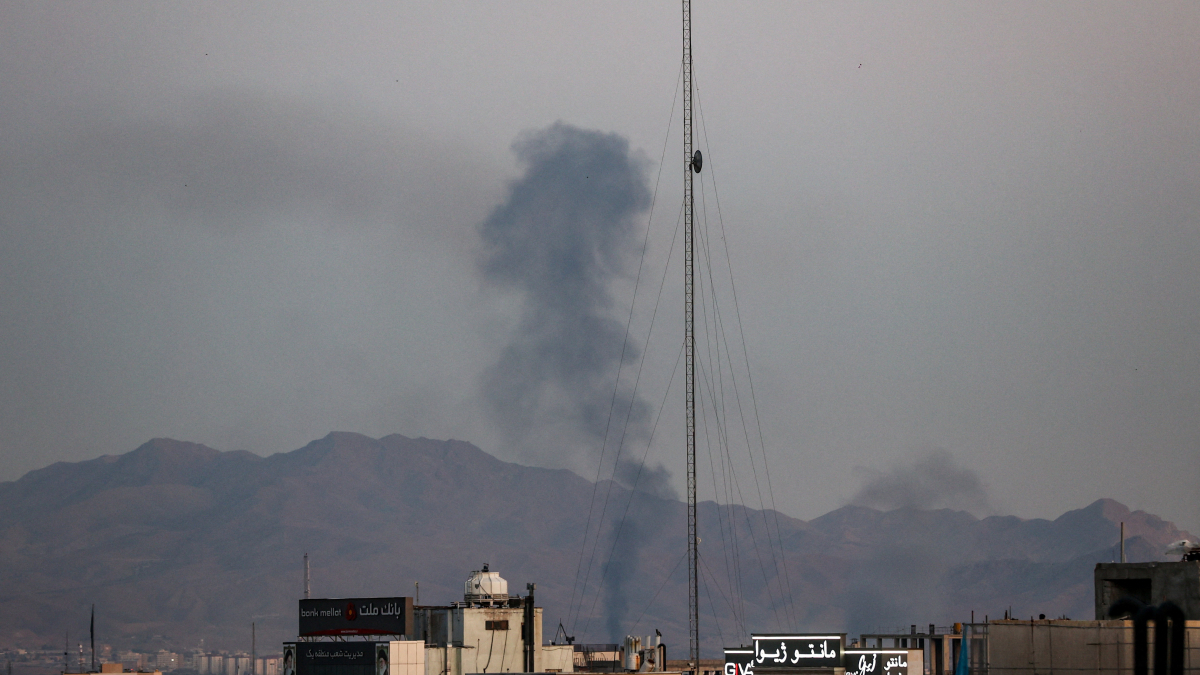
Fire and plumes of smoke seen near Tehran's Mehrabad Airport
Reuters
Videos purportedly taken in the early hours of Saturday (7 March) show fire and a large plume of smoke rising over the Iranian capital in the direction of Mehrabad Airport.
UK jets shot down hostile drones over Jordan, Royal Air Force
Royal Air Force
The RAF said it shot down two hostile drones over Jordan this week. It was the first time the airforce's F-35B planes had carried out a shoot down.
RAF F‑35Bs have carried out their first combat shoot‑down for the UK, destroying hostile drones over Jordan - supported by Typhoons and a Voyager tanker.
Iran to stop attacking neighbouring countries, says Iranian President
Reuters
Iranian President Masoud Pezeshkian said on Saturday (7 March) that the country's Interim Leadership Council had approved the suspension of attacks on neighbouring countries, except where attacks on Iran came from those countries.
The announcement came as Tehran continued to launch attacks in the region in response to U.S.-Israeli strikes.
⦿ 07:58 GMT | UPDATE
Iran planned terror attacks in Azerbaijan
Agencies
The Azerbaijani State Security Service has said it has stopped Iran committing terror attacks against four targets in the country: Baku-Tbilisi-Ceyhan pipeline, the Israeli Embassy in Azerbaijan, a leader of the Mountain Jews religious community and the "Ashkenazi" synagogue.
At least 16 killed in Israeli airstrikes overnight, Lebanese government
Reuters
Overnight air attacks on the eastern Lebanese town of Nabi Chit killed at least 16 people, Lebanon's Health Ministry said on Saturday (7 March).
In addition, 35 people were wounded. More than 200 people have been killed in Israeli strikes on Lebanon since Hezbollah launched rockets into Israel on Monday (2 March).
⦿ 06:21 GMT | UPDATE
United Arab Emirates says it is responding to missile threat
Reuters
The UAE has said its defence systems are currently responding to a missile threat. It comes as witnesses report hearing several loud bangs in the capital Abu Dhabi.
تتعامل حالياً الدفاعات الجوية الإماراتية مع تهديدات صاروخية وطائرات مسيرة قادمة من إيران
وتؤكد وزارة الدفاع أن الأصوات المسموعة في مناطق متفرقة من الدولة هي نتيجة اعتراض كل من منظومات الدفاع الجوي للصواريخ البالستية، والمقاتلات للطائرات المسيرة والجوالة.
Saudi Arabia destroys missiles heading towards air base
Ministry of Defense, Saudi Arabia
Riyadh's Ministry of Defense said it had intercepted two ballistic missiles heding towards the Prince Sultan Air Base in a post on X on Saturday morning (7 March).
A spokesperson added that four drones heading towards the Shaybah Oil Field were also intercepted and destroyed.
Mehrabad Airport struck by air attacks, Iranian news agency says
Reuters
The major domestic air hub in Tehran came under attack by heavy airstrikes on Saturday morning (7 March), according to Iran's semi-official Tasnim news agency.
Trump reportedly lashed out at Netanyahu on Monday over Israel's escalation in Lebanon, describing the Israeli leader as "crazy" and warning that furt...
A launch ceremony marking the commissioning of the modernised Baku-Tbilisi-Kars (BTK) railway line was held at Akhalkalaki station in Georgia on 2 Ju...
When Armenians vote on 7 June, they will be voting in an election shaped by months of political change and a rapidly deepening relationship with the E...
Baku Energy Week has opened in Azerbaijan, bringing together global energy leaders to discuss energy security, green energy and regional cooperation, ...
Okinawa lost transport links and suffered widespread power outages on Monday (1 June) as Severe Tropical Storm Jangmi brought destructive winds and he...
Trump reportedly lashed out at Netanyahu on Monday over Israel's escalation in Lebanon, describing the Israeli leader as "crazy" and warning that further military action would deepen Israel's international isolation, according to a report by Axios.
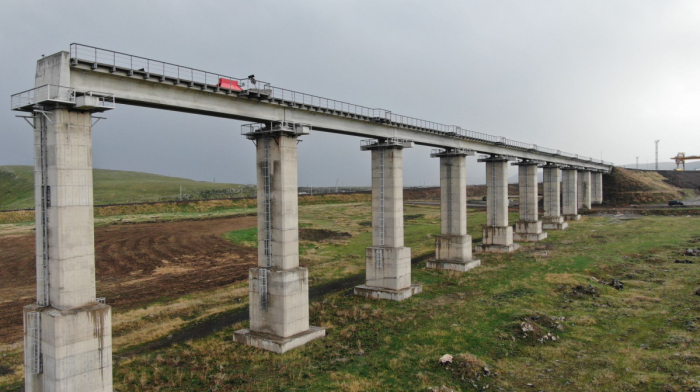
A launch ceremony marking the commissioning of the modernised Baku-Tbilisi-Kars (BTK) railway line was held at Akhalkalaki station in Georgia on 2 June, bringing together senior officials from Azerbaijan, Georgia and Türkiye.
Okinawa lost transport links and suffered widespread power outages on Monday (1 June) as Severe Tropical Storm Jangmi brought destructive winds and heavy rain to Japan's south-western islands.
Hungarian Prime Minister Péter Magyar said on Monday that his government would begin legal proceedings to remove President Tamás Sulyok if he continues to reject calls to resign.
Okinawa lost transport links and suffered widespread power outages on Monday (1 June) as Severe Tropical Storm Jangmi brought destructive winds and heavy rain to Japan's south-western islands.
Competing narratives continue to shape perceptions of the war in Ukraine, with Russian leadership suggesting a possible end phase while Ukrainian officials warn of renewed large-scale attacks and ongoing escalation risks.
U.S. Secretary of State Marco Rubio has held talks with Lebanese President and Israeli Prime Minister on efforts to ease tensions between Israel and Lebanon. According to a U.S. official, Washington has proposed a plan aimed at achieving a gradual de-escalation of hostilities.
Unsealed records from the U.S. Department of Justice have renewed scrutiny of lawyer Robert Amsterdam after documents revealed communications between his law firm and Jeffrey Epstein's office. The disclosures have drawn attention because of Amsterdam's prominent role in Armenia.
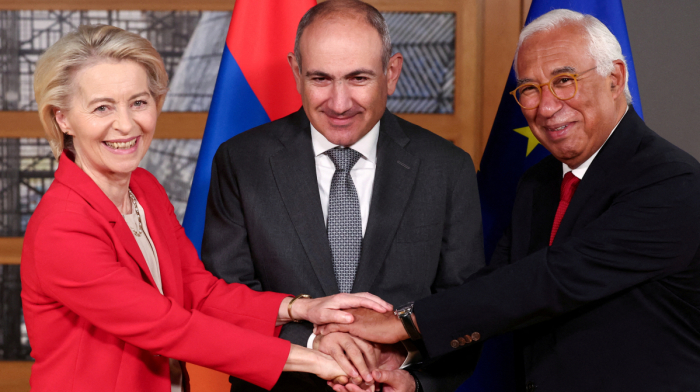
When Armenians vote on 7 June, they will be voting in an election shaped by months of political change and a rapidly deepening relationship with the European Union. The result may not only determine who governs Armenia but also the future direction of the country's geopolitical alignment.
A launch ceremony marking the commissioning of the modernised Baku-Tbilisi-Kars (BTK) railway line was held at Akhalkalaki station in Georgia on 2 June, bringing together senior officials from Azerbaijan, Georgia and Türkiye.
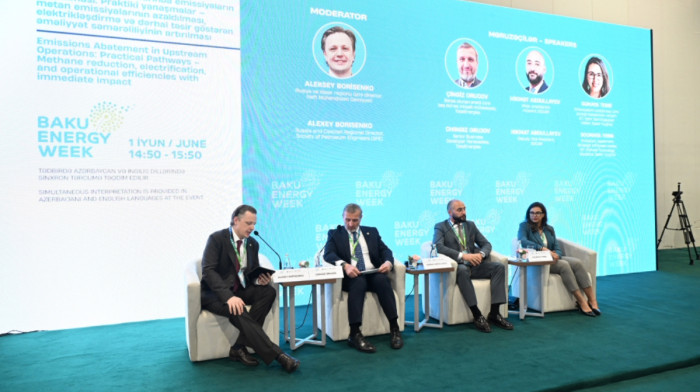
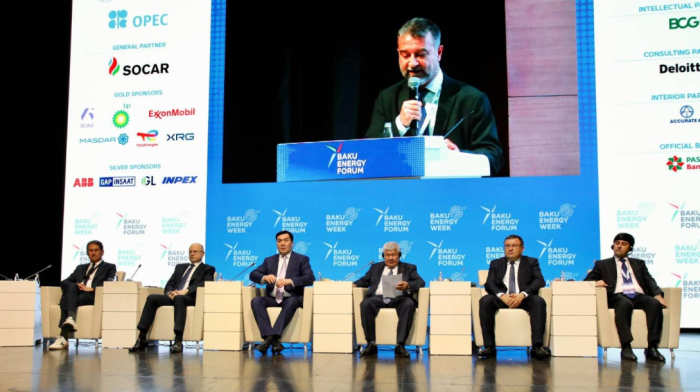
Baku Energy Week has opened in Azerbaijan, bringing together global energy leaders to discuss energy security, green energy and regional cooperation, underscoring the country's growing strategic role in Eurasian connectivity.
When Armenians vote on 7 June, they will be voting in an election shaped by months of political change and a rapidly deepening relationship with the European Union. The result may not only determine who governs Armenia but also the future direction of the country's geopolitical alignment.
Kazakhstan is open to expanding its oil export routes through Azerbaijan and advancing joint energy infrastructure projects across the Caspian region, Energy Minister Yerlan Akkenzhenov told AnewZ in an exclusive interview in Baku.
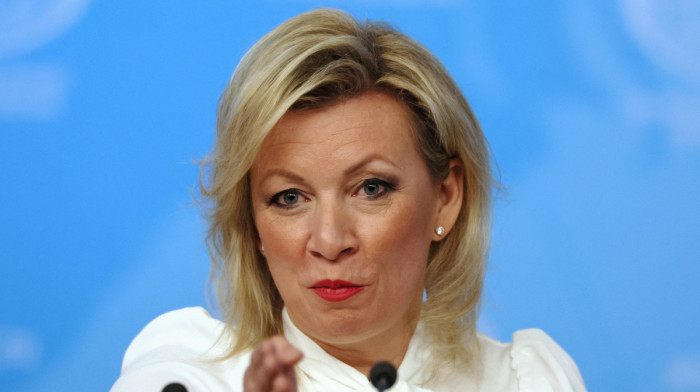
Russia's Foreign Ministry spokeswoman Maria Zakharova praised Georgia for resisting Western pressure (30 May), defending its national interests and pursuing a "multi-vector foreign policy" - language that closely mirrors the rhetoric of the ruling Georgian Dream party.















What is your opinion on this topic?
Leave the first comment