Kabul seeks urgent boost to polio testing and health services for returnees
Afghanistan’s Health Minister has urged urgent action to strengthen domestic polio diagnostics and expand healthcare for returnees and vulnerable co...
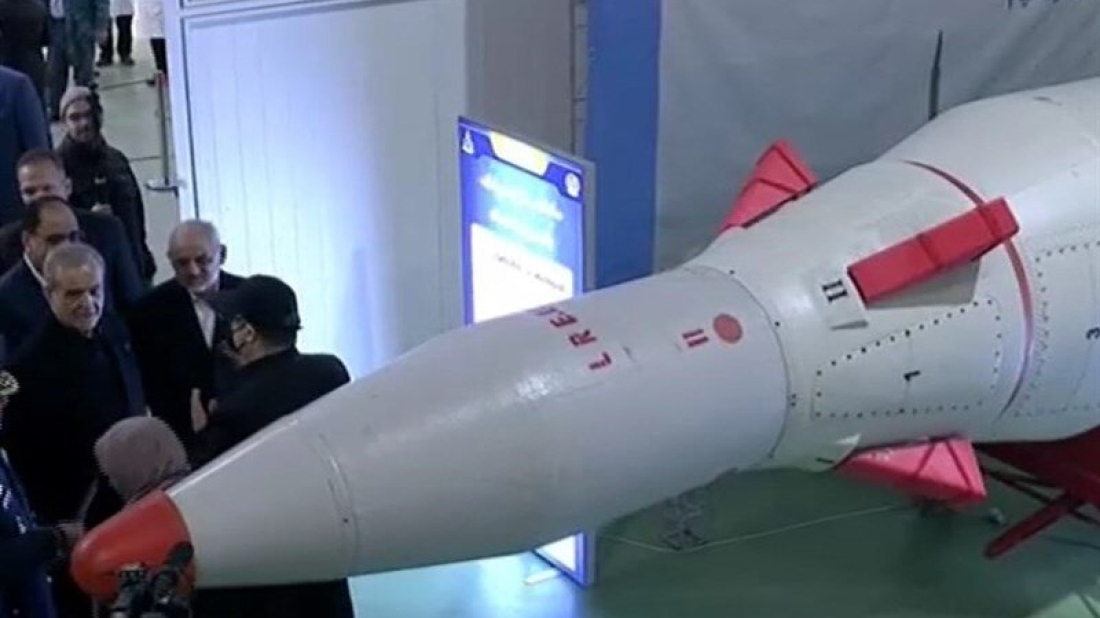
Iran’s Foreign Minister Abbas Araghchi has firmly ruled out any discussion of the country’s ballistic missile capabilities in the newly resumed, Oman-mediated negotiations with the United States, stating they are not and will never be on the agenda.
“Our missiles are not and will not be a subject of negotiations,” he told reporters on the sidelines of a nationwide rally in Tehran on Wednesday (11 February) marking the 47th anniversary of the 1979 Islamic Revolution.
He was responding to U.S.-Israeli demands to limit the range of Iran’s missiles to 500 kilometres so that they could not reach Israel.
Official media quoted Araghchi as saying that the date and venue of the upcoming indirect meeting between Iranian and U.S. negotiators “have not yet been determined”.
Last Friday, Iran and the U.S. resumed a new round of nuclear talks mediated by Oman, during which Iran stressed that only the nuclear programme was discussed.
Addressing demonstrators at the rally in Tehran, President Masoud Pezeshkian insisted Iran is not seeking nuclear weapons and rejected what he described as “excessive” U.S. demands.
“Iran will not give in to excessive U.S. demands” in the resumed mediated nuclear talks, he said, as Israeli Prime Minister Benjamin Netanyahu visited the U.S. with Iran on the agenda of his meetings.
“Distrust of the West and the U.S. hinders progress in the talks,” Pezeshkian said, adding that the date and venue of the next round remain under consultation.
Tehran has categorically rejected what it calls Washington’s “zero enrichment” condition and demands to drastically limit the range of its ballistic missiles as a “red line” in any potential deal.

The United States and Azerbaijan signed a strategic partnership in Baku on Tuesday (10 February) encompassing economic and security cooperation as Washington seeks to expand its influence in a region where Russia was once the main power broker.
Greek Prime Minister Kyriakos Mitsotakis arrived in Ankara on Wednesday, where Turkish President Recep Tayyip Erdoğan held an official welcoming ceremony at the Presidential Palace, marking the start of high-level talks between the two NATO allies.
The European Union is preparing a further expansion of its sanctions against Russia, with Central Asia emerging for the first time as a distinct point of focus.
A senior adviser to Iran’s Supreme Leader said on Tuesday that negotiations with the United States must remain focused on the nuclear issue and be grounded in realism, as Washington and Tehran prepare to resume talks mediated by Oman.
Russia has begun slowing down the Telegram messaging application, with Roskomnadzor, Russia’s federal communications regulator, set to implement partial restrictions from 10 February, following a wave of fines and administrative cases accusing the platform of hosting illegal content.
Afghanistan’s Health Minister has urged urgent action to strengthen domestic polio diagnostics and expand healthcare for returnees and vulnerable communities, pressing international partners in Kabul for faster, fully funded support as the country faces mounting strain on its health system.
Türkiye and Greece signalled renewed political will to ease long-standing tensions during high-level talks in Ankara on Wednesday (11 February). Maritime borders, migration and trade topped the agenda as both leaders struck a cautiously optimistic tone.
Israel has joined U.S. President Donald Trump's 'Board of Peace' initiative, Prime Minister Benjamin Netanyahu said on Wednesday (11 February) during his visit to Washington where he met Trump and Secretary of State Marco Rubio.
Plans to merge Tbilisi State University and Georgian Technical University have been scrapped by Georgia’s Prime Minister Irakli Kobakhidze, who backed down on the proposed move after days of backlash from lecturers and students.
Afghanistan’s humanitarian situation remained severe throughout 2025, with millions still struggling to meet basic needs, according to a new report by the International Committee of the Red Cross (ICRC).
You can download the AnewZ application from Play Store and the App Store.
What is your opinion on this topic?
Leave the first comment