live Tehran tightens grip on Hormuz; Trump says 'we don't need any help with Iran' - Middle East conflict 13 May
U.S. President Donald Trump said he does not think he will need China's help to end the war with Iran as he le...
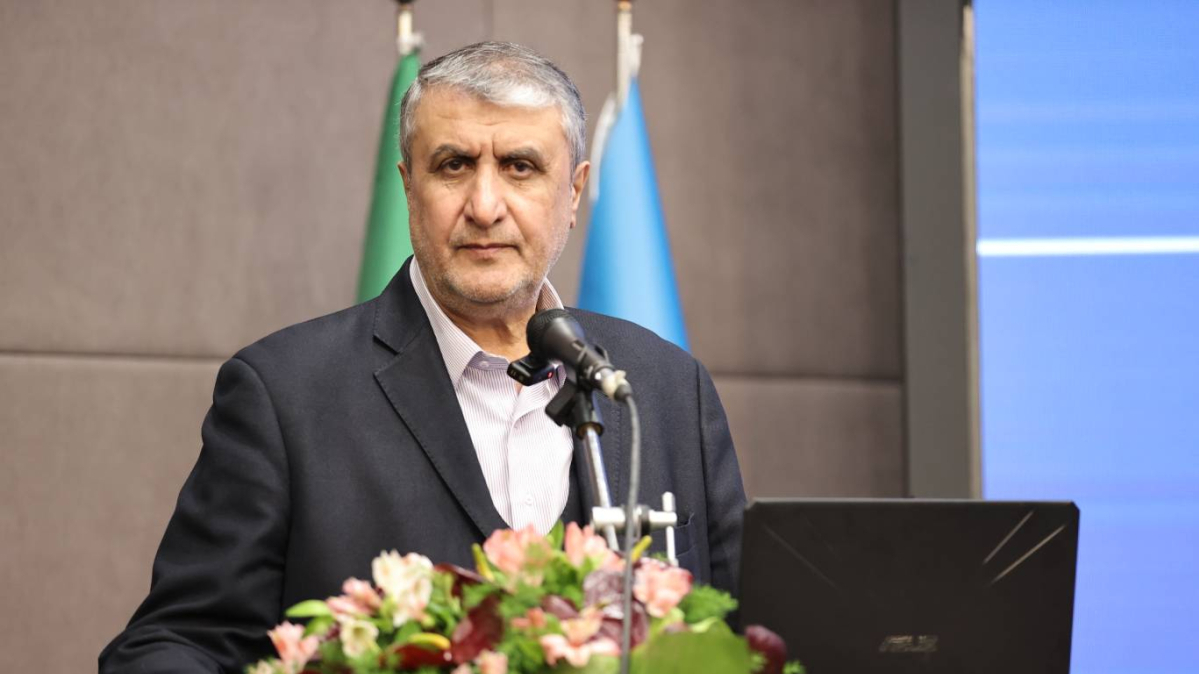
The Head of Iran’s Atomic Energy Organisation (AEOI) Mohammad Eslami unveiled that the country’s civilian nuclear program has been the target of industrial sabotage by the Israeli and the U.S. intelligent agencies for the last three decades.
The official made the remarks on Thursday in the central city of Isfahan where he inaugurated the country’s largest plasma therapy clinic.
“Years ago my colleagues had purchased packaged parts from a European company, but on the way to Iran, without anyone noticing, the U.S. and Israeli security services had opened them and carried out micro-sabotage on them,” which was tracked at destination, he said.
He also slammed remarks by Israeli Prime Minister Benjamin Nejanyahu claiming that Iranians are after reviving the Persian Empire and Isreal will not allow it to happen.
Tel Aviv’s main cause of concern for confrontation with Tehran is the acquisition of superior sciences and technologies, he added.
Eslami stressed that despite the continued attacks and acts of sabotage, Iran’s nuclear program is at the forefront of advanced medical treatments with radiopharmaceuticals and plasma therapy.
He termed as a defeat the 12-day war last June during which U.S. joined Israel’s military aggression and bombed Iran’s major nuclear sites under UN safeguards.
“Although U.S. dropped the world's largest and, in their opinion, most efficient bombs on Iran's facilities, hoping to destroy this industry, by God's grace, Iran continues to move on the frontiers of knowledge.”
Meantime, Minister of Information and Communications Technology Sattar Hashemi said that Iran successfully repelled a major cyberattack last Sunday coinciding the day it launched three remote-sensing satellites.
According to Hashemi, the attack, which targeted one of the country’s operators, was repelled in two stages: The first stage was carried out abroad, and the second stage was inside the country, using local capacities and domestic production.
He pointed out that the cyberattack against Iran’s communication infrastructure occurred simultaneously with the launch of three remote-sensing satellites last Sunday. But he did not disclose where it was originated.

Kuwait arrested four members of an IRGC-linked group as they tried to enter the country by sea, the Gulf state's KUNA news agency reported on Tuesday. Meanwhile, a senior IRGC officer said Iran had expanded its definition of the Strait of Hormuz to include a far wider area.
Metropolitan Shio of Senaki and Chkhorotsku has been elected the 142nd head of the Georgian Orthodox Church at a meeting of clergy in Tbilisi following the death of longtime Patriarch Ilia II.
Biological samples from an Italian man were transferred to a specialist hospital for testing on Tuesday, after he was suspected of contracting hantavirus. Meanwhile, World Health Organization boss Tedros Ghebreyesus said there were “no sign” of a larger outbreak linked to the MV Hondius cruise.
Afghanistan has signed a five-year gold mining contract with Afghan and Azerbaijani companies in a deal worth more than $20m, the Ministry of Mines and Petroleum has said.
Exclusive flight-tracking material obtained by AnewZ has raised new questions about French military aircraft movements linked to President Emmanuel Macron’s recent diplomacy with Armenia and the wider scope of France’s defence cooperation with Yerevan.
This is the third and final article in AnewZ’s series examining the fight for access to treatment for children with Duchenne muscular dystrophy in Georgia, and the irreversible human cost of delay.
Former Georgia rugby captain Merab Sharikadze has been banned for 11 years after an anti-doping probe uncovered sample swapping in the national team. Several other players and the Georgian Rugby Union were also sanctioned
AnewZ has premiered its new investigative documentary, Shadow of the Cross, examining the power, history and contested role of one of the world’s most recognised humanitarian symbols.
Uzbekistan Energy Week 2026 has opened in Tashkent, bringing together international energy companies, government officials and industry experts to discuss energy security, technological transformation and regional cooperation.
Japan’s first import of crude oil from Azerbaijan has highlighted the country’s energy vulnerability and renewed efforts to diversify supply chains beyond the Middle East, according to Professor Sejiro Takeshita of the University of Shizuoka.
You can download the AnewZ application from Play Store and the App Store.
What is your opinion on this topic?
Leave the first comment