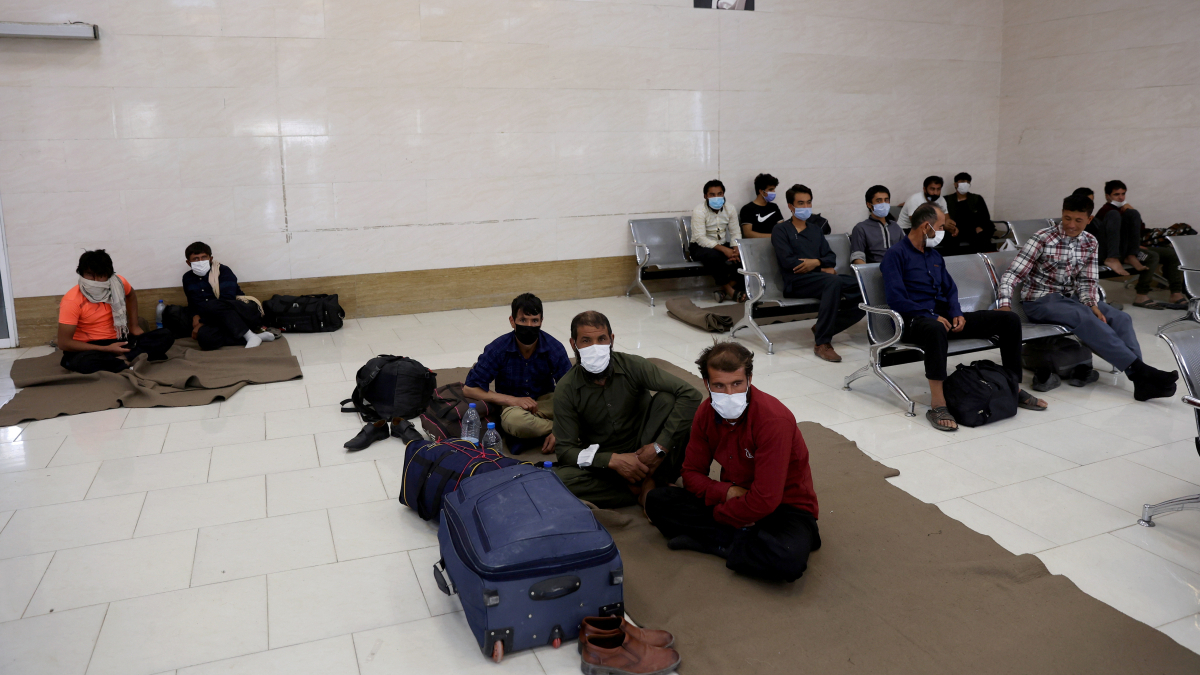
Iran’s renewed call for international burden sharing in hosting Afghan refugees has revived a familiar narrative - that refugees are an economic strain rather than a source of long-term value. Analysts say this framing overlooks decades of contribution by Afghan refugees across the region.
While Iranian officials argue that hosting millions of refugees without sustained international support is becoming increasingly difficult, experts note that Iran is far from alone. Pakistan, Türkiye and several European states continue to host large refugee populations, many of whom have become integral to local economies.
Ali Latifi, Asia editor for The New Humanitarian, told AnewZ that Iran’s position should be viewed in a broader regional context.
“But the truth is Iran is not alone. Pakistan has had a massive refugee population for as long as Iran has. Türkiye still hosts a massive refugee population. Greece also has a large refugee population,” he said.
Latifi emphasised debates over burden sharing often overlook economic realities, particularly the labour contributions made by Afghan refugees over decades.
“And simply demanding that the world helps you out without acknowledging the fact that Afghan refugees in all of these countries have contributed greatly to the economy ignores reality,” he added.
In Iran, he noted, that contribution is most visible in the construction sector, where Afghan labour has played a central role in urban growth.
“The saying is that the cities of Iran were built by Afghan workers and the facts back that up,” Latifi said. “When you speak to Afghan returnees from Iran, most of them worked in construction.”
He pointed to similar patterns elsewhere in the region, pointing to Afghan workers in manufacturing and service sectors.
“In Türkiye, Afghans have worked in leather factories, automotive plants, as well as in restaurants and small businesses,” he noted.
Latifi warned that portraying refugees solely as a burden echoed broader anti-immigration rhetoric seen globally.
“This misnomer is not very different from what Donald Trump says about Latinos in the U.S., that they are just a burden and do not contribute to the economy or culture of a country,” he said.
He argued that Afghan refugees had consistently demonstrated the opposite.
“They have invested in these countries. They have literally helped build them with their hands,” Latifi said, adding that refugees had also contributed culturally and educationally.
“To simply see an entire population as a burden is unfair and untrue.”
Iranian officials reiterated their position earlier this week at an international forum, warning that hosting millions of refugees without fair global support was no longer sustainable, a stance that continues to fuel debate over responsibility, contribution and perception.




















What is your opinion on this topic?
Leave the first comment