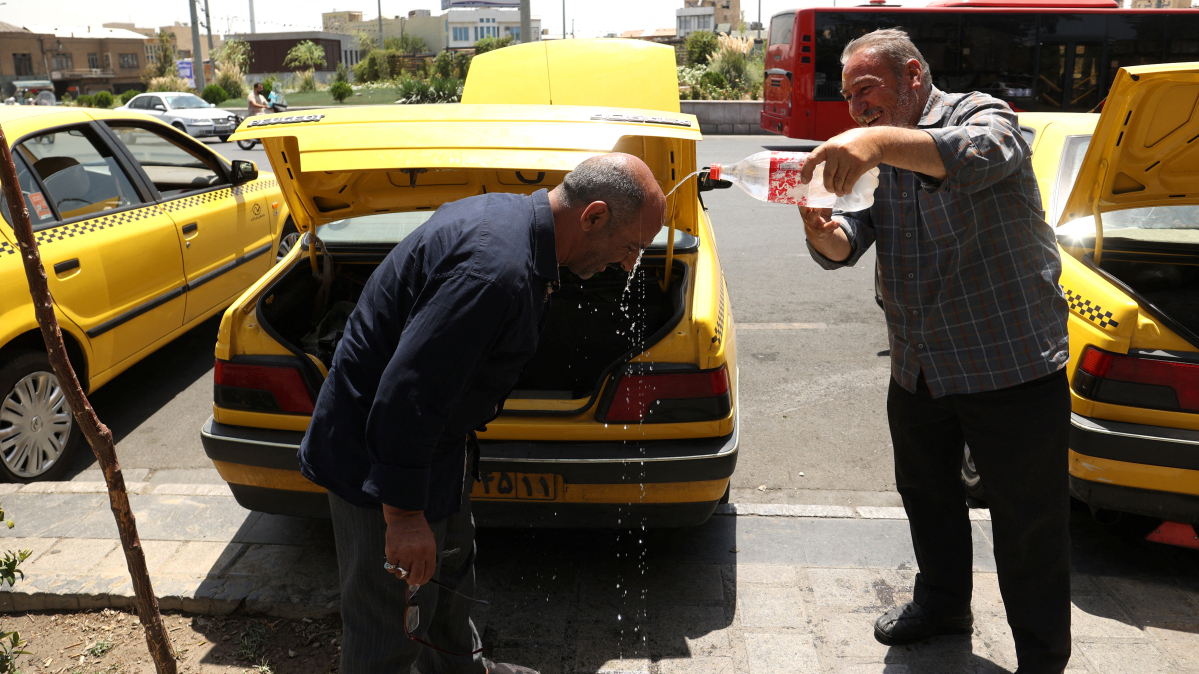
Iranian President Masoud Pezeshkian has urged the public to drastically reduce water consumption in the aftermath of an unprecedented drought across the country.
At the same time, the Ministry of Energy has announced plans for cutting Tehran's water supply at night as water shortage intensifies.
Speaking at a conference in Kurdistan Province, Pezeshkian warned that if the critical water shortage continues, it would be rationed in Tehran for the next few weeks, adding that it could lead to possible evacuation of the capital if the situation does not improve in coming months.
“If it does not rain in Tehran by December, we will have to ration water; if it does not rain again, we will have to evacuate Tehran,” the president said.
He also said that water shortage is a national issue and called for long-term plans to invest in wastewater recycling and desalination.
With an exception of its northern provinces bordering the Caspian Sea, Iran’s predominantly dry geography has contributed to the depletion of water reserves. Climate change and global rising temperatures are adding to its water problem.
After President Pezeshkian’s warning last week of worsening shortage across the country, the government has started “adjusting” the capital’s water distribution at night in sections of Tehran’s districts lasting for 5 hours since midnight.
Ministry of Energy on Monday rejected the nightly water supply shut off in Tehran saying it had no option but to lower the supply pressure to economize its usage.
"Despite entering the sixth consecutive year of drought, there are no plans to cut off or ration water, and our main policy is to manage the network by adjusting pressure during the night hours," said CEO of the Tehran Provincial Water and Wastewater Company Mohsen Ardakani.
The decision aims at preserving the declining reserves while the Iranian capital of estimated 10 million population is facing its severest water shortage in decades.
According to official figures, water levels in Tehran’s reservoirs have dropped by 40 percent since last year mainly because of the reduction in rainfall as well as the hike in demand due to the enlargement of the capital and its satellite towns which reportedly use 1 billion liters of water per day.
Ministry of Energy said that essential pubic services including hospitals will be exempt from the water shut off while Tehran’s water distribution system is experiencing an unprecedented stress of the last 60 years.
It has also launched water saving campaign educating the public to fix leaks and stop watering gardens to reduce usage for at least two months.















What is your opinion on this topic?
Leave the first comment