Azerbaijan’s support to Ukraine could set regional example, aid group director says
Azerbaijan’s support for Ukraine could provide a model for neighbouring countries seeking to strengthen their sovereignty, the director of de...
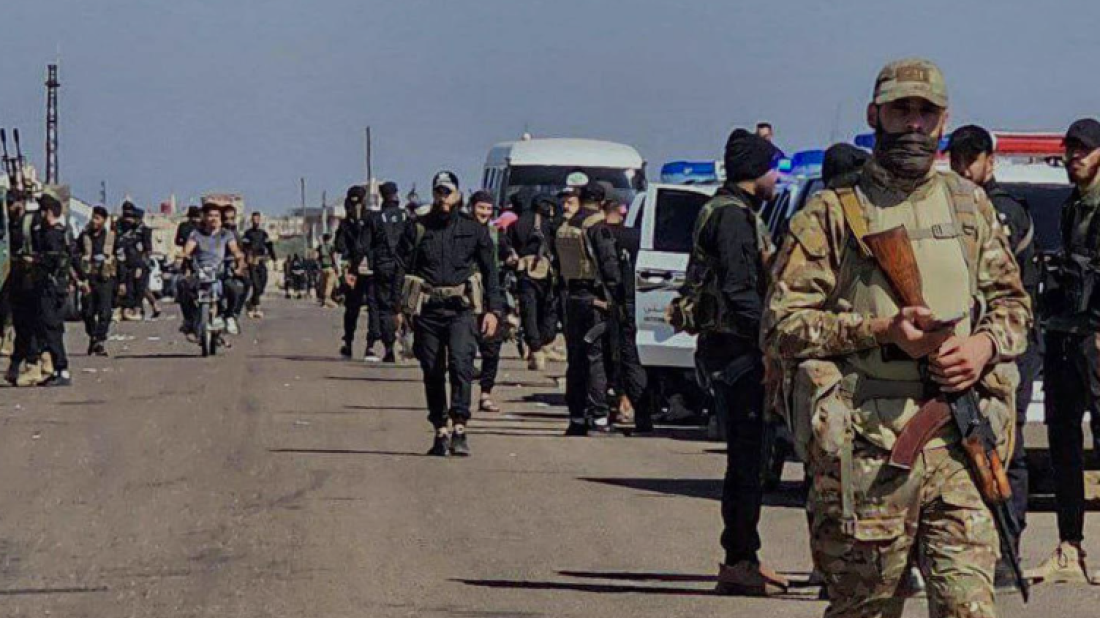
Clashes between Druze and Bedouin Arab tribes continue in Syria’s southern Sweida province, near the Jordanian border, while six soldiers were killed in an attack by Druze forces on Syrian army units deployed to restore order in the area.
A source from the Syrian Ministry of Defence told the state-run Syrian News Channel that military reinforcements had been sent to Sweida to end the ongoing tribal fighting, but were met with an attack by Druze forces. The assault resulted in the death of six soldiers and the capture of nine others.
Interior Ministry spokesman Nureddin al-Baba stated to Syrian News Channel that they are responding to calls for help from the people of Sweida and are coordinating with key actors in the province.
Al-Baba said, “A security deployment plan has been prepared by the defence and interior ministries. The aim of this plan is to restore state authority, uphold the rule of law, and disarm illegal armed groups.”
Clashes are currently ongoing in the southern countryside of the province, particularly in the town of Kanaker and the western rural areas.
Meanwhile, prominent Druze leader Sheikh al-Hijri issued a written statement declaring that the Syrian army and security forces would not be allowed to enter the region.
Hijri accused the Syrian government of providing military support to the Bedouin tribes and called for “urgent international protection.”
At the time of Hijri’s statement, Israeli fighter jets were observed flying along the Quneitra–Sweida–Daraa axis in southern Syria.
Following the outbreak of Syria’s civil war, the Israeli government had promised military and political support to the Druze minority in their opposition to the Damascus regime, hampering efforts to reintegrate the Druze region into the rest of the country.
The current clashes began yesterday morning when Druze groups seized several vehicles belonging to the Bedouin Arab tribes, sparking minor armed confrontations.
Both sides have since taken civilians hostage, and the violence has escalated, with at least 30 people reported killed and over 100 wounded so far.

The collective-defence agreement between Türkiye, Saudi Arabia and Pakistan signals that regional powers no longer want to rely solely on external security guarantees. Whether it becomes a stabilising deterrent or another axis of rivalry remains unresolved.
Shipping through the Strait of Hormuz has slowed, according to the latest data, as uncertainty over the waterway’s reopening kept most shipowners away. Six commodity vessels crossed the strait on Tuesday, down from nine the day before and below the 10-day daily average of 11.
Shipping traffic through the Strait of Hormuz remains limited on Thursday, with no increase in vessel crossings as U.S.-Iran talks to resolve the conflict remained stalled. Nine commodity vessels transited the key waterway on Wednesday, unchanged from the previous day, according to Kpler data.
Iran has said the Strait of Hormuz will remain closed until the U.S. fulfils the terms of an interim deal, including lifting the maritime blockade and sanctions and releasing Iran’s frozen assets.
Start your day informed with AnewZ Morning Brief. Here are the top news stories for the 19th of August, covering the latest developments.
Azerbaijan’s support for Ukraine could provide a model for neighbouring countries seeking to strengthen their sovereignty, the director of development at an organisation supporting Ukraine’s armed forces has told AnewZ.
Two days inside Uzbekistan’s newsrooms, hospitals, factories and technology hubs reveal a country eager to show how it is changing — while that transformation is still under way.
Syrian Foreign Minister Asaad al-Shaibani arrived in Islamabad on Wednesday for a two-day visit, marking the first trip by Syria’s top diplomat to Pakistan in 19 years as Damascus seeks to deepen ties with the country.
More than a year after Pakistan and India were involved in their most serious military confrontation in decades, a key airspace restriction between the nuclear-armed neighbours remains in force.
Uzbekistan has unveiled a sweeping package of business reforms, including easier access to loans, $1 billion in export support, a three-year moratorium on most inspections and stronger protections for entrepreneurs.
You can download the AnewZ application from Play Store and the App Store.
What is your opinion on this topic?
Leave the first comment