Several state-owned infrastructure companies in Central Asia are preparing for potential listings in Hong Kong, as the financial hub steps up efforts to connect the region’s businesses with international investors.
Central Asian companies look to Hong Kong for capital
Hong Kong Financial Secretary Paul Chan has highlighted Kazakhstan Temir Zholy (KTZ), Kazakhstan’s state-owned railway operator, as one of the companies moving towards a listing on the Hong Kong Stock Exchange (HKEX).
The potential listings could open the door to a major international financial centre and a wider pool of investors for Central Asian state-owned companies. The plans also underline efforts across the region to diversify financing and deepen links with Asian capital markets.
More than 100 companies from countries participating in the Belt and Road Initiative are already traded on HKEX, with a combined market capitalisation of more than $43.4 billion.
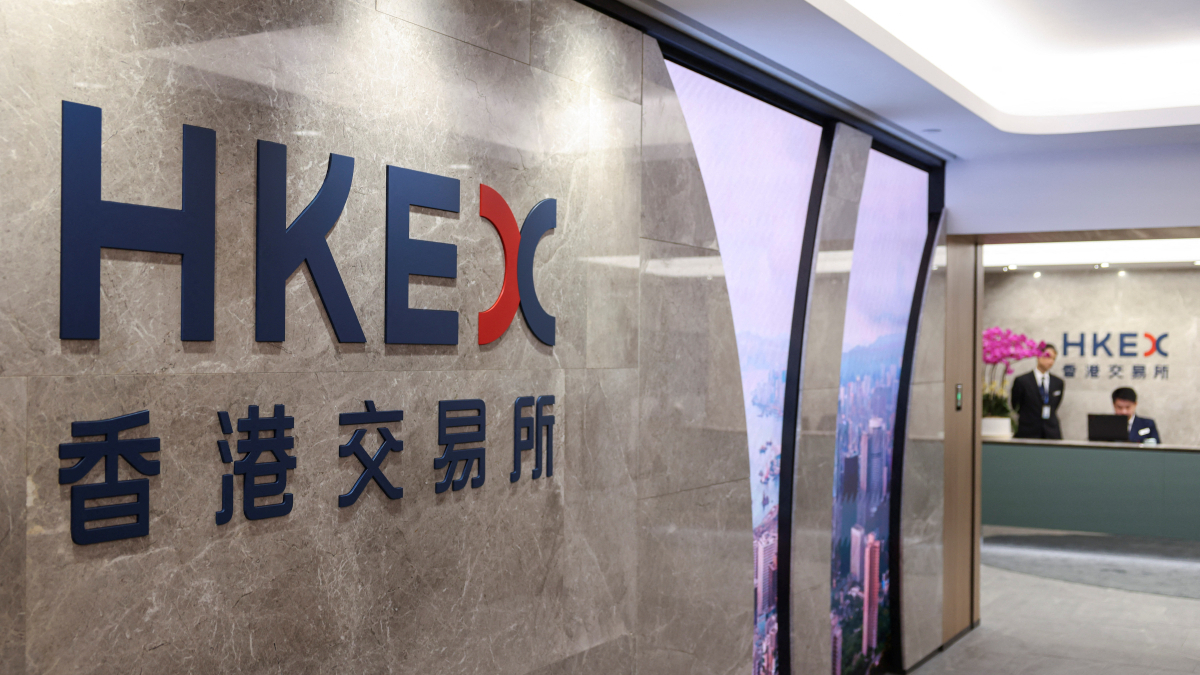
Hong Kong Stock Exchange
HKEX is one of Asia’s largest financial markets and operates under Hong Kong Exchanges and Clearing.
The exchange has a market capitalisation of around $4 trillion, with approximately 2,500 companies listed. Trading takes place in the Hong Kong dollar, a freely convertible currency. HKEX is also closely connected to mainland China’s financial markets through the Stock Connect system.
Trading can also continue during severe weather, including typhoons and major storms.
Uzbekistan explores IPOs and dual listings
Officials from Uzbekistan and Hong Kong have been discussing ways for Uzbek companies to launch initial public offerings (IPOs) and pursue dual listings in Hong Kong. In May 2026, Hong Kong Secretary for Financial Services Christopher Hui met Uzbek stock exchange officials to discuss listing opportunities and broader financial integration.
Hong Kong Chief Executive John Lee also led a business delegation to Central Asia in June, including Uzbekistan, as the two sides sought to strengthen links between their capital markets.
Officials are exploring cooperation in bond markets, exchange-traded funds, tokenised assets and financial technology. Dual listings could allow major Uzbek companies to trade simultaneously on domestic and international markets.
Kazakhstan builds direct financial links
Kazakhstan has one of the most developed relationships with HKEX in Central Asia. In June 2026, HKEX signed strategic memorandums of understanding with the Astana International Financial Centre Authority and Astana International Exchange (AIX), covering cross-border listings, commodities and sustainable finance.
Cooperation has already produced a concrete example. In late 2025, Jiaxin International Resources Investment Limited completed a simultaneous share offering and dual listing on HKEX and AIX. Kazakhstan’s state-owned railway operator, Kazakhstan Temir Zholy, has also pursued a Hong Kong listing and submitted an IPO application.
The relationship extends beyond equities to debt financing. The Development Bank of Kazakhstan launched its first offshore renminbi, or “Dim Sum”, bond listed on HKEX.
Kyrgyzstan moves from sovereign bonds to digital assets
Kyrgyzstan has already turned to HKEX for sovereign financing, listing its first sovereign bond on the exchange. It marked the first time a Central Asian country had used HKEX to issue sovereign debt.
Financial links with Hong Kong also extend to mining and digital assets. HKEX-listed mining companies such as Zijin Mining Group have operations in Kyrgyzstan, including involvement in major gold assets.
Kyrgyzstan has also been developing USDKG, a gold-backed stablecoin, with Hong Kong and Singapore identified as potential Asian centres for international digital-asset partnerships.
Tajikistan looks to regional financial links
Tajikistan’s links to Hong Kong are developing mainly through the financial hub’s broader push to connect Central Asian economies with international capital markets.
Cooperation between HKEX and financial platforms in neighbouring Kazakhstan and Uzbekistan could eventually create a regional route for Tajik companies seeking access to international funding.
Turkmenistan's links centre on commodities
Turkmenistan does not currently have the same direct financial relationship with HKEX as Kazakhstan or Uzbekistan.
Instead, much of the economic connection is centred on commodities. Hong Kong-based companies and trading houses participate in Turkmenistan’s State Commodity and Raw Materials Exchange, purchasing products including cotton as well as textile and chemical goods.
Central Asia looks to international capital
The growing interest in HKEX points to a broader shift in Central Asia’s financial strategy, with countries across the region seeking deeper access to international capital.
Kazakhstan has already moved into IPOs, dual listings and bond issuance, while Uzbekistan is strengthening institutional links with HKEX. Kyrgyzstan has used the exchange for sovereign debt.
Tajikistan and Turkmenistan have more limited direct connections, but both are increasingly part of a wider financial network linking Central Asia with Hong Kong.
Read more:
















What is your opinion on this topic?
Leave the first comment