Uzbekistan is looking to Singapore as it builds a fintech ecosystem designed to attract global investment, technology companies and talent.
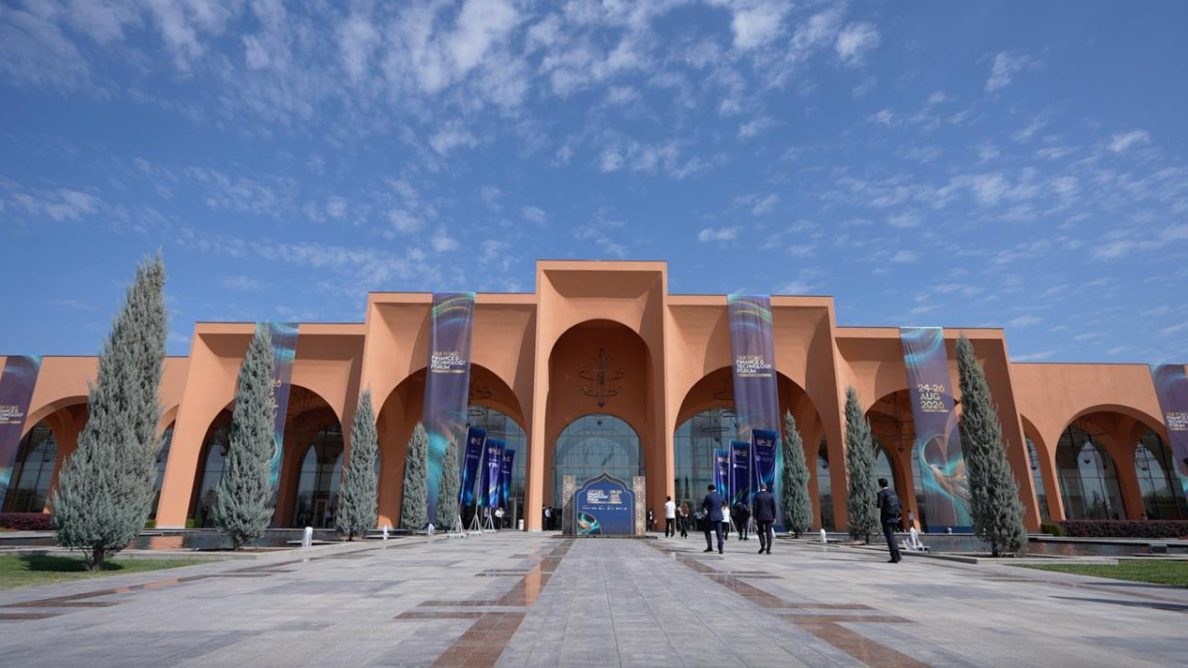
The comparison came into focus at the inaugural Silk Road Finance & Technology Forum in Tashkent, co-organised by the Central Bank of Uzbekistan and the Global Finance & Technology Network (GFTN), an organisation established by the Monetary Authority of Singapore.
The forum aims to become an annual platform for fintech and financial innovation across Central Asia.
Singapore as a benchmark
Singapore launched its first FinTech Festival in 2016, attracting around 11,000 participants from more than 50 countries.
By 2025, that figure had risen to more than 65,000. Over the same period, Singapore established itself as a leading global fintech centre, supported by regulatory reforms, digital infrastructure, investment and talent development.
Sopnendu Mohanty, group CEO of GFTN, was closely involved in the development of Singapore’s fintech ecosystem.
Mohanty drew parallels between Uzbekistan’s new forum and Singapore’s early fintech journey.
He said Uzbekistan could follow a similar trajectory over time, expressing hope that the country could attract substantial investment into its fintech ecosystem over the next decade.
Uzbekistan’s fintech ambitions
Uzbekistan has more than 100 active fintech companies. Under its 2030 strategy, the country aims to increase that number to 200, attract $1 billion in foreign investment into fintech start-ups, train more than 5,000 fintech professionals and support 100 start-ups through incubation and acceleration programmes.
A $50 million sovereign venture fund is also being formed, while Uzbekistan is rolling out an open banking framework.
The country’s broader digital market is also expanding. Uzbekistan has a population of more than 37 million, many of them under the age of 30, and digital adoption is approaching 70 per cent. Uzum, Uzbekistan’s first unicorn, is valued at around $2.3 billion, while early-stage fintech investment reached $58 million in 2024.
Uzbekistan is also seeking to strengthen its position as a regional investment hub. The latest Tashkent International Investment Forum attracted more than 8,000 participants from nearly 100 countries, with investment contracts and trade agreements worth $30.5 billion.
The Singapore comparison
Uzbekistan still has considerable ground to cover. Singapore is an established global financial centre, while Uzbekistan is still developing its fintech market and regulatory infrastructure.
The challenge now is to turn Uzbekistan’s growing fintech sector and ambitious investment targets into a broader regional ecosystem that can compete for international capital, technology companies and talent.




















What is your opinion on this topic?
Leave the first comment