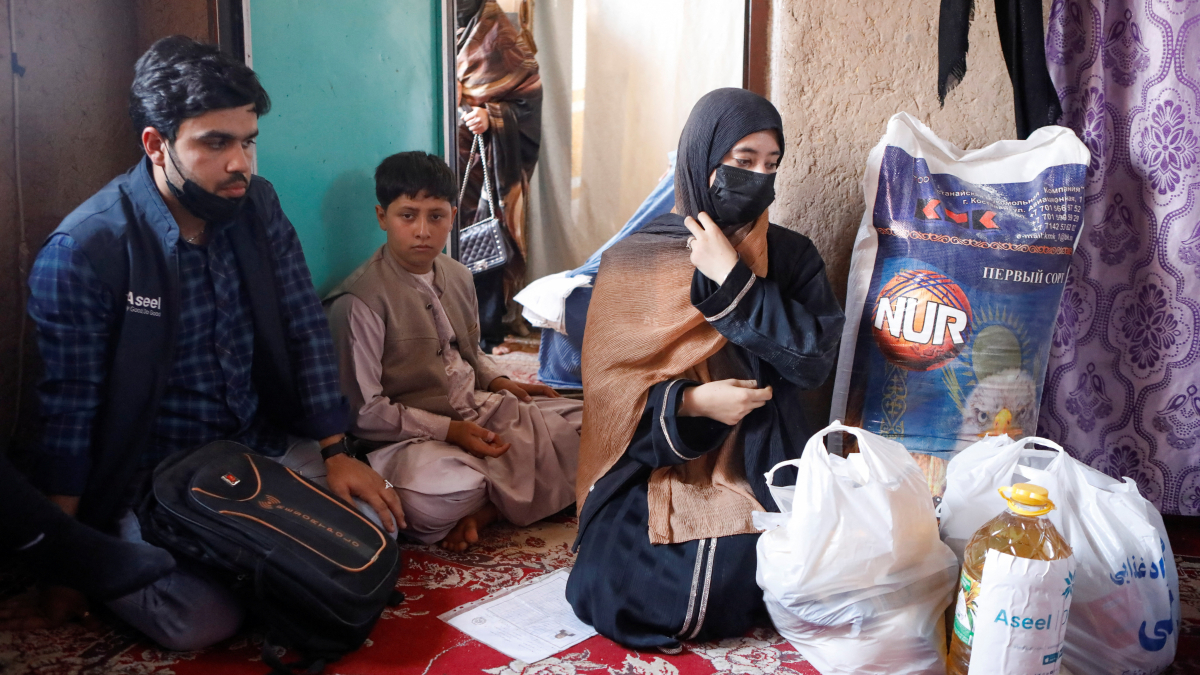
Aid organisations in Afghanistan are struggling to keep women in work as Taliban restrictions force them to spend more on male guardians, transport and separate workplaces, a June 2026 survey has found.
Keeping women employed
Aid organisations in Afghanistan are struggling to keep women in work because Taliban restrictions require additional spending on male guardians, transport and separate workplaces, a June 2026 survey has found.
The survey covered 122 organisations across Afghanistan's 34 provinces, including 102 national non-governmental organisations (NGOs), 14 international NGOs and six United Nations agencies.
It was carried out by the Gender in Humanitarian Action Working Group and the Humanitarian Access Working Group. The Gender in Humanitarian Action Working Group is not an NGO or government body. It is a humanitarian coordination forum involving UN agencies, NGOs and other aid organisations.
The conditions vary between provinces and sectors. However, 75% of responding organisations said they had accepted the conditions in order to continue employing women.
Some 61% said female staff needed a mahram, or male guardian, for work journeys they had previously made alone. A mahram is a male relative, such as a husband, father, brother or son.
Organisations are also providing separate workplaces and working hours, transport or travel payments, and financial support for guardians. Some must negotiate permission for women to enter offices or work in the field.
The survey found that 68% used separate workspaces, 65% supported transport or mahram costs, and 58% relied on field-only working arrangements. Some 46% said women could no longer report to offices where they had previously worked.
Funding pressures
The report warned that funding cuts were making these arrangements harder to maintain.
“Funding shortages remain the greatest long-term obstacle to women’s participation in humanitarian work, while Taliban restrictions continue to limit women’s mobility, employment and humanitarian access.”
The survey found that 16% of female staff were working from home, with 81% of them employed by UN agencies. It also found that 54% of participating organisations had laid off Afghan staff following funding cuts.
The Taliban authorities have said women’s rights are protected under their interpretation of Islamic law and Afghan culture.












What is your opinion on this topic?
Leave the first comment