Uzbekistan will establish an intermodal logistics centre in Belarus before the end of 2026 and launch more than $100 million worth of new regional investment projects as the two countries accelerate implementation of their newly established strategic partnership.
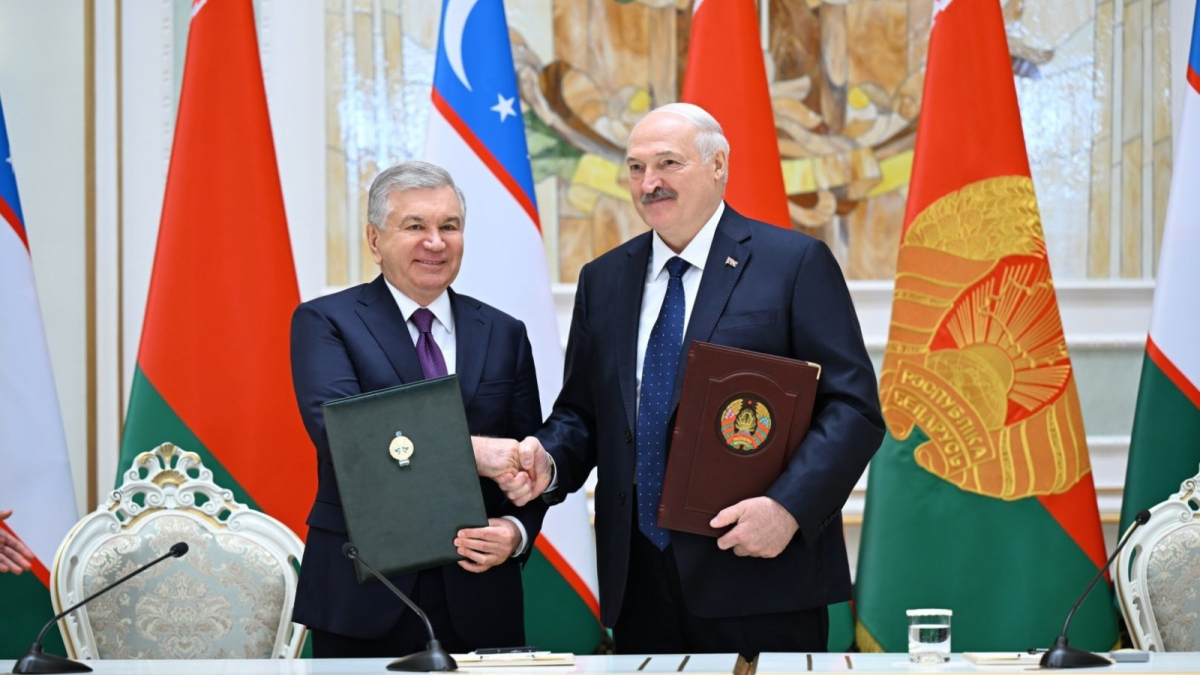
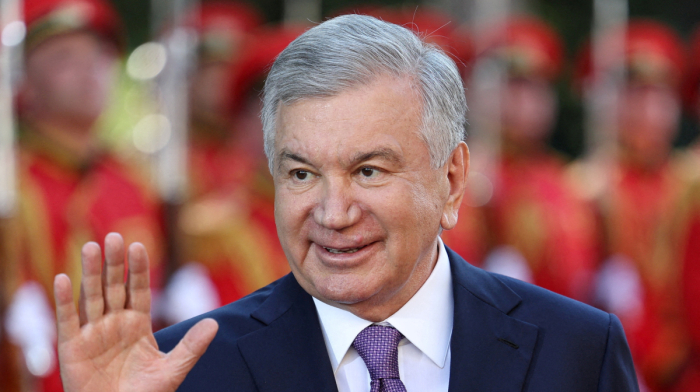
The initiatives were reviewed by President Shavkat Mirziyoyev on 15 July during a presentation on progress made following his official visit to Belarus on 8–9 July.
New logistics hub to boost trade
A central component of the partnership is the creation of an intermodal logistics centre at Orsha railway station in Belarus's Vitebsk region in cooperation with Belarusian Railways.
The facility will manage export and import cargo under preferential tariff arrangements, while both countries also plan to introduce direct block-train services to lower transport costs and shorten delivery times.
The project is expected to improve logistics connectivity and support expanding trade between Uzbekistan and Belarus.
Trade target raised to $2 billion
The logistics initiative forms part of a wider programme aimed at strengthening economic ties.
During President Mirziyoyev's visit to Minsk, Uzbekistan and Belarus signed a Declaration on Strategic Partnership and agreed to raise bilateral trade to $2 billion. They also approved 310 joint projects and initiatives valued at $2 billion across sectors including mechanical engineering, agriculture, pharmaceuticals, textiles, woodworking and healthcare.
Economic cooperation has expanded steadily in recent years. Bilateral trade reached approximately $965 million in 2025, nearly three times higher than five years earlier.
Around 360 joint ventures are now operating between the two countries, with Belarusian companies investing in Uzbekistan's textile, leather and food-processing industries, while Uzbek businesses continue expanding their presence in Belarus.
Regional partnerships and labour mobility
Regional cooperation has become a key pillar of the partnership.
Officials highlighted the successful collaboration between Uzbekistan's Andijan Region and Belarus's Vitebsk Region, where 255 residents of Andijan have already secured employment through organised labour programmes.
From September, Belarus plans to receive around 500 Uzbek workers each month. The first stage of the programme will place 1,100 workers at 13 enterprises in Vitebsk and other regions.
The broader objective is to employ 5,000 Uzbek citizens in Belarus, supported by the opening of a representative office of Uzbekistan's Migration Agency in Vitebsk.
President Mirziyoyev instructed officials to replicate the Andijan–Vitebsk model by pairing additional Uzbek and Belarusian regions and developing detailed roadmaps covering investment, industrial cooperation and employment.
More than 30 new investment projects planned
Alongside logistics and labour initiatives, the two governments are preparing more than 30 new investment projects worth over $100 million.
The portfolio includes livestock farming, deep wood processing, logistics, trade and services. Planned investments feature a 3,000-head dairy complex, several medium-sized cattle farms, a wood-processing enterprise and a wood pellet production facility.
Belarus has also offered industrial facilities, state-owned assets and agricultural land to Uzbek investors to encourage joint manufacturing and agricultural ventures.
Focus on implementation
President Mirziyoyev directed officials to ensure the systematic implementation of all agreements reached during the Belarus visit and to closely monitor progress under the bilateral roadmaps.
He also called for additional support measures to help Uzbek businesses establish operations in Belarus, including assistance with opening bank accounts, transferring charter capital and securing financing for new investment projects.
The latest agreements highlight the growing economic partnership between Uzbekistan and Belarus, with logistics, regional cooperation and industrial investment forming the foundation of a strategy aimed at doubling bilateral trade in the coming years.













What is your opinion on this topic?
Leave the first comment