Uzbekistan is accelerating its transition towards a greener economy, driven by new Chinese-backed industrial projects, growing interest in sustainable cryptocurrency mining and a sharp increase in renewable energy generation.
Green industry partnerships
Uzbekistan’s Ministry of Investment, Industry and Trade has announced plans to cooperate with Chinese companies on environmentally focused industrial projects.
Deputy Minister Ilzat Kasimov held talks with representatives from China CAMC Engineering and Fushun Zhenxing Chemical Engineering to explore the launch of tyre recycling facilities and the production of technical carbon in Uzbekistan.
The projects are expected to rely on modern pyrolysis technologies, enabling the recycling of used tyres into valuable industrial materials while reducing environmental waste.
According to the ministry, both sides agreed to move towards the practical implementation phase, signalling growing interest from foreign investors in Uzbekistan’s emerging green industrial sector.
Discussions were also held with Anhui Conch New Energy, a major Chinese renewable energy company. Talks focused on expanding cooperation in clean energy initiatives, with both sides agreeing to deepen technological partnerships and begin implementing joint projects.
Crypto mining shifts towards solar energy
Uzbekistan is also seeing rising interest in cryptocurrency mining following the issuance of its first official permit earlier this year.
In January, private company NexaGrid received approval to operate a mining facility in the Bukhara region. The permit marks a shift towards a more regulated and energy-conscious approach to the sector.
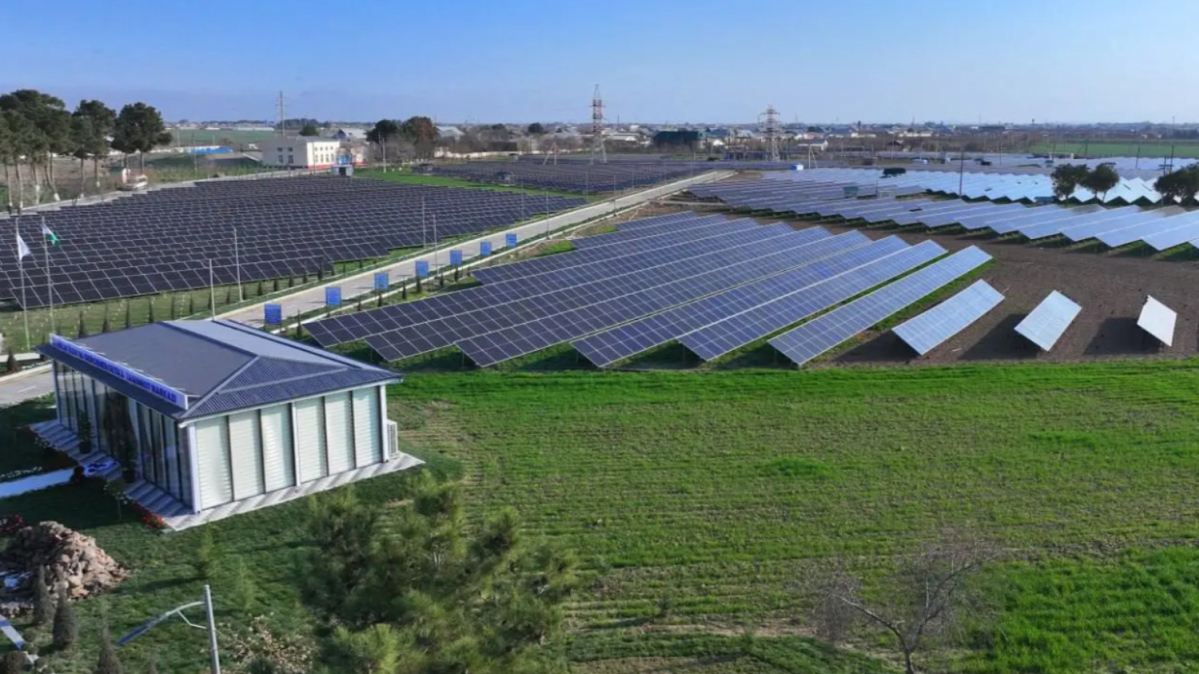
Authorities require mining operators to use electricity generated from their own solar installations, ensuring that such activity does not place additional strain on the national grid.
“We set strict requirements, including the use of renewable energy. Those who meet them can operate legally,” said Askarjon Zakirov, a representative of the National Agency for Perspective Projects.
Following the approval, officials reported a noticeable increase in interest from businesses seeking to enter the sector, suggesting potential growth in green-powered digital infrastructure.
Renewable energy output surges
These developments come alongside a significant rise in Uzbekistan’s renewable energy production.
According to the Ministry of Energy, the country generated more than 2 billion kWh of ‘green’ electricity between January and March 2026. Solar power plants produced 959.2 million kWh, while wind farms generated 1.05 billion kWh, supported by a total of 15 solar and five wind stations with a combined capacity of 5,582 MW.
This represents a 43 per cent increase compared with the same period last year.
The rapid expansion has already delivered tangible economic and environmental benefits. Uzbekistan has saved 537 million cubic metres of natural gas and prevented the emission of 1.15 million tonnes of harmful substances.
Including hydropower, total renewable generation reached 3.16 billion kWh, enough to meet the annual electricity needs of approximately 1.3 million households.
Energy transition gains momentum
Uzbekistan’s clean energy sector has grown rapidly in recent years. For comparison, solar generation stood at just 434 million kWh in 2022 before rising sharply to 10.5 billion kWh in 2025.
The latest industrial partnerships and regulatory developments indicate that the country is not only expanding renewable generation but also building a broader green economy ecosystem, combining energy, industry and digital sectors.
With continued foreign investment and policy support, Uzbekistan is positioning itself as an emerging regional player in sustainable development and the energy transition.



















What is your opinion on this topic?
Leave the first comment