South Korea is seeking alternative oil supplies from Kazakhstan as disruptions in the Strait of Hormuz expose its reliance on Middle Eastern energy routes.
As tensions in the Middle East continue to disrupt established supply chains, South Korea is moving to reduce its dependence on traditional oil routes, with Kazakhstan increasingly viewed as a viable alternative.
The shift reflects a more cautious approach among Asian importers, as instability around the Strait of Hormuz begins to translate into tangible risks for energy security.
According to Reuters, a senior envoy representing President Lee Jae-myung is expected to visit Kazakhstan, as well as Saudi Arabia and Oman, for talks on crude and naphtha supplies.
The discussions will extend beyond governments to include oil producers and shipping operators, suggesting that Seoul is not only seeking new suppliers but also workable delivery routes.
Rising vulnerability through Hormuz
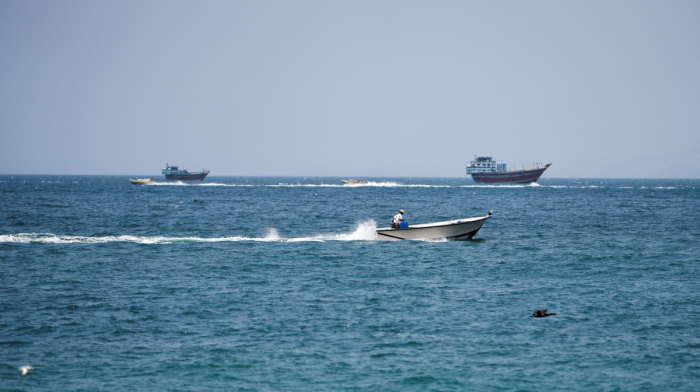
The urgency is clear. Around 61% of South Korea’s oil imports pass through the Strait of Hormuz, where transit has become increasingly uncertain amid tensions involving Iran.
Earlier this year, Seoul secured a deal for 24 million barrels of crude from the United Arab Emirates, but officials are now focused on building more durable, long-term arrangements that reduce exposure to a single corridor.
Measures at home point to the same concern. Authorities have called on households and businesses to cut energy use, signalling that the government is preparing for tighter supply and possible price increases rather than treating the disruption as temporary.
The stakes extend beyond South Korea. The Strait of Hormuz has long carried roughly 20% of global oil trade, and new transit rules introduced by Iran, which classify countries as neutral, friendly or hostile, have added a further layer of unpredictability.
The possibility that certain states could face restrictions has accelerated the search for alternatives.
Japan is moving in a similar direction. The Japanese company INPEX has stakes in major Caspian projects, including the Kashagan oil field, producing about 430,000 barrels per day, and Azerbaijan’s ACG field, with output of around 350,000 barrels per day.
Oil from these fields is comparable in quality to Middle Eastern grades, making substitution technically feasible.
What complicates the picture is distance. Shipments routed via the Red Sea and the Mediterranean, bypassing the Cape of Good Hope, can take between 25 and 55 days, compared with about 20 days through the Strait of Hormuz.
The longer journey raises transport costs and introduces additional uncertainty into already strained supply chains.
Japan is also considering increasing imports from the U.S. and exploring supplies from South America.
In 2025, the U.S. accounted for 3.8% of Japan’s crude imports, making it its largest supplier outside the Middle East, though still far from replacing the region’s role.













What is your opinion on this topic?
Leave the first comment