Kazakhstan’s IT exports have reached $700 million, highlighting the accelerating development of the country’s digital economy and its growing integration into global technology markets.
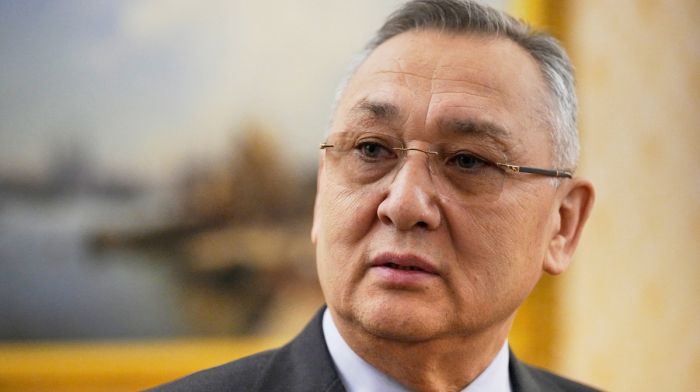
The figures were announced by Zhaslan Madiyev, Deputy Prime Minister and Minister of Digital Development, Innovation and Aerospace Industry, at a press conference reviewing the ministry's performance over the past year.
The export growth is closely linked to the expansion of Astana Hub, the country’s main technology ecosystem, which currently brings together around 2,000 IT companies. In 2025, the hub’s network expanded to 20 regional platforms across Kazakhstan, alongside four international hubs operating abroad.
This infrastructure has become a key gateway for Kazakh technology companies seeking access to foreign markets. Through these international platforms, more than 100 domestic start-ups have already entered overseas markets, translating technological capacity into export revenues.
According to Madiyev, the financial performance of the sector continues to improve alongside export growth. “Today, IT exports and the gross revenue of Astana Hub residents are showing solid growth,” he said.
“We expect Astana Hub residents to generate around 800 billion tenge this year, which is equivalent to $1.6–1.7 billion.” On this basis, he added, Kazakhstan now expects its IT exports to reach $1 billion, exceeding the original timeline set by the head of state, who had defined 2026 as the target year. “We anticipate that this indicator will be achieved ahead of schedule,” Madiyev noted.
The broader digital ecosystem has also begun to produce companies of global significance. Against this backdrop, Kazakhstan has seen the emergence of its first domestic technology unicorn, Higgsfield AI, valued at over $1 billion.
The company specialises in generative video models and has attracted interest from major international players, including Meta, which explored the possibility of an acquisition. The developers ultimately chose to retain independence and continue scaling the project from Kazakhstan.
These developments are underpinned by what the authorities describe as a systematic state policy in digitalisation and artificial intelligence. A key milestone was the adoption of the region’s first dedicated law on artificial intelligence.
The legislation introduces requirements for algorithm transparency, strengthens the protection of citizens’ rights and regulates the use of AI in sensitive areas, including public administration, education, healthcare and social policy. The framework is intended to ensure that rapid technological adoption is matched by institutional safeguards.
Kazakhstan’s progress is increasingly reflected in international rankings. Over the past year, the country has strengthened its position globally, ranking 24th in the UN E-Government Development Index and placing among the top ten countries worldwide for online public services. These indicators point to a relatively high level of digital maturity and an ability to implement technology-driven solutions at scale across the public sector.
The government’s next target is to increase IT services exports to $1 billion by 2026, positioning technology as a key driver of economic growth.




















What is your opinion on this topic?
Leave the first comment