U.S.-Israeli strikes on Iran: What we know so far
The United States and Israel have carried out large-scale strikes on Iranian leadership and military targets, with Iranian state media confirming t...
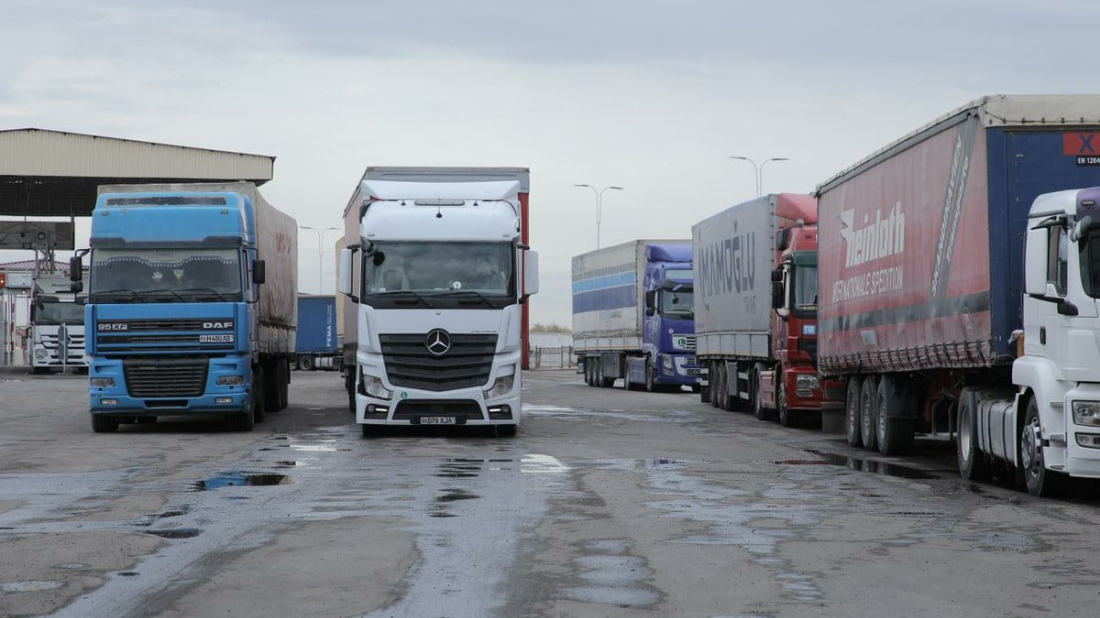
Uzbekistan revises entry and transit fees for foreign freight trucks, introducing new rates for EU, Azerbaijan, and others under the 2025 state budget law, effective January 1.
Uzbekistan has revised the entry and transit fees for foreign freight trucks, by introducing new procedures particularly for European Union (EU) and Azerbaijan. New rates are approved as a part of the Uzbekistan’s state budget law for 2025.
Starting from 1st January 2025, a transit cost for trucks from EU countries and Azerbaijan is defined as $80 for the stay in Uzbekistan up to 14 days and $280 if they are in transit for 14 days and more.
Fees have been significantly increased for Turkmenistan’s trucks and range depending on vehicle’s carrying capacity. So, for a vehicle with capacity up to 10 tons it costs $130, from 10 tons to 20 tons - $180 and for capacity over 20 tons - $250.
In addition, a fee for transporting goods from third countries and exporting goods from Uzbekistan by Turkmenistan carriers has been increased to $375. With regard to vehicle’s carrying capacity, transit fees for Tajikistan’s trucks range between $100 and $200. The lowest fee at $50 is applied for freight trucks from Afghanistan, which is considered as a sign of Uzbekistan’s growing relationship with the Taliban government.
In accordance with the principle of reciprocity, Iranian carriers will not be charged. Rates for other countries remain unchanged. Vehicles from Kazakhstan and Kyrgyzstan are charged a fee of $300, while all other countries - $400.

Follow the latest developments and global reaction after the U.S. and Israel launched “major combat operations” in Iran, prompting retaliation from Tehran.
Governments across the region responded swiftly to Israel’s strikes on Iran, closing airspace, issuing travel advisories and activating contingency plans amid fears of escalation.
Ayatollah Alireza Arafi has moved into a pivotal constitutional role following the death of Supreme Leader Ayatollah Ali Khamenei, becoming the clerical member of Iran’s temporary leadership council under Article 111 of the Constitution of the Islamic Republic of Iran.
A senior Iranian official has warned Israel to “prepare for what is coming”, insisting that Tehran’s response to the latest escalation in the Middle East will be made openly and without limits.
Ayatollah Ali Khamenei, Iran’s supreme leader for 36 years and the country’s highest political and religious authority, has died aged 86 following joint Israeli and U.S. strikes on his compound in Tehran.
The United States and Israel have carried out large-scale strikes on Iranian leadership and military targets, with Iranian state media confirming that Supreme Leader Ayatollah Ali Khamenei was killed.
Follow the latest developments and global reaction after the U.S. and Israel launched “major combat operations” in Iran, prompting retaliation from Tehran.
Ayatollah Alireza Arafi has moved into a pivotal constitutional role following the death of Supreme Leader Ayatollah Ali Khamenei, becoming the clerical member of Iran’s temporary leadership council under Article 111 of the Constitution of the Islamic Republic of Iran.
A number of senior Iranian figures have reportedly been killed in Saturday’s joint U.S.–Israeli airstrikes on Iran, according to Iranian state media, Israeli military statements and international reporting. Some of the details remain unverified. .
The death of Iran’s Supreme Leader Ayatollah Ali Khamenei has triggered one of the most significant political processes in the Islamic Republic: the selection of a new Supreme Leader.
You can download the AnewZ application from Play Store and the App Store.
What is your opinion on this topic?
Leave the first comment