United Nations Secretary-General António Guterres announced on Thursday that the latest discussions on Cyprus were "constructive" and that progress had been made on several initiatives.
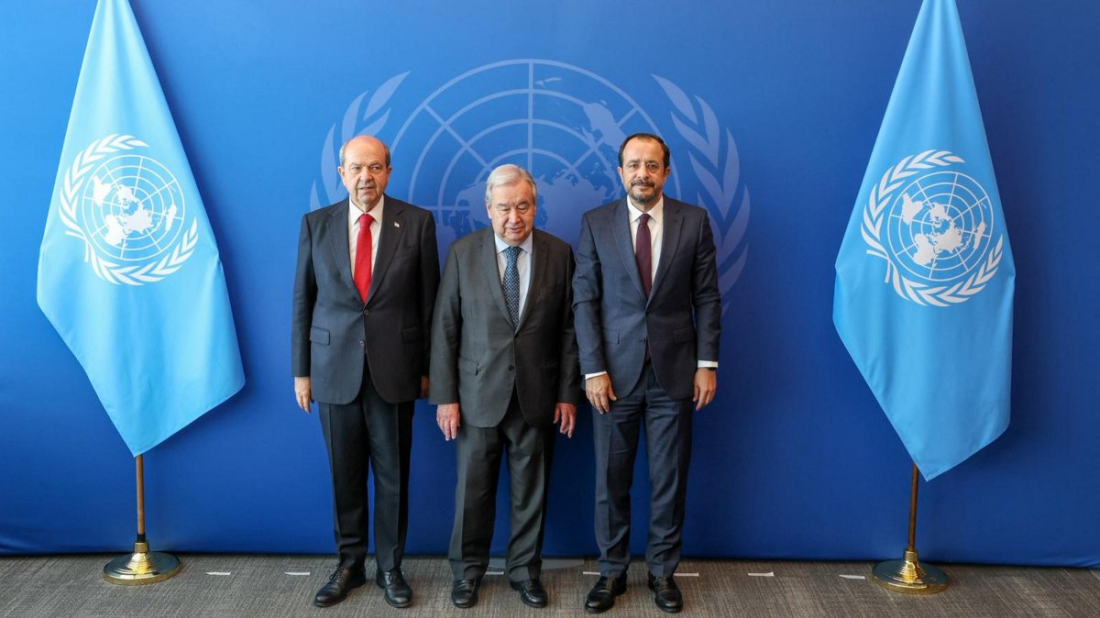
Guterres was speaking to reporters after hosting Greek Cypriot leader Nikos Christodoulides and Turkish Cypriot leader Ersin Tatar at the UN Headquarters in New York.
“Today’s discussions were constructive. Both leaders reviewed the progress on the six initiatives they agreed to in March to build trust,” he said.
Out of these six initiatives, four have been achieved: the creation of a technical committee on youth, initiatives on the environment and climate change, restoration of cemeteries, and an agreement on demining that will be closed once the final technical details are established.
“And discussions will continue on the remaining two,” the UN chief added, referring to the opening of four crossing points on the divided island and solar energy in the buffer zone.
In addition, the leaders reached a common understanding on new initiatives, including a consultative body for civil society engagement, exchanging cultural artifacts, improving air quality monitoring, and addressing microplastic pollution.
“It is critical to implement these initiatives – all of them – as soon as possible for the benefit of all Cypriots,” Guterres said.
The Secretary-General also confirmed that he will meet both leaders again during the UN General Assembly’s high‑level week in September. Another informal meeting in the same format is planned later this year.
“There’s a long road ahead. And it is important to think about what the future can mean – for all Cypriots,” he said.
“But these steps clearly demonstrate a commitment to continuing a dialogue on the way forward and working on initiatives that benefit all Cypriots,” he added.
Turkish Cypriot leader Ersin Tatar stressed Thursday that formal negotiations on the Cyprus issue would not resume unless the sovereign equality and international status of Turkish Cypriots are recognized.
He ruled out the possibility of a federation-based solution for Cyprus.
“We will never compromise our sovereignty. Any agreement must be founded on the principle of equal sovereignty between two separate states,” Tatar told reporters in New York.
The Turkish Republic of Northern Cyprus (TRNC), situated in the northern part of the island, is recognized only by Türkiye, which serves as a guarantor state in efforts to resolve the Cyprus issue.
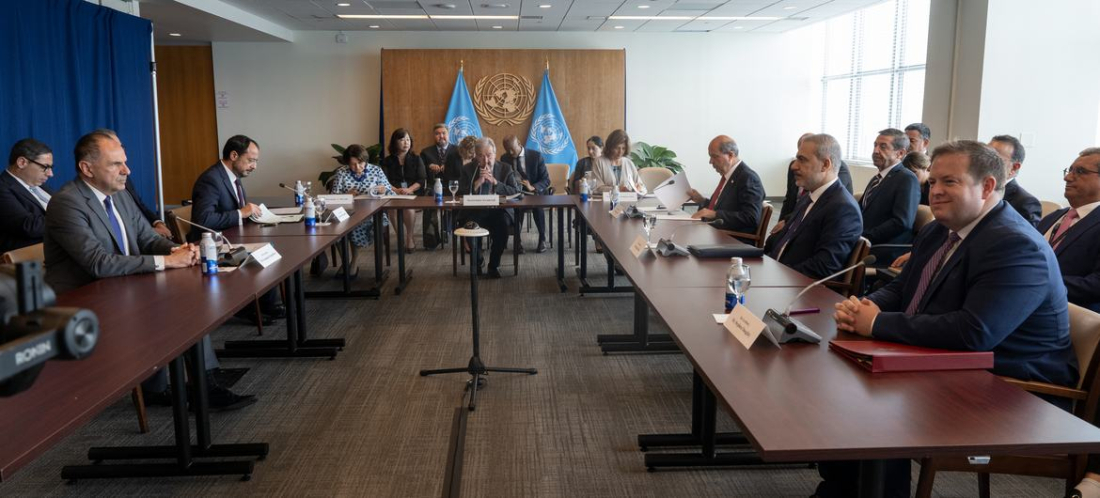
Türkiye's Foreign Minister Hakan Fidan, Greek Cypriot leader Nikos Christodoulides, the Foreign Minister of Greece, George Gerapettis and the U.K. Minister of State for Europe, North America and Overseas Territories, Stephen Doughty, also attended the meeting.
Greece and the U.K. are guarantor states for the the Republic of Cyprus in the process.
The UN has pushed for negotiations towards a settlement of the issues which led to the division of the island, with the Security Council authorising a UN peacekeeping force in 1964.
In the absence of a permanent agreement, the force remains on the island to supervise ceasefire lines, a buffer zone and to support humanitarian activities.
The United Nations has been putting efforts towards a comprehensive and mutually acceptable settlement to the Cyprus issue, supporting dialogue between Greek Cypriot and Turkish Cypriot leaders.













What is your opinion on this topic?
Leave the first comment