Iran's President Massoud Pezeshkian has begun a two day visit to Kazakhstan, with officials from both sides describing the trip as an opportunity to advance cooperation in trade, transport, industry, mining and cultural exchanges.
A business forum in Astana and a cultural exhibition are part of the programme. The visit follows Iranian Foreign Minister Abbas Araghchi's meetings in Azerbaijan earlier in the week, which focused on maintaining dialogue between the two neighbours.
Speaking to AnewZ, Zaur Gasimov, Professor at the Turkish-German University, said the trip reflects Iran's intention to broaden its engagement across Central Asia at a time when several regional partnerships are evolving. He noted that Iran's deeper Central Asian ties have traditionally been with states such as Uzbekistan and Tajikistan, but that Tehran is now giving additional attention to Kazakhstan.
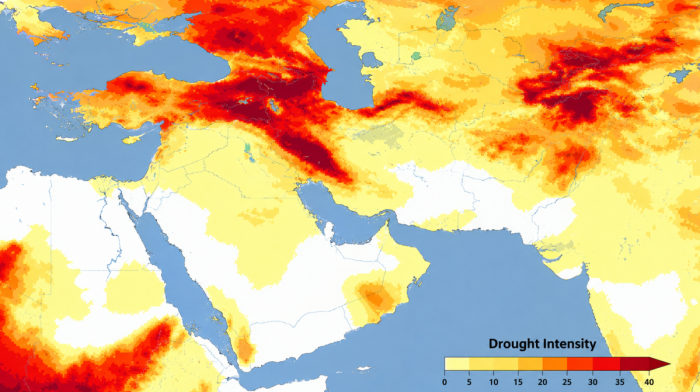
"Iran is about to diversify its foreign policy to engage itself wherever that works," he said. "The country is economically and politically isolated, dealing with a financial and ecological crisis, so cooperation with Kazakhstan carries significance."
Economic considerations form part of the discussion. Kazakhstan is the largest economy in Central Asia, and Iranian officials have signalled interest in attracting investment and expanding bilateral trade. Gasimov also noted that Kazakhstan has shown interest in a range of foreign technologies, including some developed in Iran.
Transport and connectivity form another major element. Kazakhstan has been exploring multiple export routes as part of its wider logistics strategy, including links to the South Caucasus, Türkiye and Iran. Access to southern corridors through Iranian ports offers an alternative to northern routes that rely on Russian infrastructure. Gasimov said this serves the diversification goals of both sides but does not indicate the emergence of a formal strategic partnership. "It is important for diversification, but it will never be a close strategic cooperation," he said.
Iranian statements about the visit highlight plans to deepen cooperation across industrial sectors and to expand trade routes linking Iran with Central Asia. Kazakh officials have placed similar emphasis on connectivity and infrastructure, citing the need for stable and predictable transport channels.
Araghchi's earlier visit to Baku also features in this broader diplomatic moment. Gasimov said the meetings in Azerbaijan helped maintain political dialogue after a period of strained relations in 2022 and 2023. He said officials in both countries have shown interest in lowering tensions and keeping communication channels open. "There is a political interaction, a political dialogue," he said. "The countries have different interests, but the consensus is the interest in stable dialogue."
Taken together, the visits to Azerbaijan and Kazakhstan form part of Iran's current outreach across its northern neighbourhood. The outcomes will depend on how the agreements in Astana are implemented and whether planned economic and transport projects progress in the coming months.










What is your opinion on this topic?
Leave the first comment