Tajikistan’s President Emomali Rahmon has held an emergency meeting with the country’s security leadership following the death of five people at the Tajik Afghan border.
The escalation of tension in the border areas over recent days has forced both Dushanbe and Beijing to react quickly, while Chinese authorities have called on their citizens to leave the frontier zone immediately.
Five people who were killed were Chinese nationals with an unspecifed number of people sustaining injuries.
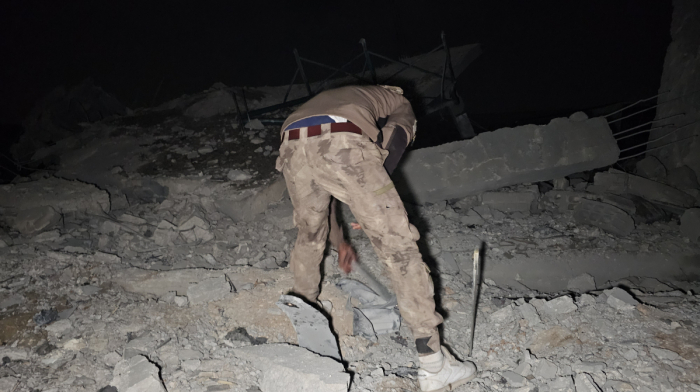
Within a week Tajikistan witnessed two major shootings originating from Afghan territory. On 30 November gunmen struck again in the Shodak area of Darvaz district where two more Chinese citizens were killed and two injured.
Several days earlier, on 26 November, 3 Chinese nationals were killed during an assault on a gold processing facility in the Shamsiddin Shohin district, where attackers used a drone, grenades and firearms.
Emomali Rahmon condemned what he described as unlawful and provocative actions by Afghan citizens and instructed security agencies to take immediate measures to stabilise the situation and prevent any further incidents.
The meeting with security officials focused on tightening border protection and responding to threats emanating from Afghan territory.
Dushanbe stressed that Kabul must curb extremist groups launching incursions into Tajikistan. Afghan officials expressed regret and promised cooperation and information sharing, while acknowledging de facto that the authorities still do not control the whole country following their rise to power in 2021.
In Beijing the wave of attacks prompted serious concern. Chinese authorities ordered their nationals to leave Tajikistan’s border districts without delay.
This decision came after the number of Chinese citizens killed in the recent attacks reached 5. Although the motives behind the assaults remain unclear, Afghan Foreign Ministry spokesman Hafiz Zia Ahmad Takal stated that the perpetrators are elements seeking to provoke chaos and instability in the region.
The situation has become an unexpected challenge for China which maintains close ties with Tajikistan and holds regular contacts with Afghan leaders.
China attaches great importance to regional security because militants from Afghanistan have in the past attempted to infiltrate Xinjiang where the local population is predominantly Muslim.
Chinese border forces have repeatedly prevented such attempts. In recent years Beijing has strengthened cooperation with Dushanbe with both countries agreeing to conduct joint counter terror exercises every two years.
A strategic outpost was also built at the junction of the Chinese, Tajik and Afghan borders in the Wakhan Corridor in order to prevent militants from crossing into China or Tajikistan.
China also views Afghanistan as a strategically significant economic partner. In 2023 Beijing became the country’s third largest import source providing approximately 15% of its imported goods.
Beyond trade, China is interested in Afghanistan’s mineral wealth particularly copper reserves estimated at more than 4 billion tonnes.
In 2007 Chinese companies Jiangxi Copper and Metallurgical Corporation of China won a tender worth $3 billion to develop a copper deposit in Logar province.
The plan included building a railway and a power station although these projects have not yet materialised. Despite the two countries sharing a 91km border a direct road connection has not been constructed although the intention has been voiced repeatedly with the proposed route running through the 300km Wakhan Corridor.
Regular consultations between Chinese and Afghan officials since 2021 have not prevented the recent escalation of violence.
Kabul considers China one of its most important economic and political partners and Beijing was the first country to accept credentials from an ambassador appointed by the Taliban.
Yet the current attacks highlight the fragility of regional security and show that threats from uncontrollable armed groups remain a reality.
For Tajikistan the incidents serve as a reminder that danger from the southern frontier persists. For China they signal the need to reassess the safety of its citizens working in Central Asia.
And for the wider region the events underscore once again that instability in Afghanistan directly affects the security of neighbouring states.
















What is your opinion on this topic?
Leave the first comment