Ukraine denies Russian capture of Pokrovsk amid intense fighting
Ukraine has rejected Russian claims that its forces have captured the city of Pokrovsk in eastern Donetsk, stating that Ukrainian troops continue to h...
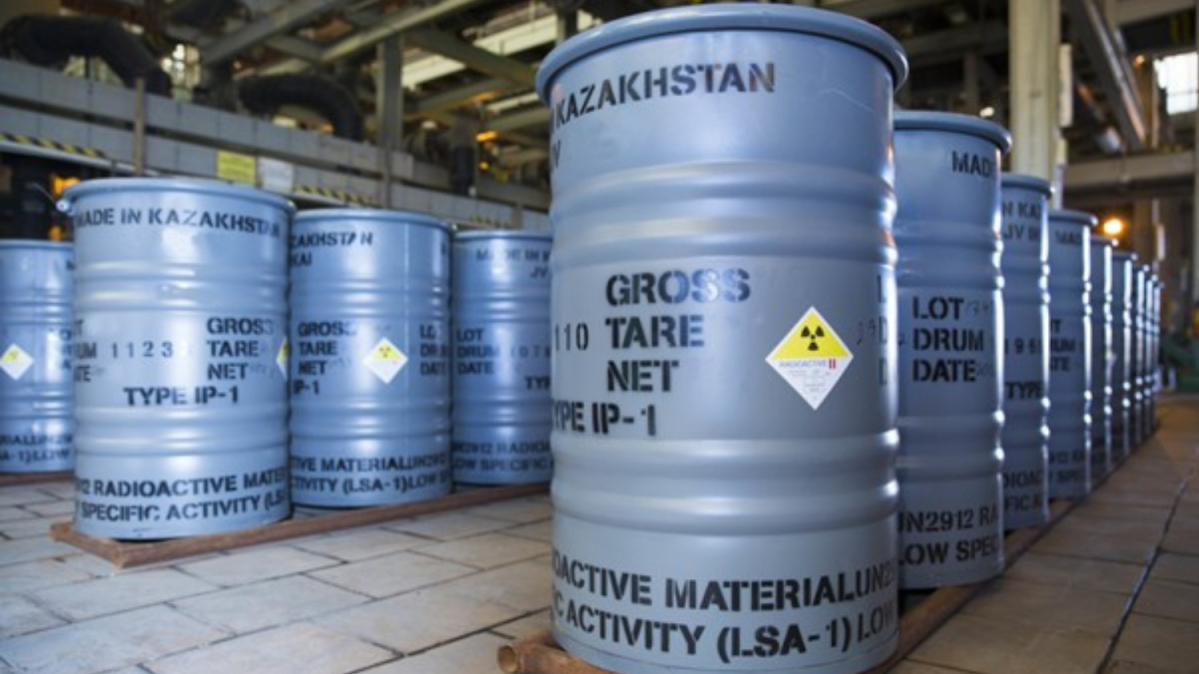
Deputy Chairman of Kazakhstan’s Agency for Nuclear Energy Gumar Sergazin has said that Kazakhstan stands out on the global uranium market, with reserves reported to last for another 60 years.
The country has accumulated around one million tonnes of natural uranium. Moreover, there remain unexplored territories with Kazakhstan holding approximately 14% of the world’s uranium reserves and supplying around 40% of global production.
Last year alone, the country produced more than 23,000 tonnes of uranium, with production expected to rise to 25,000–26,500 tonnes in 2025.
At the same time, Kazakhstan is negotiating uranium supplies with Finland for two nuclear power plants currently under construction.
Once an agreement is reached, nuclear fuel will be shipped to the country. The United States currently receives roughly a quarter of its uranium imports from Kazakhstan, and is prepared to expand its supplies.
In view of the anticipated global uranium shortage by 2030, Kazakhstan has the potential to become a key player, effectively replacing Russian uranium and strengthening its influence in the global market.
Beyond its production scale, Kazakhstan has a technological advantage, with a significant portion of its uranium deposits developed through in-situ leaching, a method that reduces production costs and minimises environmental impact. This allows the country to remain competitive and offer the market high-quality raw material under attractive conditions.
However, Kazakhstan’s success depends on a combination of political and commercial factors. Uranium exports require careful logistics, secure supply chains, and adherence to international standards.
The Central Asian country is also working to reduce reliance on transit through Russia by developing alternative routes to reach western markets.

A four-part docuseries executive produced by Curtis '50 cent' Jackson and directed by Alexandria Stapleton on Netflix is at the centre of controversy online.
Russia has claimed a decisive breakthrough in the nearly four-year war, with the Kremlin announcing the total capture of the key logistics hub of Pokrovsk just hours before United States mediators were due to arrive in Moscow.
Uzbekistan has reopened its border with Afghanistan for the first time since 2021, the country’s Chamber of Commerce and Industry announced on Tuesday.
Belgian police have raided the EU’s diplomatic service and the College of Europe as part of a corruption probe into an EU-funded training academy for diplomats, detaining three suspects and searching multiple premises, according to Politico.
Venezuelan President Nicolás Maduro on Monday pledged his “absolute loyalty” to the Venezuelan people as tensions continue to rise with the administration of U.S. President Donald Trump.
The European Commission’s decision to grant the Black Sea Submarine Cable project the status of a Project of Mutual Interest is more than a technical upgrade—it is a geopolitical message.
Uzbekistan has launched an urgent environmental reform package after recent air-quality data revealed serious pollution problems, particularly in Tashkent
Iran’s Foreign Minister Abbas Araghchi said the Islamic Republic has closed its security gaps after Israel and U.S. repeatedly bombed the country in June.
Afghanistan’s Foreign Minister Amir Khan Muttaqi spoke to his Tajikistani counterpart Sirajuddin Muhriddin regarding the recent security crisis along their shared border.
The Shanghai Cooperation Organization (SCO) has launched a five-day joint anti-terrorism exercise codenamed Sahand-2025 in Iran’s northwest province of East Azarbaijan under the command of the Islamic Revolutionary Guards Corps (IRGC).
You can download the AnewZ application from Play Store and the App Store.
What is your opinion on this topic?
Leave the first comment