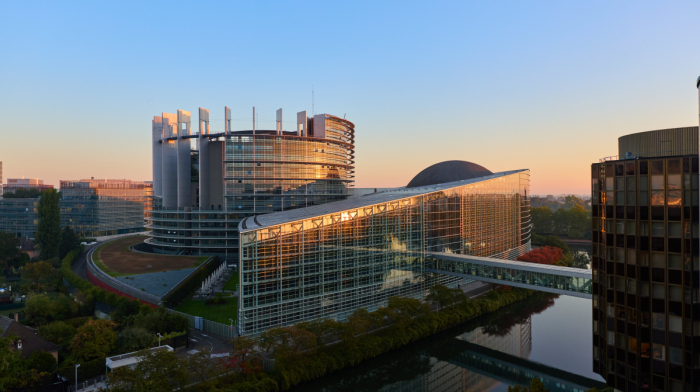
Brussels has become the stage for a pivotal shift in Central Asia’s energy policy, with a focus on sustainable development, access to investment, and geopolitical reorientation towards Europe.
Kazakhstan has solidified its role as a key partner of the European Union in the field of sustainable energy, signing a series of strategically important agreements with the European Investment Bank (EIB) and the European Bank for Reconstruction and Development (EBRD) in Brussels.
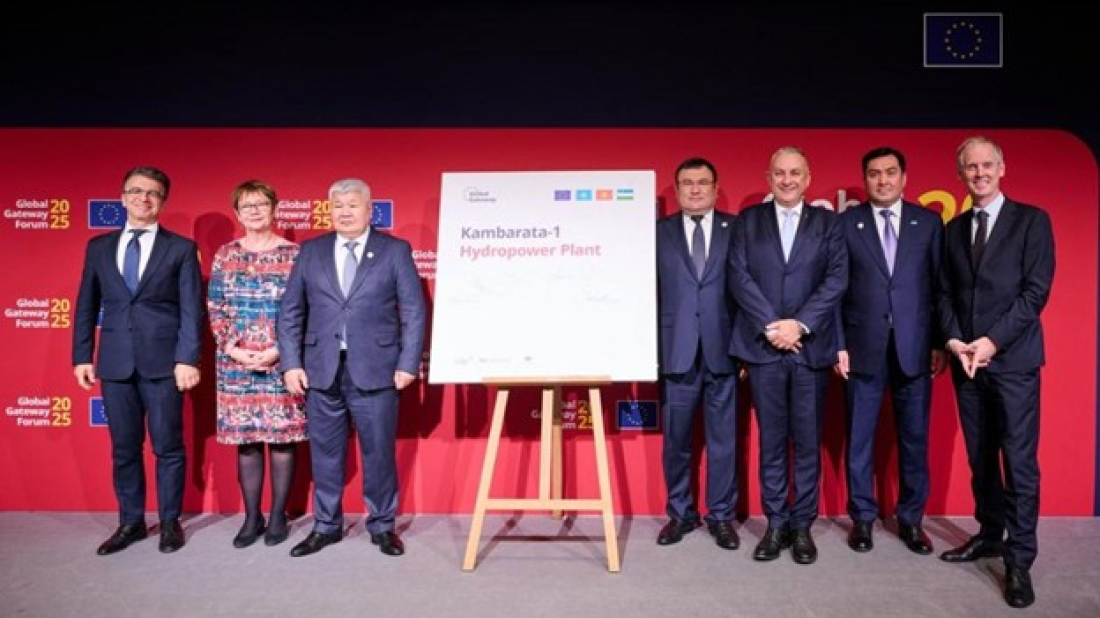
The agreements which were signed during Global Gateway Forum, are expected to unlock access to investments in renewable energy projects, grid modernisation, and the construction of major hydroelectric power plants, including the large-scale Kambar-Ata-1 HPP in Kyrgyzstan.
Kazakhstan’s Minister of Energy, Erlan Akkenzhenov, held a series of meetings with European leaders and representatives of international financial institutions, marking a step forward in aligning Astana’s energy agenda with that of Brussels.
The memoranda signed reflect the EU’s growing interest in diversifying sources of critical raw materials and energy infrastructure, particularly as geopolitical dynamics shift across the region.
At the heart of the energy cooperation lies the Kambar-Ata-1 hydroelectric project on the Naryn River, estimated to cost of $5-6 billion and expected to take at least 15 years to complete.
The European Union has pledged $2.4 billion to support the initiative, which involves Kyrgyzstan, Uzbekistan and Kazakhstan.
Bishkek has signed financing agreements worth $1 billion with the EIB and the EBRD - including memoranda of understanding for $500 million from each bank. Under a tripartite agreement reached in early 2023, Kazakhstan (33%), Kyrgyzstan (34%) and Uzbekistan (33%) will co-own the project company responsible for construction.
Upon completion, full ownership of the dam and power plant will be transferred to Kyrgyzstan.
The EU views the project as part of its broader Global Gateway strategy, designed to deepen trade and investment ties with Central Asian nations.
Presented as an alternative to China’s Belt and Road Initiative, Global Gateway encompasses key areas such as transport, raw materials, digital connectivity, water management and energy.
A central pillar of the initiative is the Trans-Caspian Transport Corridor - also known as the Middle Corridor - a 6,500 km trade route linking China to Europe via Central Asia and the Caucasus, bypassing Russia.
In addition, the EBRD is preparing a separate portfolio of projects worth €7-8 billion, to be implemented by 2027.
These investments will target strategically important sectors such as critical mineral extraction and renewable energy development
Kazakhstan and the EU are also working to implement a 2025-2026 roadmap within the framework of their Memorandum of Understanding on critical raw materials, batteries and green hydrogen.
The document formalises a shared commitment to sustainable, technology-driven energy development, aligned with the global green transition.
This growing energy partnership between the EU and Kazakhstan highlights not only the region’s investment potential but also its strategic importance in an evolving geopolitical landscape.
As the war in Ukraine reshapes regional dynamics and China expands its economic footprint, Brussels is moving to strengthen its presence in Central Asia - a region that is becoming increasingly central to global supply chains for both energy and resources.












What is your opinion on this topic?
Leave the first comment