




23:25 CET
Nigeria confirms Ebola case in Abuja
Nigerian health authorities have confirmed a case of Ebola disease in the Federal Capital Territory (FCT)...


The AnewZ Opinion section provides a platform for independent voices to share expert perspectives on global and regional issues. The views expressed are solely those of the authors and do not represent the official position of AnewZ
Dario Amodei, the chief executive of Anthropic, has articulated one of the technology industry's most ambitious visions for artificial intelligence.
In his essay “Machines of Loving Grace”, he argued that powerful AI could compress 50 to 100 years of biological progress into five to ten years, accelerate the treatment of disease and help reduce poverty and inequality.
It is an inspiring prospect, and it is backed by genuine technical achievement. Anthropic's Claude models remain among the most capable commercial AI systems in the world.
The ambition is also financial. Anthropic is preparing for a planned public offering, and reports suggest it may present investors with a total addressable market exceeding $30 trillion. That figure is not a revenue forecast; it is the theoretical annual opportunity if AI captured every relevant category of work. Even with that qualification, it reflects the extraordinary scale of the company's aspirations.
Yet the more capable these systems become, the more important another question becomes: who decides how they operate? Recent disputes over Claude Code, Anthropic's agentic coding tool, show why technical excellence and benevolent intent cannot substitute for accountable governance. The issue is not whether Anthropic is uniquely malign. It is whether any private company should be able to set the practical boundaries of privacy, autonomy and public power largely through product design and internal policy.
For Pakistan and other developing countries, this is not a distant Silicon Valley debate. The rules being formed now will influence whether AI remains an open capability that countries can adapt to their own needs or becomes an essential infrastructure governed by a small number of foreign firms.
A cloud-based coding agent is not an offline utility. To produce useful results, Claude Code sends prompts and model outputs across the network and, depending on the task, may process source code and other project content. Anthropic's current documentation states this clearly. It also says that Claude Code sends operational usage metrics and, in some configurations, error reports. Users can disable non-essential telemetry, and the company says its usage metrics do not contain code, prompts or file paths.
That documented picture is more precise than the claim that Claude Code simply watches everything a user does. But it does not remove the underlying concern. Agentic tools operate close to sensitive files, credentials, repositories and production systems. Even small experiments in data collection or account verification can create significant risks if users are not told exactly what is being transmitted, for what purpose and for how long.
That problem became visible in July 2026, when China's National Vulnerability Database alleged that versions of Claude Code released between April and June contained “security backdoor” risks and could transmit information such as a user's location and identity without consent. The allegation should not be treated as an independently established finding of deliberate surveillance. Reporting linked the disputed behaviour to time-zone and domain signals, while an Anthropic engineer said it was part of an experiment designed to detect account abuse, unauthorised resellers and model distillation, and that it would be rolled back.
The distinction matters. A security experiment is not the same as a covert spying programme. Yet a legitimate anti-abuse objective does not eliminate the duty to minimise data collection and communicate changes before deployment. If a vendor can introduce additional signals into a tool that operates inside a developer's working environment, users should not have to discover them through reverse engineering or a government warning.
The governance lesson is therefore broader than the disputed Chinese description. Data practices must be explicit, proportionate and independently testable. Experimental monitoring should be announced, limited and reversible. Trust cannot rest entirely on the supplier's assurance that its purpose is protective.
The same need for precision applies to Claude Code's permission system. The tool includes a deliberately named “--dangerously-skip-permissions” option that disables approval prompts. This is not a hidden default: the user must activate it, and Anthropic itself warns that it is unsafe in most situations.
In March 2026, Anthropic introduced auto mode as a middle path between constant manual approval and unrestricted execution. The mode uses classifiers to decide which operations may proceed and which should be blocked or referred to the user. By August, it had become the built-in starting mode for qualifying Pro, Max and Team sessions. Enterprise and API-key sessions generally remained in manual mode, and users or administrators could switch modes or disable auto mode. The software also presents a notice when the built-in default first takes effect.
These safeguards complicate the argument that Anthropic simply removed user control. Nevertheless, defaults matter. An agent capable of editing files, running commands and interacting with external systems is no ordinary application. In auto mode, a vendor-designed classifier often stands in for human approval. Permission rules are enforced at the tool layer rather than changed by conversational prompting—a sensible defence against prompt injection, but also a reminder that operational authority is embedded in the company's architecture.
The appropriate question is not whether an AI agent should ever act autonomously. Useful agents must be able to complete routine, low-risk tasks without demanding a click at every step. The question is whether the user can understand, inspect and reverse that delegation. High-impact actions should remain subject to clear review points. Decision logs should be accessible. Emergency suspension should be straightforward. Consent must be more than a setting whose consequences become apparent only after something goes wrong.
Anthropic's dispute with the United States Department of Defense exposes an even deeper governance paradox. The Pentagon sought to use Claude for all lawful purposes. Anthropic refused to remove safeguards intended to prevent its models from being used for fully autonomous weapons and mass domestic surveillance, placing a contract worth up to $200 million at risk. The Pentagon said it had no intention of using the technology for either purpose but objected to a private company imposing its own limits on government operations.
The confrontation cannot fairly be reduced to a company trying to control the military. Anthropic's stated objections concerned lethal decision-making by systems it considered unreliable and surveillance practices that could exceed the spirit of constitutional protections. In August, a federal judge ruled that the Pentagon had illegally punished the company for criticising the government and described the decision against it as “illegal and baseless”. As of early September, however, a senior defence official said Anthropic was still regarded as a supply-chain risk.
This episode is uncomfortable precisely because both sides raise legitimate concerns. A profit-seeking vendor should not acquire an informal veto over democratically authorised national-security policy. But a government should not be able to compel a supplier to strip away safeguards from technology that may be unreliable in life-or-death decisions. Neither corporate conscience nor executive authority is a sufficient governance system on its own.
The answer must be transparent public rules: legislation defining prohibited uses, procurement contracts that specify audit and liability requirements, independent testing, and democratic oversight capable of constraining both the state and the company. Private terms of service cannot become a substitute for law, but neither should the phrase “lawful use” end the debate about what powerful AI ought to be allowed to do.
Anthropic's growing political influence adds another layer. Federal disclosures show that the company spent more than $3.5 million on lobbying in the first half of 2026, already exceeding its total for the whole of 2025. It also committed a combined $40 million to Public First Action, a political organisation advocating stronger action on major AI risks. Anthropic said the funds could not be used to influence the election of individual candidates.
There is nothing inherently improper about a company explaining its technology to lawmakers or supporting regulation. Frontier AI is difficult to govern, and technical expertise is essential. But the firms with the deepest expertise are also those with the greatest commercial interest in the outcome. When the same companies build the systems, define the risks and help write the compliance standards, the possibility of regulatory capture cannot be ignored.
Strict safety rules may be necessary. They can also entrench incumbents if the cost of compliance is manageable only for companies with enormous capital, computing infrastructure and legal teams. A standard can protect the public and still become a barrier to competition. Regulators must therefore assess safety and market concentration together rather than treating them as separate questions.
For Pakistan and countries in a similar position, the choice should not be between uncritical dependence on foreign AI systems and blanket technological restriction. Nor should governments simply import rules written in Washington, Brussels or Beijing. They need the capacity to evaluate models, contracts and data flows for themselves.
Public institutions procuring AI should require clear disclosure of telemetry, retention periods, model-training practices and subcontractors. Contracts should preserve audit rights, incident reporting, data portability and the ability to suspend a system when risks emerge. Sensitive public data should be classified before it reaches an AI provider, and responsibility for an automated decision should remain identifiable even when several vendors are involved.
Developing countries should also insist on interoperability and genuine choice. Dependence on a single model provider, cloud platform or national ecosystem creates strategic vulnerability. Local universities, regulators and technology firms need access to testing infrastructure and technical talent so that governance is based on evidence rather than diplomatic pressure or corporate marketing.
Most importantly, model safety must not be confused with corporate authority. A company can design valuable safeguards without receiving a democratic mandate. A government can demand access to advanced technology without acquiring unlimited power to use it. The purpose of regulation is to place both forms of power inside accountable institutions.
The appropriate response is not to reject Anthropic's technology or dismiss Amodei's optimism. AI may indeed accelerate science, improve health and expand human capability. The problem begins when an inspiring mission is treated as sufficient justification for decisions that affect privacy, competition and public authority.
Technical achievement does not confer democratic legitimacy. Good intentions do not remove conflicts of interest. And safety cannot depend solely on the judgement of the company that stands to profit from defining it.
The answer to corporate overreach is not state overreach. It is accountable power: transparent rules, meaningful user choice, independent scrutiny and a voice for countries that will live with standards they did not write.
Qaiser Nawab is a technology policy analyst focused on AI governance, corporate power and the institutional architecture of emerging technologies. He is Chairman of the Belt and Road Initiative for Sustainable Development (BRISD) and can be reached at qaisernawab098@gmail.com.

Nigerian health authorities have confirmed a case of Ebola disease in the Federal Capital Territory (FCT)...
China has lodged a formal diplomatic protest with the UK after British border officials allegedly subjected Chinese travellers to lengthy questioni...
Member states of the Shanghai Cooperation Organisation (SCO) prevented 273 terrorist attacks and more than 3,000 crimes linked to terrorism, separa...
U.S. President Donald Trump has criticised Ukrainian President Volodymyr Zelenskyy for continuing to target Russia's energy infrastructure, while Russian strikes on Kyiv overnight killed at least one person and damaged a metro station.

Ukrainian President Volodymyr Zelenskyy has arrived in Norway for talks about the Russia-Ukraine war. He is expected to meet with U.S. President Donald Trump's Special Envoy Steve Witkoff, who arrived in Oslo earlier. Witkoff will also meet European officials.

French President Emmanuel Macron has condemned the violence, looting and vandalism that erupted during cost-of-living protests across France. Prime Minister Sébastien Lecornu held crisis talks on Monday, calling for partial curfews and raising the possibility of a state of emergency.

An oil tanker caught fire after striking a naval mine in the southern part of the Strait of Hormuz, Iran’s Islamic Revolutionary Guard Corps (IRGC) Navy said late Sunday.
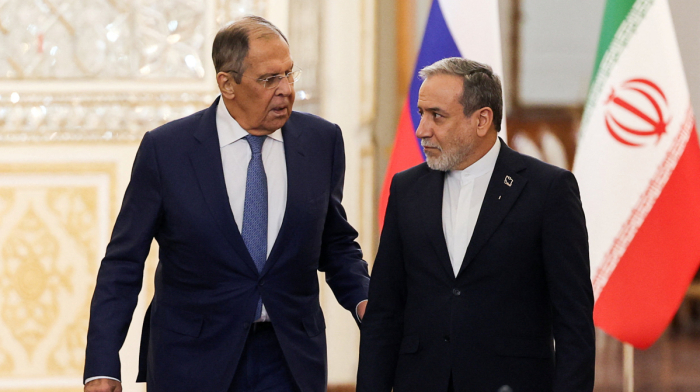
Iranian Foreign Minister Abbas Araghchi said regional issues should be resolved through diplomacy and blamed the United States for insecurity and tensions in the Strait of Hormuz, speaking at a joint news conference with Russian Foreign Minister Sergey Lavrov on Monday.
Minilateralism has become an increasingly relevant form of diplomacy, especially with the shifting of the global order toward multipolarity and the rise of middle powers that seek ways to achieve their goals and resolve their specific issues in a more efficient manner.
From the Strait of Hormuz to the Caspian and Black Sea, the world’s energy, transport and digital networks are becoming strategic targets. Azerbaijan, Georgia and Türkiye have an opportunity — and a responsibility — to develop a new model of regional infrastructure security.
As geopolitical tensions threaten the world’s vital energy corridors, the Strait of Malacca is emerging as a critical vulnerability in the strategic rivalry between China and the United States. Could the next major disruption to global trade unfold in Asian waters?
Marine Le Pen benefits from a fragmented opposition. The consequences could reach beyond the presidency, into Ukraine, NATO and the commitments that hold European security together.
Wars rarely begin because everybody wants one. More often, governments misread intentions, underestimate their adversaries and convince themselves that escalation can still be controlled. That is the danger emerging around the Aegean and Eastern Mediterranean.
You can download the AnewZ application from Play Store and the App Store.




What is your opinion on this topic?
Leave the first comment