Strait of Hormuz reopened, Iran and U.S. say - Middle East conflict on 17 April
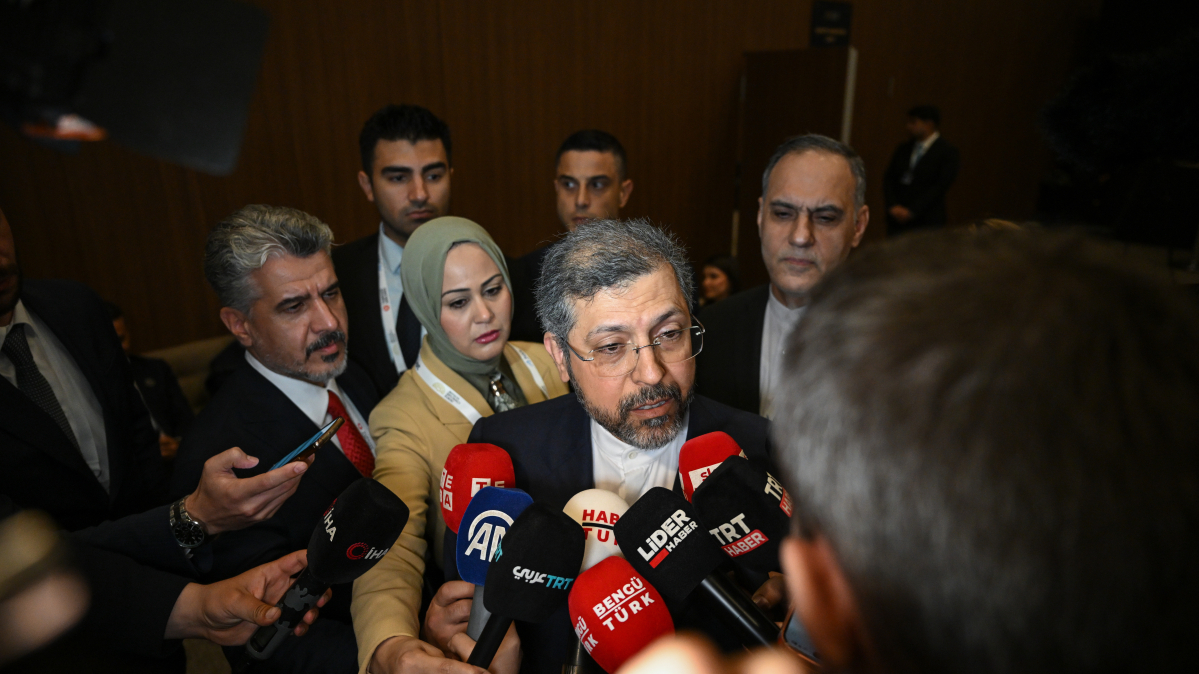
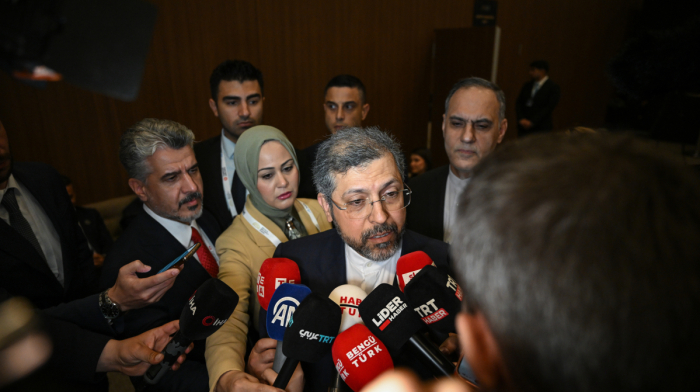
Iranian Deputy Foreign Minister Saeed Khatibzadeh speaking to media about the U.S.-Iran ceasefire and Strait of Hormuz, at the Antalya Diplomacy Forum (ADF) 2026, 17 April, 2026.
Iran reopened the Strait of Hormuz to commercial shipping on Friday (17 April) for the first time since the U.S. and Israel killed Iran's ex-Supreme Leader in air strikes, triggering the Middle East conflict, at the end of February. A U.S. blockade on Iranian ports, however, remains in force.
⦿ 19:50 GMT | UPDATE
Today's summary
The live blog is now closing. Thanks for joining us. Please find a wrap-up of today’s main events below.
Iran and the U.S. both said that the Strait of Hormuz was now open on Friday. The waterway is essential for global trade and has been effectively closed since the U.S. and Israel carried out strikes on Iran at the end of February. Logistics companies reacted cautiously to the development, with Danish shipping conglomerate Maersk saying advice it had received to avoid the sea passage hadn’t changed. Despite this, a group of around 20 ships were seen moving towards the exit of the Strait of Hormuz on Friday evening.
Lebanon’s President said he would not accept any peace deal with Israel that resulted in Lebanese territory being ceded. On Thursday (16 April), the leaders of Lebanon and Israel agreed to a 10-day ceasefire. But Israel has said it won’t withdraw from southern Lebanon during the ceasefire, while Iran-backed Lebanese political and militant group Hezbollah has insisted Lebanon has the “right to resist” Israeli troops’ continued presence in the country.
Despite the apparent reopening of the Strait of Hormuz, officials have warned about delays in energy output increasing following the recent disruption. Fatih Birol, Executive Director of the International Energy Agency, said that it may take up to two years for the Middle East’s energy yield to recover. Saudi Finance Minister Mohammed Al-Jadaan also cautioned that it may take certain countries longer to restore their production capabilities than others.
⦿ 19:23 GMT | UPDATE
Ukraine's President Zelenskyy calls for joint efforts to set up Hormuz mission
Reuters
Ukrainian President Volodymyr Zelenskyy called on Friday for joint efforts for an effective mission to ensure freedom of navigation in the Strait of Hormuz and said Kyiv's wartime experience in the Black Sea could help.
"Decisions made regarding Hormuz now will determine how other aggressive actors perceive the possibility of creating problems in other straits and on other fronts," Zelenskyy said in remarks to a video conference attended by 50 countries and chaired by France and Britain.
"We need to be as specific and clear as possible so that in six months we don't find ourselves in the same situation as in Gaza, where much still needs to be done."
"In Hormuz, there are security challenges that cannot be addressed by political decisions alone," he added, without elaborating.
Zelenskyy, whose remarks appeared on the Telegram messaging app, said that in the course of four years of war with Russia, Ukraine had already carried out a similar mission in the Black Sea.
"Russia also attempted to blockade our sea and we have experience in escorting merchant vessels, demining, defending against air attacks and the overall coordination of such operations," he said.
Ukraine, he said, had sent specialists throughout the Middle East to help countries benefit from its experience in defending against Russian drones, many designed in Iran.
"We can also contribute to maritime security," he said.
Ukraine has clinched security cooperation agreements with Saudi Arabia, Qatar and the United Arab Emirates and says it is In talks with Oman, Kuwait and Bahrain.
⦿ 18:43 GMT | UPDATE
Group of ships moving towards Strait of Hormuz exit
Reuters
A group of around 20 ships including container ships, bulk carriers and tankers was seen moving in the Gulf towards the exit via the Strait of Hormuz on Friday evening, ship tracking data showed.
Earlier, Iran’s Foreign Minister Abbas Araghchi and U.S. President Donald Trump said that the Strait of Hormuz had reopened.
⦿ 18:15 GMT | UPDATE
Crucial differences persist between Iran and U.S. on nuclear issues, senior Iranian official says
Reuters
Significant differences between Iran and the U.S. remain to reach a deal aimed at ending the war, a senior Iranian official told Reuters on Friday, adding that keeping the Strait of Hormuz open is "conditional on U.S. adherence to the terms of ceasefire".
The official, who spoke on condition of anonymity, said "no agreement has been reached on the details of the nuclear issues," and serious negotiations are required to overcome differences.
He said Tehran hoped that a preliminary agreement could be reached in the coming days with mediator Pakistan’s efforts, with the possibility of extending the ceasefire to "create space for more talks on lifting sanctions on Iran and securing compensation for war damages."
⦿ 17:30 GMT | UPDATE
Peace deal won't result in Lebanon giving up territory, Beirut's President says
Reuters
Lebanese President Joseph Aoun said on Friday that any future deal reached by the government would not cede any territory or undermine Lebanon's national rights, without saying whether he was referring to prospective talks with Israel.
The televised address was his first speech since the U.S. brokered a ceasefire to end fighting between Israel and armed group Hezbollah on Thursday. The text of the deal says Israel and Lebanon would hold direct talks to produce a "peace between the two countries".
⦿ 17:27 GMT | UPDATE
Iran will respond if U.S. blockade continues, Foreign Ministry Spokesperson says
Reuters
Speaking to State TV, an Iranian Foreign Ministry Spokesperson has said that Tehran will reciprocate if the U.S. continues to blockade Iranian ports.
Earlier, U.S. President Donald Trump said that the U.S. naval blockade would remain in place until a peace deal was reached in a post on social media website Truth Social.
⦿ 17:05 GMT | UPDATE
Top Saudi official warns of delays to oil producing countries increasing output
Reuters
Saudi Finance Minister Mohammed Al-Jadaan on Friday welcomed news that Iran would reopen the Strait of Hormuz, but warned that the situation in the Middle East remained very fragile.
Al-Jadaan, who chairs the International Monetary and Financial Committee, which advises the International Monetary Fund (IMF), said certain countries would be able to restore their production capabilities quickly, but others would need more time, depending on the extent of the damage they suffered.
The biggest challenge was not how much production of oil and natural gas could be ramped up, but whether insurers would feel comfortable backing shipments and other logistical questions, he said at a briefing during the IMF and World Bank spring meetings in Washington.
⦿ 16:32 GMT | UPDATE
UN Secretary General welcomes opening of Strait of Hormuz
X
UN Secretary General António Guterres has said he welcomes Iran's announcement that the Strait of Hormuz is now open for commercial vessels in a post on social media.
"This a step in the right direction," he wrote on X, and restated the need for the full restoration of free navigation in the waterway.
I welcome Iran’s announcements that the Strait of Hormuz is completely open for all commercial vessels for the remainder of the ceasefire.
This a step in the right direction.
The @UN position remains clear: we need the full restoration of international navigational rights &…
— António Guterres (@antonioguterres) April 17, 2026
⦿ 16:19 GMT | UPDATE
Container shipping firm Maersk says no change in advice to avoid Strait of Hormuz
Reuters
Danish logistics conglomerate Maersk said advice to avoid the Strait of Hormuz hadn't yet changed, despite the U.S. and Iran saying the sea passage was now open.
The company said that it had followed the guidance of security partners in the region and that the recommendation so far was to avoid the strait.
It added that any decision to transit the waterway would be based on risk assessments and close monitoring of the security situation in the region.
⦿ 16:11 GMT | UPDATE
U.S. to recover uranium from Iran, Trump says
Reuters
U.S. President Donald Trump said on Friday that Washington will enter Iran at a "leisurely pace" to recover its enriched uranium during a phone interview.
He added that no money would be exchanging hands as part of a peace deal with Iran.
⦿ 14:45 GMT | UPDATE
Trump says Iran agrees never to close the Strait of Hormuz again
Truth Social/@realDonaldTrump
U.S. President Donald Trump said Iran had agreed never to close the Strait of Hormuz again, adding that it would no longer be used “as a weapon against the world”.
⦿ 14:33 GMT | UPDATE
Trump: 'They (NATO) were useless when needed;
Truth Social/@realDonaldTrump
U.S. President Donald Trump said the situation in the Strait of Hormuz was “over” and claimed NATO had called to ask whether help was needed. He said he told the alliance “to stay away”, adding, “unless they just want to load up their ships with oil”, and described NATO as “useless when needed, a Paper Tiger”.
In a series of posts on his Truth Social account, he thanked Saudi Arabia, the United Arab Emirates, and Qatar for what he called their “great bravery and help”.
In another post, Trump said Iran, “with the help of the U.S.A.”, had removed or was removing “all sea mines”.
He added that the deal was “not tied, in any way, to Lebanon”, but said the U.S. would “Make Lebanon Great Again”.
Trump also thanked Pakistan and its "Great Prime Minister and Field Marshal," whom he referred to as "two fantastic people!!!"
⦿ 14:05 GMT | UPDATE
U.S. prohibits Israel from bombing Lebanon
Truth Social/@realDonaldTrump
U.S. President Donald Trump said the U.S. would take possession of all nuclear “dust” generated by what he called “our great B2 Bombers”, and added that “no money will exchange hands in any way, shape, or form”.
He said the arrangement was “in no way subject to Lebanon”, though he added the U.S. would work separately with Lebanon and deal with “the Hezbollah situation” in what he described as an “appropriate manner”.
Mr Trump also said Israel would not carry out further strikes in Lebanon, stating that Israel was “prohibited” from doing so by the U.S. He ended his message with: “Enough is enough!!! Thank you!”
⦿ 13:57 GMT | UPDATE
Iran says commercial ships can use Hormuz route with Guards’ approval, but military vessels not allowed
Reuters
A senior Iranian military official has said commercial vessels can pass through the Strait of Hormuz, but only along a designated route and with permission from the Revolutionary Guards’ naval forces, Reuters reports, citing Iranian state television.
The official further added that transit through the Strait will be through designated safe lanes, which Iran has deemed safe for maritime operations.
The report stated the official said military vessels are not allowed to pass through the strait, state television reported.
⦿ 13:28 GMT | UPDATE
Trump says Strait of Hormuz is fully open during ceasefire, confirming Iran's announcement
Truth Social/@realDonaldTrump
U.S. President Donald Trump has confirmed Iran’s announcement in a post on his Truth Social platform, saying the Strait of Hormuz is “fully open” and “ready for full passage.”
This came after Iran’s Foreign Minister Abbas Araghchi said commercial shipping would be “completely open” for the remainder of the ceasefire period.
⦿ 13:06 GMT | BREAKING
Iran says Strait of Hormuz now fully open to commercial shipping during ceasefire
Reuters
Iran’s Foreign Minister, Abbas Araghchi, said that, in line with the ceasefire in Lebanon, passage for all commercial vessels through the Strait of Hormuz is now “completely open” for the remainder of the ceasefire period, Reuters reports.
In line with the ceasefire in Lebanon, the passage for all commercial vessels through Strait of Hormuz is declared completely open for the remaining period of ceasefire, on the coordinated route as already announced by Ports and Maritime Organisation of the Islamic Rep. of Iran.
— Seyed Abbas Araghchi (@araghchi) April 17, 2026
The Strait of Hormuz is a vital global trade route. Weeks of disruption in the Strait have tightened shipping movements and raised broader concerns about energy supplies and regional stability.
⦿ 12:19 GMT | UPDATE
Kremlin welcomes U.S. backed Israel Lebanon ceasefire
Reuters
The Kremlin said on Friday it welcomed the U.S.-backed ceasefire between Israel and Lebanon and said it hoped the truce would help prevent renewed fighting. “We welcome this decision and hope that, within the timeframe set out, it will be possible to reach agreements that will prevent a recurrence of armed clashes,” Kremlin spokesman Dmitry Peskov told reporters.
Israel and Lebanon have agreed to begin a 10-day ceasefire at 5 p.m. EST, 21:00 GMT, on Thursday, after talks brokered by Washington this week.
U.S. President Donald Trump has said he believes an agreement could soon be reached to end the Iran war.
⦿ 10:45 GMT | UPDATE
Norway weighs contingency measures amid fears of fuel shortages
Anadolu
Norway is considering contingency measures to protect fuel supplies in case of shortages linked to rising tensions in the Middle East.
Officials are increasingly concerned about possible disruptions to global energy markets and their impact on domestic supply.
Norwegian public broadcaster NRK reported on Friday that the government is assessing how disruptions to international oil and fuel supply chains could affect the country.
The review is focused on potential impacts if key shipping routes are disrupted or refining capacity is strained, according to comments from Prime Minister Jonas Gahr Støre.
⦿ 10:30 GMT | UPDATE
Lithuania says U.S. flagged possible delays to ammunition deliveries
Reuters
Lithuania’s defence ministry said that the U.S. has notified Vilnius of possible delays to ammunition deliveries previously purchased from the U.S., citing the war in the Middle East.
⦿ 09:00 GMT | UPDATE
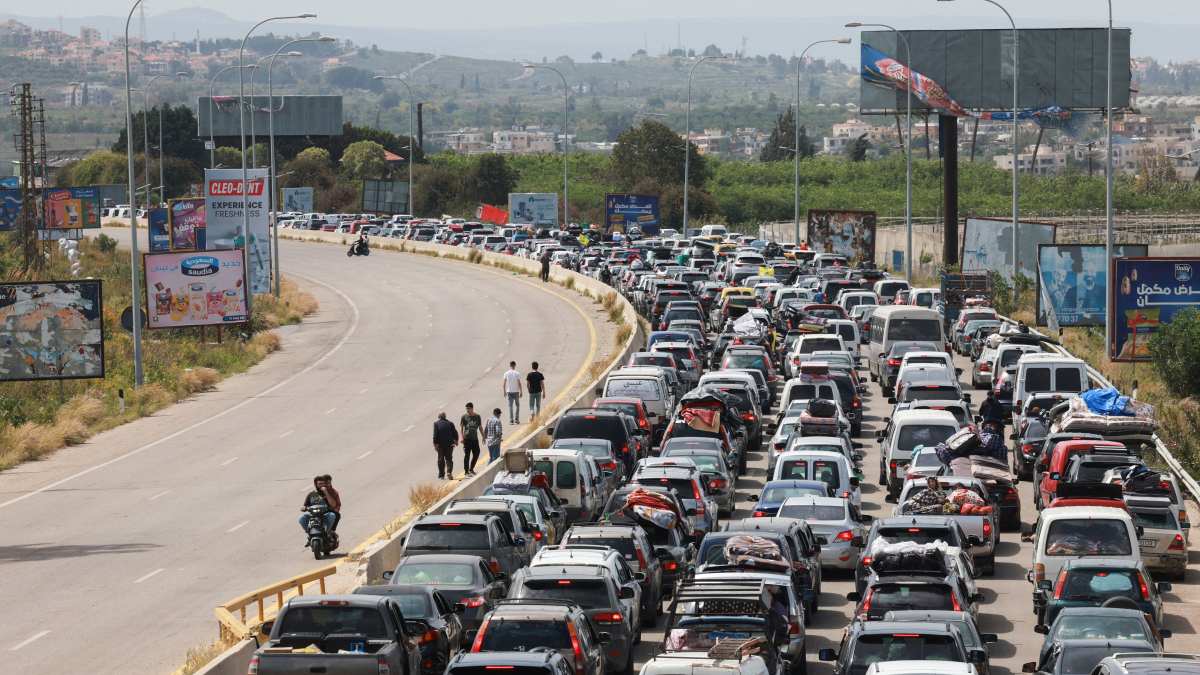
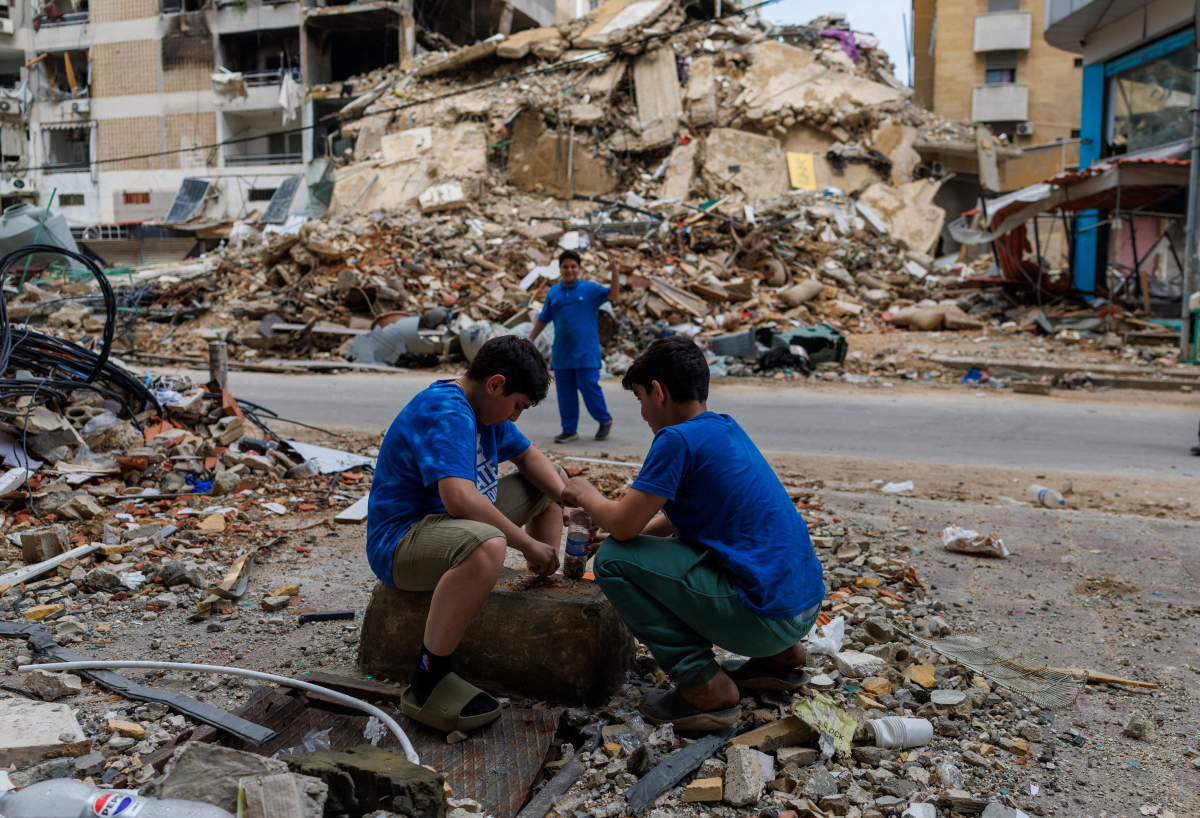
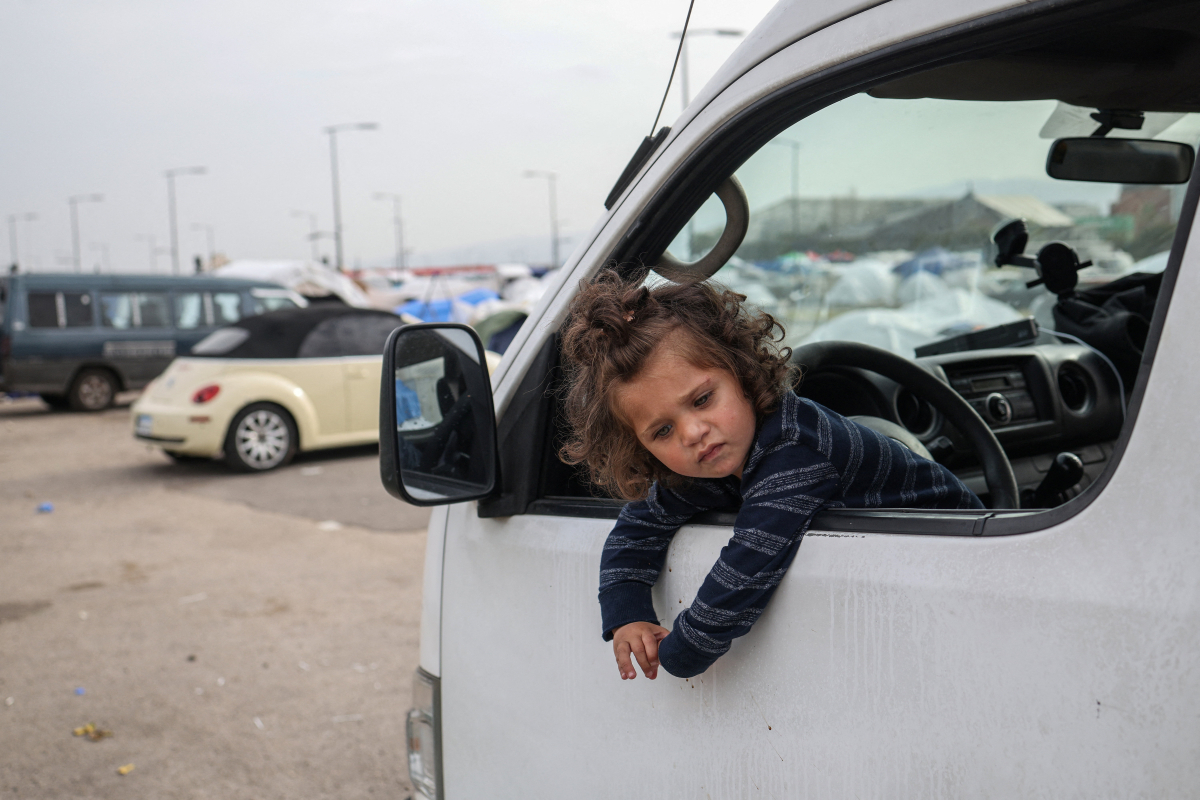
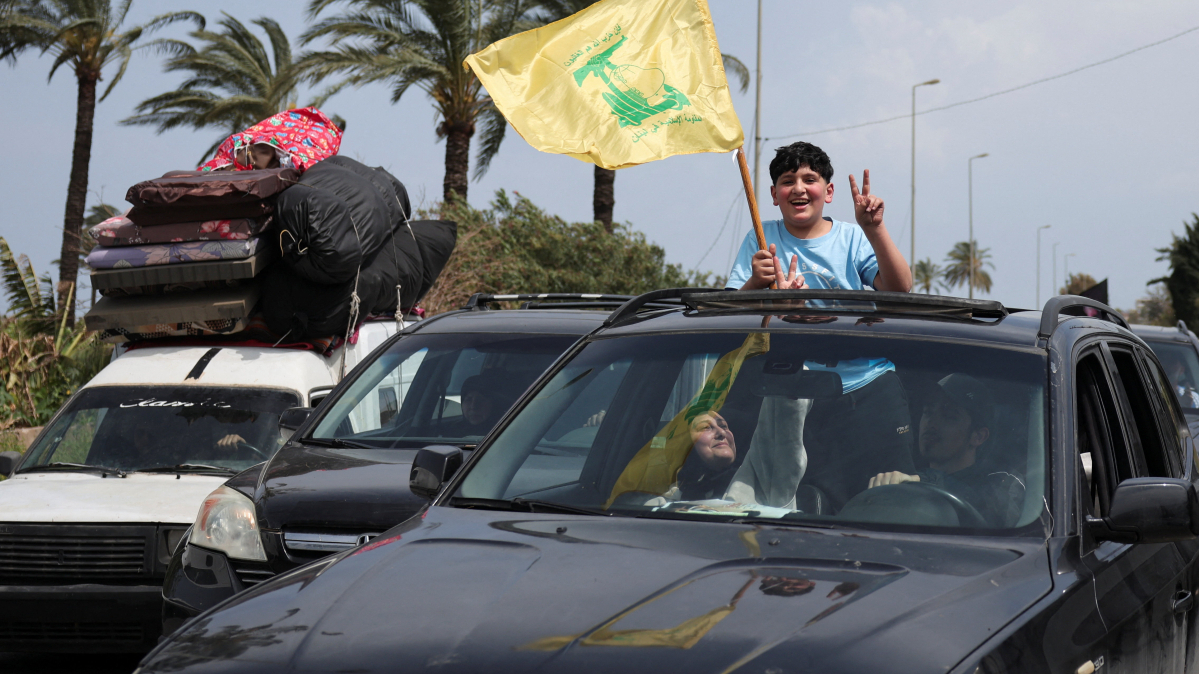
Lebanese heading south after the ceasefire announcement
Reuters
Vehicles on the road as displaced people make their way to return to their homes after a 10-day ceasefire between Lebanon and Israel went into effect, near Tyre, Lebanon, 17 April, 2026.
Displaced children play by damaged buildings as they return temporarily to their homes, after a 10-day ceasefire between Lebanon and Israel went into effect, in the southern suburbs of Beirut, Lebanon, 17 April, 2026.
Reuters
A child sits inside a van as displaced people pack up their belongings and prepare to return to their homes after a 10-day ceasefire between Lebanon and Israel went into effect, in Beirut, Lebanon, 17 April, 2026.
A boy flashes a victory sign from a vehicle as displaced people return home in Qasmiyeh on 17 April, 2026.
Reuters
Reuters
⦿ 08:32 GMT | UPDATE
Lebanon ceasefire risk of renewed fighting remains, analyst warns
Speaking to AnewZ, political journalist Malek Jadah said the situation in Lebanon remains uncertain despite the ceasefire, with reports of Israeli strikes continuing after the ceasefire took effect.
He warned that the ceasefire is unlikely to hold, saying, “I think that it’s just a pause because, first of all, Israel's objectives in Lebanon have not yet been reached.”
Jadah also highlighted a key obstacle, noting that Israel’s presence in southern Lebanon complicates the situation: “Israel is now eight kilometres deep into Lebanon, controlling many villages fully,” which he said is unacceptable for Hezbollah.
He added that even progress in U.S.- Iran talks may not ease tensions in Lebanon, as Israel appears determined to treat the two fronts separately.
⦿ 08:05 GMT | UPDATE
Pakistan PM hopes for lasting peace
X
Pakistan’s Prime Minister Shehbaz Sharif has welcomed the Lebanon ceasefire, expressing hope that it will lead to lasting peace.
In a post on X, he said the agreement was made possible through “bold” diplomatic efforts led by Trump.
I welcome the announcement of a ceasefire in Lebanon, facilitated through bold and sagacious diplomatic efforts led by President Donald Trump, and express the hope that it will pave the way for sustainable peace.
Pakistan reaffirms its unwavering support for the sovereignty and…
— Shehbaz Sharif (@CMShehbaz) April 17, 2026
⦿ 07:59 GMT | UPDATE
Germans do not expect war in Iran to end soon, survey says
Anadolu
The poll found 87% of respondents expect the conflict to continue for an extended period, while only 9% believe it will end in the coming weeks.
It also showed that 93% of Germans oppose any military involvement by their country in the war.
⦿ 07:17 GMT | UPDATE
French president welcomes ceasefire
Anadolu
French President Emmanuel Macron welcomed a newly announced 10-day ceasefire between Israel and Lebanon, while warning that continued military operations risk undermining the fragile ceasefire.
"I fully support the ceasefire between Hezbollah and Israel as announced by President Trump yesterday," he said on X.
J’apporte tout mon soutien au cessez-le-feu entre le Hezbollah et Israël tel que le Président Trump l’a annoncé hier.
J’exprime aussi ma préoccupation qu’il puisse d’ores et déjà être fragilisé par la poursuite d’opérations militaires.
Je demande la sécurité…
— Emmanuel Macron (@EmmanuelMacron) April 17, 2026
However, the French leader voiced concern that the agreement may already be at risk.
⦿ 06:48 GMT | UPDATE
Australian PM says U.S. did not request new support
Anadolu
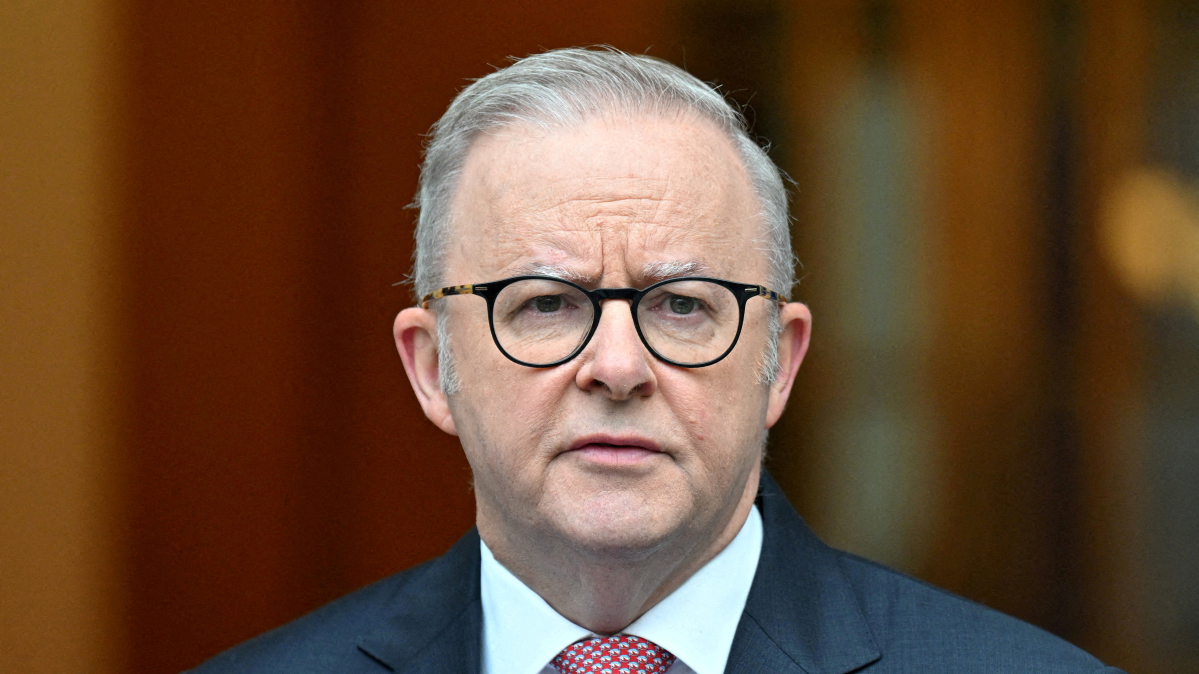
Australian Prime Minister Anthony Albanese denied that the United States had sought fresh assistance from Canberra for Pentagon operations around the Strait of Hormuz.
Australia's Prime Minister Anthony Albanese attends a press conference at Parliament House in Canberra, Australia, 10 March, 2026.
Reuters
“There’s been no new requests at all. And indeed, (U.S.) President (Donald) Trump has himself said that he has got this and he has made that position clear. There’s been no change in Australia,” Albanese told reporters.
Trump told reporters in Washington earlier: “I’m not happy with Australia because they were not there when we asked them to be there.
“They were not there, having to do with Hormuz,” he said.
IEA chief says Middle East energy output recovery may take up to two years
Anadolu
International Energy Agency (IEA) Executive Director Fatih Birol noted that additional emergency stock releases are still being considered.
The recovery would vary across countries, with Iraq likely taking longer than Saudi Arabia, although the region overall could return to pre-war output in about two years, Birol said.
European countries have capacity to clear mines in Hormuz
Reuters
French Defence Minister Catherine Vautrin said Belgium, the Netherlands and France have mine-clearing capabilities that could help secure passage through the Strait of Hormuz.
"There are capabilities to provide fully supported escort services- that is to say, in no way offensive, of course for ships to ensure safe passage through the strait; that is what will be debated today in Paris," she added.
The Strait typically carries about 20% of the world's oil and liquefied natural gas flows, once conditions allow.
UN Secretary-General praises the Israel–Lebanon ceasefire
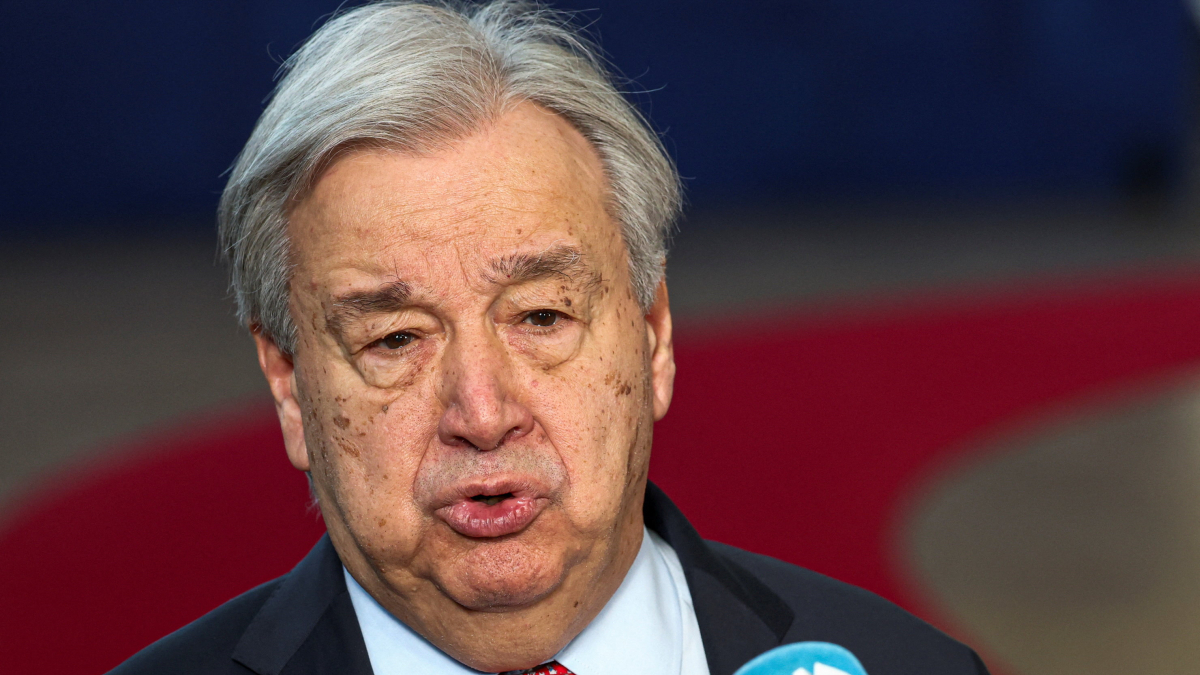
UN Secretary-General António Guterres has welcomed the ceasefire between Israel and Lebanon, expressing gratitude to the United States for its role in facilitating the agreement.
"I hope this will pave the way for negotiations towards a long-term solution to the conflict & contribute to ongoing efforts toward a lasting & comprehensive peace in the region," Guterres says in a statement.
United Nations Secretary-General Antonio Guterres speaks to the press on the day of a European Union leaders' summit in Brussels, Belgium,, 2026.
Reuters
⦿ 05:21 GMT | UPDATE
Saudi Arabia and Oman have welcomed the ceasefire between Israel and Lebanon
Saudi Arabia’s Foreign Ministry has welcomed U.S. President Donald Trump’s announcement of the ceasefire in Lebanon and reiterated the kingdom’s support for the Lebanese state and its sovereignty.
#Statement | The Foreign Ministry expresses the Kingdom of Saudi Arabia’s welcome of the announcement by President Donald Trump of the United States of America, regarding the ceasefire in the Republic of Lebanon. The Kingdom commends the significant and positive roles played by… pic.twitter.com/wCxeu5Hi18
— Foreign Ministry 🇸🇦 (@KSAmofaEN) April 16, 2026
Oman also welcomed the announcement, expressing appreciation for “the efforts undertaken by the United States in reaching this understanding.”
It stressed the importance of all parties complying with the terms of the ceasefire and refraining from any violations.
⦿ 05:00 GMT | UPDATE
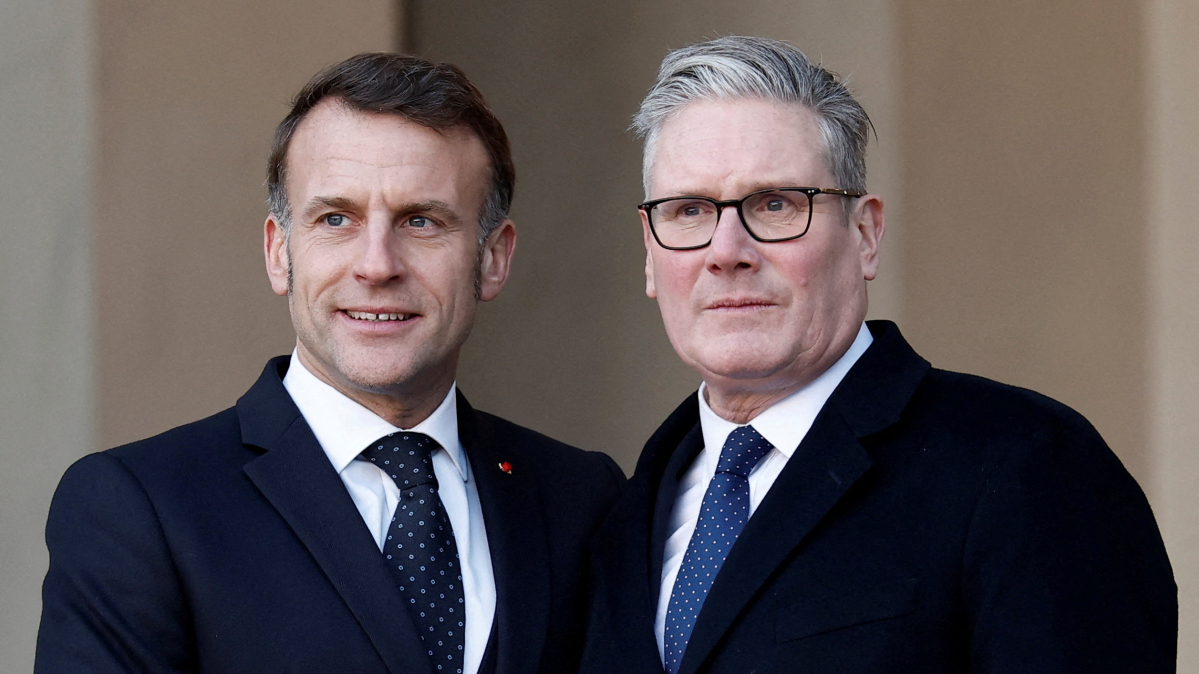
UK and France to co-chair meeting on the Strait of Hormuz
The UK and France are set to chair a meeting with allies later today to coordinate efforts aimed at restoring freedom of navigation through the Strait of Hormuz.
Downing Street said around 40 countries are expected to take part in the meeting this afternoon.
French President welcomes Britain's Prime Minister as he arrives for a summit of the so-called 'Coalition of the Willing' at the Elysee Palace in Paris, France, 6 January, 2026.
Reuters
It added that discussions will focus on supporting the fragile ceasefire in the region and ensuring shipping routes through the Strait are reopened and secured in the long term.
Trump calls Lebanon ceasefire an 'historic day' for the country
Truth Social
U.S. President Donald Trump is optimistic on the recent Middle East developments, following his announcement of a ceasefire in Lebanon and his claim that a deal with Iran is “very close.”
May have been a historic day for Lebanon. Good things are happening!!! President DJT
— Commentary Donald J. Trump Posts From Truth Social (@TrumpDailyPosts) April 17, 2026
⦿ 04:34 GMT | UPDATE
The International Rescue Committee has welcomed the ceasefire
The International Rescue Committee (IRC) has welcomed the Israel- Lebanon ceasefire, describing it as “a critical and long-overdue reprieve for civilians who have endured weeks of unrelenting violence.”
It added that the ceasefire should serve as an important opportunity to protect civilians, ensure continuous humanitarian access, and build the basis for a lasting and durable peace.
Crowds in Sidon, Lebanon, cheered, honked horns and flashed victory signs as a 10-day ceasefire between Lebanon and Israel took effect. Israeli strikes since early March has killed more than 2,100 people and displaced over 1.2 million https://t.co/YASHUBaJSupic.twitter.com/2Tcf0PhFrq
Oil prices fall following announcement of a fragile ceasefire
Asian markets opened with oil prices declining after the Israel-Lebanon ceasefire agreement raised hopes of easing Middle East tensions and a possible end to the conflict.
Brent crude futures fell by more than 1% to $98.05 per barrel at 00:21 GMT, while U.S. crude also slipped below $94.
Oil prices had surged by around 50% in March during a record rally linked to the U.S.-Israel war on Iran and only recently dropped back below $100 per barrel, though they have largely remained in the $90 range over the past week.
IMF warns that war-related energy shock is pushing inflation higher in Europe
Anadolu
The International Monetary Fund (IMF) has projected slower economic growth and higher inflation for Europe in 2026 due to an energy shock stemming from the Middle East conflict.
Alfred Kammer, Director of the European Department at the IMF, said the region faces a new economic challenge that demands robust macroeconomic policies and structural reforms.
⦿ 03:42 GMT | UPDATE
Arab countries welcome Israel-Lebanon ceasefire
Anadolu
Syria, Jordan, Saudi Arabia, and Oman welcomed a 10-day ceasefire between Israel and Lebanon announced by U.S. President Donald Trump, expressing support for strengthening the Lebanese state and restricting weapons to its institutions.
Syria described it as a "significant step" toward preventing further escalation in the region.
⦿ 03:17 GMT | UPDATE
South Korea announces $7.1B stimulus to offset Iran war supply shocks
Anadolu
South Korea has announced a 10.5 trillion won ($7.1 billion) stimulus package along with emergency measures to ease the economic impact of rising global tensions linked to the U.S.- Israeli war on Iran.
The country’s finance chief said the steps are aimed at stabilising the economy amid growing supply disruptions.
⦿ 02:50 GMT | UPDATE
Lebanese army reports Israeli 'ceasefire violations'
Reuters
Israel has committed violations of a ceasefire in Lebanon that took effect at midnight, including intermittent shelling of several southern Lebanese villages, the Lebanese army said early on Friday.
In a statement, the army called on citizens to hold off on returning to southern villages and towns. There was no immediate comment from the Israeli military.
Trump says war in Iran should be ending 'pretty soon'
Reuters
U.S. President Donald Trump briefly addressed the war in Iran during a tax day roundtable in Nevada, saying, "I will say the war in Iran is going along swimmingly" and that it "should be ending pretty soon."
He did not provide further details but praised the U.S. military for its ability to shoot down rockets.
The White House said discussions about a potential second round of peace talks are "ongoing," though no time or location has been confirmed.
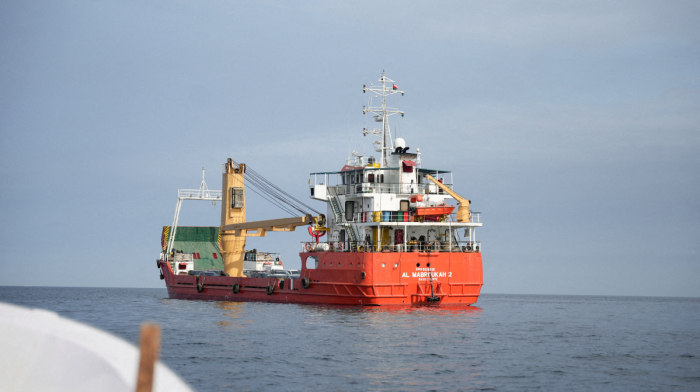
Two Indian-flagged ships were shot at in the Strait of Hormuz on Saturday, India's Foreign Ministry said, as Iran closed the Strait of Hormuz again, less than 24 hours after reopening the 167km long sea passage, which is essential for global trade.
The Trump administration extended a sanctions exemption on some Russian oil as prices continue to skyrocket in the wake of the U.S.- Israeli war against Iran on Friday (17 April).
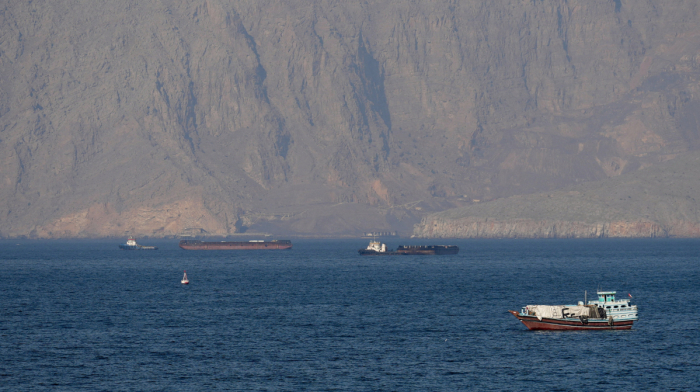
Global shipping through the Strait of Hormuz has shown signs of partial recovery after Iran announced it was open to commercial vessels during a limited ceasefire, though uncertainty remains over security conditions and compliance rules.
U.S. President Donald Trump says Israeli and Lebanese leaders have agreed to a 10-day ceasefire that includes Hezbollah, raising cautious hopes of a pause in hostilities after weeks of escalating tensions.
Iran reopened the Strait of Hormuz to commercial shipping on Friday (17 April) for the first time since the U.S. and Israel killed Iran's ex-Supreme Leader in air strikes, triggering the Middle East conflict, at the end of February. A U.S. blockade on Iranian ports, however, remains in force.
Two Indian-flagged ships were shot at in the Strait of Hormuz on Saturday, India's Foreign Ministry said, as Iran closed the Strait of Hormuz again, less than 24 hours after reopening the 167km long sea passage, which is essential for global trade.
Netflix shares fell sharply on Friday after the streaming group issued a weaker-than-expected outlook and said chairman and co-founder Reed Hastings will step down from the board.
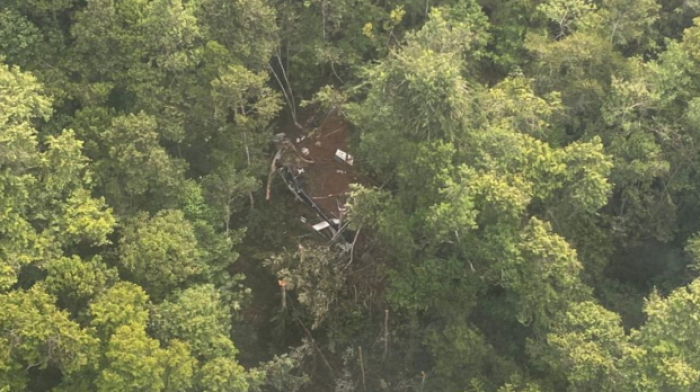
Eight people have died after a helicopter crash in West Kalimantan province, Indonesia. Authorities said contact was lost five minutes after taking off from a plantation area in Melawi.
Two Indian-flagged ships were shot at in the Strait of Hormuz on Saturday, India's Foreign Ministry said, as Iran closed the Strait of Hormuz again, less than 24 hours after reopening the 167km long sea passage, which is essential for global trade.
Global shipping through the Strait of Hormuz has shown signs of partial recovery after Iran announced it was open to commercial vessels during a limited ceasefire, though uncertainty remains over security conditions and compliance rules.
The Strait of Hormuz has reopened, Iran’s Foreign Minister Abbas Araghchi and U.S. President Donald Trump said on Friday (17 April), although Washington warned its naval blockade on Iran would remain until a peace deal is reached.
Iran has cautiously welcomed the ten-day ceasefire between Israel and Lebanon stressing that it is an integral part of Tehran’s set of its conditions for an end to the ongoing conflict with Washington.













What is your opinion on this topic?
Leave the first comment