



20:20 CET
Politics
Three ships struck by drones in Black Sea near Romanian shipping canal
Drones have struck three commercial...



Portugal has become the first European Union member state to join HealthAI's Global Regulatory Network (GRN), as Europe prepares to implement new rules governing artificial intelligence across the bloc.
The agreement between Portugal's healthcare regulator Infarmed and Geneva-based non-profit HealthAI gives the country access to a directory of regulator-reviewed AI health tools, along with a real-time warning system for sharing reports of harmful incidents.
Portugal joins Britain, India, Brazil, Singapore, the Philippines, Indonesia, Vietnam, Zambia and Peru in the network, which promotes international cooperation on AI governance in healthcare.
The move comes as the EU's AI Act begins taking effect and healthcare systems accelerate the adoption of AI-powered technologies.
"This is clearly better achieved through international cooperation and by sharing experiences and expertise," Infarmed President Santos Ivo said in a statement.
HealthAI, funded mainly by governments including Canada, Britain, Norway and Singapore, was established to develop common standards and governance frameworks for AI in healthcare.
HealthAI Chief Executive Baptista Leite said the organisation is in talks with other EU member states and argued that Europe's regulatory decisions will have a global impact.
"Whatever Europe will do will have a spillover effect in other regions around the world. It's incredibly important that Brussels gets it right," he said.

Drones have struck three commercial...

Almost 1,500 migrants arrived in Spain's Canary Islands on Saturday, the highest number in a single day sin...

The World Health Organization (WHO) warned on Friday (13 November) of surging respiratory illnesses in Gaza, ...

The U.S. Federal Aviation Administration lifted a nationwide ground stop on Friday (13 November) after a communications failure at air traffic control centres caused chaos at airports and triggered the longest nationwide shutdown since the 9/11 attacks in 2001.

More than 30 people have been taken to hospital after a cargo ship collided with a passenger cruise docked on the Mississippi River in New Orleans on Friday (13 November).

Saudi Arabia said it intercepted two Houthi ballistic missiles targeting Riyadh and three drones in its oil-rich Eastern Province on Sunday (15 November), as Iran's Revolutionary Guards claimed separate attacks on a U.S. military facility in Bahrain.

Europe will send a team of diplomats to Ukraine peace talks rather than a single envoy, EU leaders agreed on Friday at the end of a summit in Dublin.

Afghanistan’s Ministry of Education has challenged a United Nations report on access to education, saying its findings do not reflect the full picture of the country’s education system.
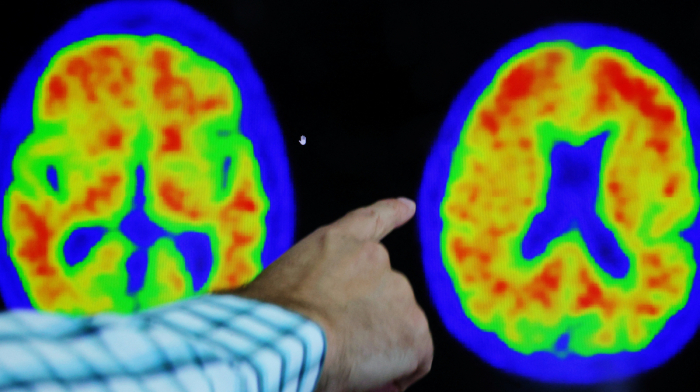
A new study in mice suggests the brain’s protective barrier does more than block harmful substances. It also delivers essential proteins from the body, a process that may break down early in Alzheimer’s disease and offer a new target for treatment.

Here's your AnewZ Daily Brief for the 5th of November, as health emergencies, humanitarian crises, political shifts, and cybersecurity threats put governments and essential services under pressure across the globe. Here are five stories worth your attention.

Kazakhstan plans to manufacture 494 types of medicines through eight major investment projects worth a combined $862 million, Health Minister Akmaral Alnazarova announced on 3 November, local media reported.

Dengue fever has killed more people in Bangladesh this year than in the whole of 2025, with October the deadliest month so far, data from Bangladesh's Health Ministry shows.

Visitors to Armenia could face temperature screening after a lab worker died from suspected Pneumonic plague in Russia, Yerevan’s Health Minister Anahit Avanesyan told lawmakers on Wednesday, Armenian state news agency Armenpress reported.
You can download the AnewZ application from Play Store and the App Store.




What is your opinion on this topic?
Leave the first comment