Upcoming vote puts Armenia's European future to the test
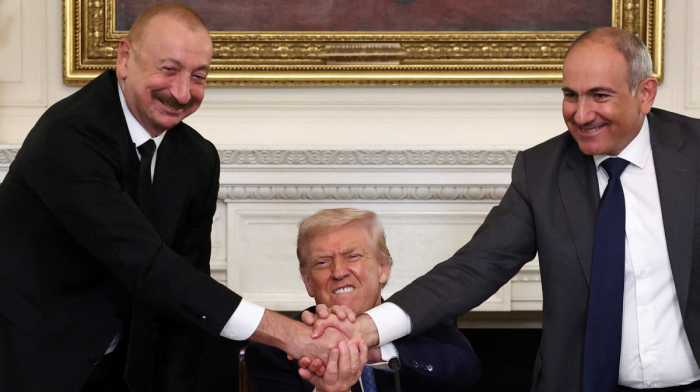
When Armenians vote on 7 June, they will be voting in an election shaped by months of political change and a rapidly deepening relationship with the E...
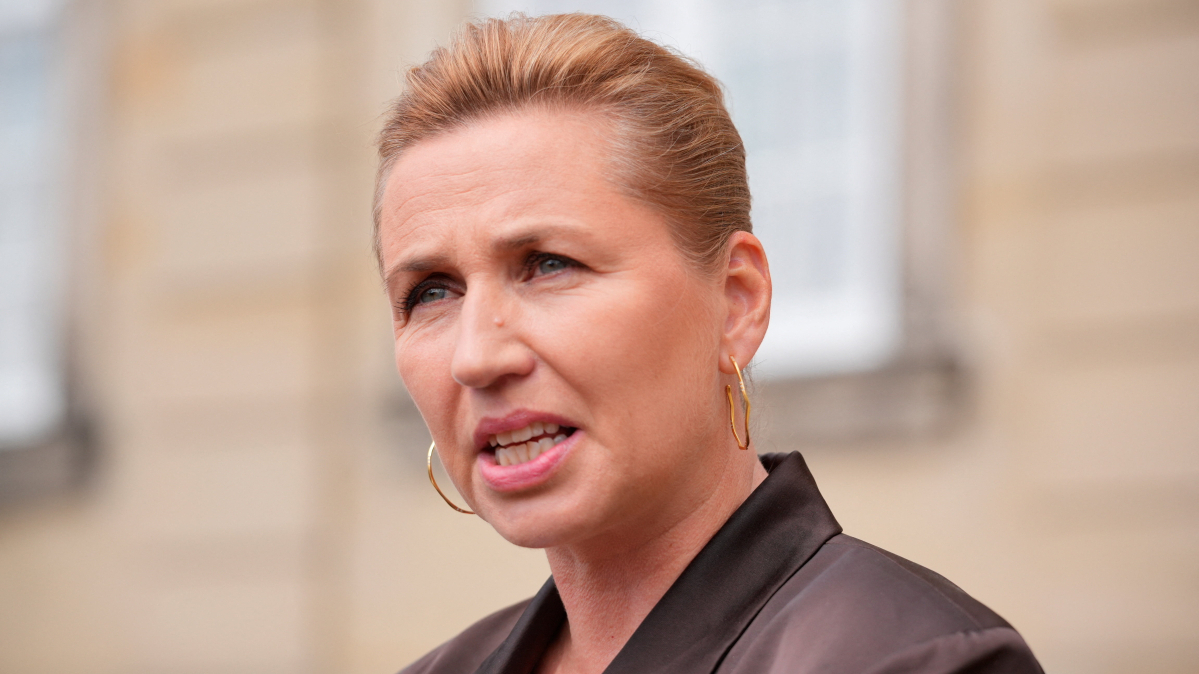
Denmark’s Social Democratic leader Mette Frederiksen said on Monday (1 June) she has agreed to form a new centre-left coalition government, securing a third consecutive term as prime minister amid heightened diplomatic tensions with the United States over Greenland.
Frederiksen said she had informed the Danish monarch that a government could now be formed after months of negotiations following the 24 March parliamentary election, which left no party with a clear majority.
“I have been to see His Majesty the King and announced that a government can be formed after long negotiations,” Frederiksen told reporters.
The agreement ends a period of political uncertainty after the election, in which 12 parties entered parliament and Frederiksen’s Social Democratic Party remained the largest force with 38 seats, down from 50.
The new minority coalition will include the Social Democrats, the Social Liberals, the Left Greens and the centrist Moderates. It will rely on outside support from the far-left Red-Green Alliance and other parties on a case-by-case basis to pass legislation.
Frederiksen said the government’s priorities will be presented on Tuesday, with ministerial appointments expected on Wednesday.
“It is a government platform for the people who are in Denmark and for the generations to come and also for the animals,” she said, highlighting animal welfare as one of the campaign issues.
The new government is expected to focus immediately on diplomatic discussions over Greenland, after U.S. President Donald Trump previously raised the prospect of annexation of the Danish territory.
Security concerns are also expected to shape the government’s agenda, with Denmark preparing a rapid expansion of its defence capabilities amid wider European security challenges linked to Russia’s war in Ukraine.
The formation marks a shift to the left for Frederiksen, who in recent years had led a broader cross-spectrum coalition including both left- and right-leaning parties.

U.S. rapper Kanye West, now known as Ye, performed to a crowd of 118,000 people in Istanbul on Saturday night, marking his first concert in Europe in more than a decade, despite being barred from performing in several countries over past antisemitic remarks.
Okinawa lost transport links and suffered widespread power outages on Monday (1 June) as Severe Tropical Storm Jangmi brought destructive winds and heavy rain to Japan's south-western islands.
U.S. Secretary of State Marco Rubio has held talks with Lebanese President and Israeli Prime Minister on efforts to ease tensions between Israel and Lebanon. According to a U.S. official, Washington has proposed a plan aimed at achieving a gradual de-escalation of hostilities.
The World Health Organisation’s designation of the Bundibugyo Ebola virus outbreak as a Public Health Emergency of International Concern (PHEIC) is a stark reminder that Ebola remains a persistent global health threat rather than a disease of the past.
The Africa Centres for Disease Control and Prevention (Africa CDC) says the Ebola outbreak in the Democratic Republic of Congo and Uganda is continuing to spread, with 263 confirmed cases and 43 deaths reported as of 30 May.
Global health organisation CEPI will provide around $60 million to Moderna and two other partners to speed up the development of vaccines targeting the Ebola Bundibugyo strain, which is currently driving an outbreak in eastern Democratic Republic of Congo.
The head of the World Health Organization (WHO) has warned that the Ebola outbreak in the Democratic Republic of Congo may be significantly larger than official figures suggest, following a visit to the country where he briefed President Felix Tshisekedi on the ongoing response.
Four nurses have recovered and been discharged after receiving treatment for Ebola in the Democratic Republic of Congo, the World Health Organisation (WHO) said.
The World Health Organisation’s designation of the Bundibugyo Ebola virus outbreak as a Public Health Emergency of International Concern (PHEIC) is a stark reminder that Ebola remains a persistent global health threat rather than a disease of the past.
The Ebola outbreak in eastern Democratic Republic of the Congo is "outpacing containment efforts" amid conflict, weak disease surveillance and limited access to healthcare, according to London-based pharmacist and health commentator Thorrun Govind.
You can download the AnewZ application from Play Store and the App Store.
What is your opinion on this topic?
Leave the first comment