Syria and Israel meet in Paris as U.S. mediates peace effort
Syrian Foreign Minister Asaad al-Shibani met an Israeli delegation in Paris on Tuesday for talks aimed at boosting stability in southern Syria and the...
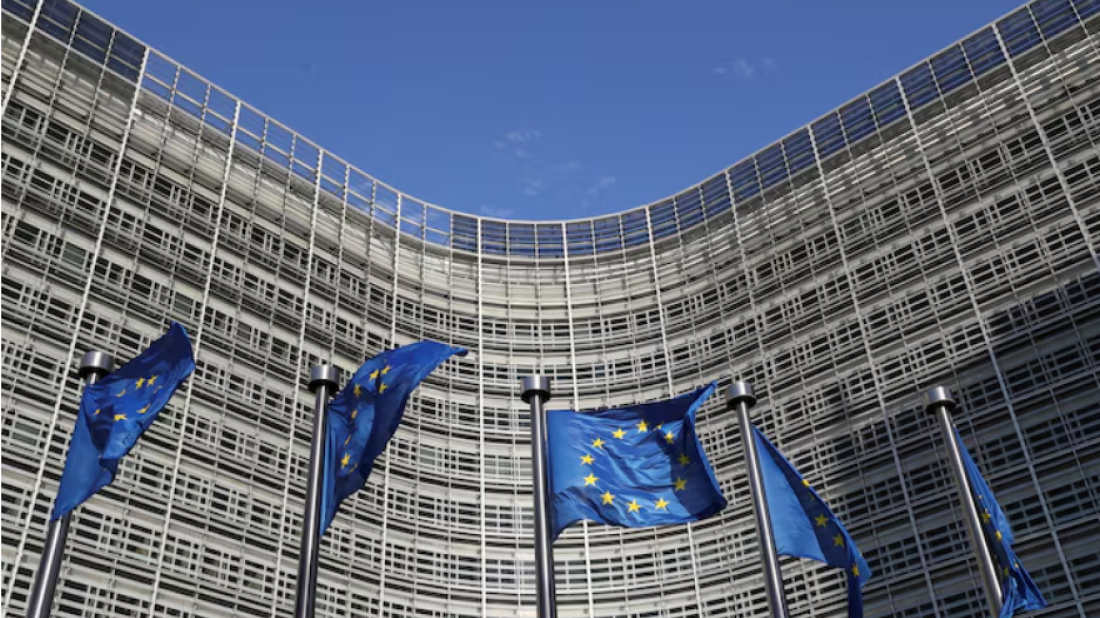
A group of 11 European Union countries is pressuring the European Commission to delay and soften the bloc’s landmark deforestation law, warning that current requirements are too burdensome for farmers and foresters, according to a document seen by Reuters.
The European Union is facing renewed calls to scale back its pioneering anti-deforestation regulation, as 11 member states—including Austria, Luxembourg, Italy, and Finland—have urged the European Commission to simplify and postpone the law’s implementation once again.
The policy, set to take effect in December 2025 after a previous delay, aims to curb the EU’s role in global deforestation by requiring companies to prove that key imports—such as soy, beef, palm oil, cocoa, and coffee—are not linked to forest destruction. Firms failing to comply could face fines of up to 4% of their EU turnover.
In a joint paper addressed to EU agriculture ministers, the governments argued that the current requirements remain “disproportionate” and “nearly impossible to implement,” especially for small-scale farmers and foresters. They proposed introducing a new “very low risk” category of countries that would be exempt from strict due diligence and customs checks.
Bulgaria, Croatia, the Czech Republic, Latvia, Portugal, Romania, and Slovenia also signed the paper, which will be discussed at an agriculture ministers’ meeting in Brussels on Monday.
The Commission has already watered down the regulation in response to backlash from global trade partners like Brazil and the U.S., and earlier this month announced that most countries would avoid the law’s strictest checks. A spokesperson for the Commission did not immediately respond to requests for comment.

A powerful eruption at Japan’s Shinmoedake volcano sent an ash plume more than 3,000 metres high on Sunday morning, prompting safety warnings from authorities.
According to the German Research Centre for Geosciences (GFZ), a magnitude 5.7 earthquake struck the Oaxaca region of Mexico on Saturday.
Honduras has brought back mask mandates as COVID-19 cases and a new variant surge nationwide.
The UK is gearing up for Exercise Pegasus 2025, its largest pandemic readiness test since COVID-19. Running from September to November, this full-scale simulation will challenge the country's response to a fast-moving respiratory outbreak.
Kuwait says oil prices will likely stay below $72 per barrel as OPEC monitors global supply trends and U.S. policy signals. The remarks come during market uncertainty fueled by new U.S. tariffs on India and possible sanctions on Russia.
Ocean acidification, caused by rising CO₂, is silently reshaping marine life, threatening shellfish, coral reefs, and coastal communities. Scientists warn its impacts could ripple through food chains, economies, and human livelihoods unless urgent action is taken.
Residents in the Bahamas and Turks and Caicos braced themselves on Monday as Hurricane Erin, the first of the Atlantic season, passed nearby as a Category 4 storm, with winds of 225 kph.
The hurricane was located about 170 km north of Anguilla, with maximum sustained winds near 255 km/h, according to the National Hurricane Center (NHC).
Talks at the United Nations in Geneva to establish a global legally binding treaty on plastic pollution went into overtime on Thursday, with discussions adjourned to Friday.
SOCAR Türkiye, a subsidiary of the State Oil Company of the Azerbaijani Republic, has announced about a cooperation with Turkish Airlines in the field of sustainable aviation fuel. The move is aimed at complying with Türkiye's goal of reducing aviation emissions by 5% by 2030.
You can download the AnewZ application from Play Store and the App Store.
What is your opinion on this topic?
Leave the first comment