The United States is preparing to launch a new phase of Venezuela-related operations in the coming days, four U.S. officials told Reuters, as the Trump administration escalates pressure on President Nicolas Maduro.
The officials – who all spoke on condition of anonymity due to the sensitivity of the matter – said it was unclear when or how broad the operations would be, or whether U.S. President Donald Trump had given final approval.
Two officials said covert actions were likely to form the first stage.
Washington has deployed military assets to the Caribbean in recent months amidst deteriorating relations with Caracas.
A senior U.S. administration official said on Saturday that “nothing is being ruled out,” adding that Trump is prepared to use “every element of American power” to combat drug trafficking and “bring those responsible to justice.”
The Pentagon referred questions to the White House. The CIA declined to comment.
Drug-trafficking allegations and regime-change options
The Trump administration has repeatedly accused Maduro of playing a role in supplying illegal drugs to the United States—charges he denies.
Two U.S. officials said Washington’s options include attempting to overthrow the Venezuelan leader.
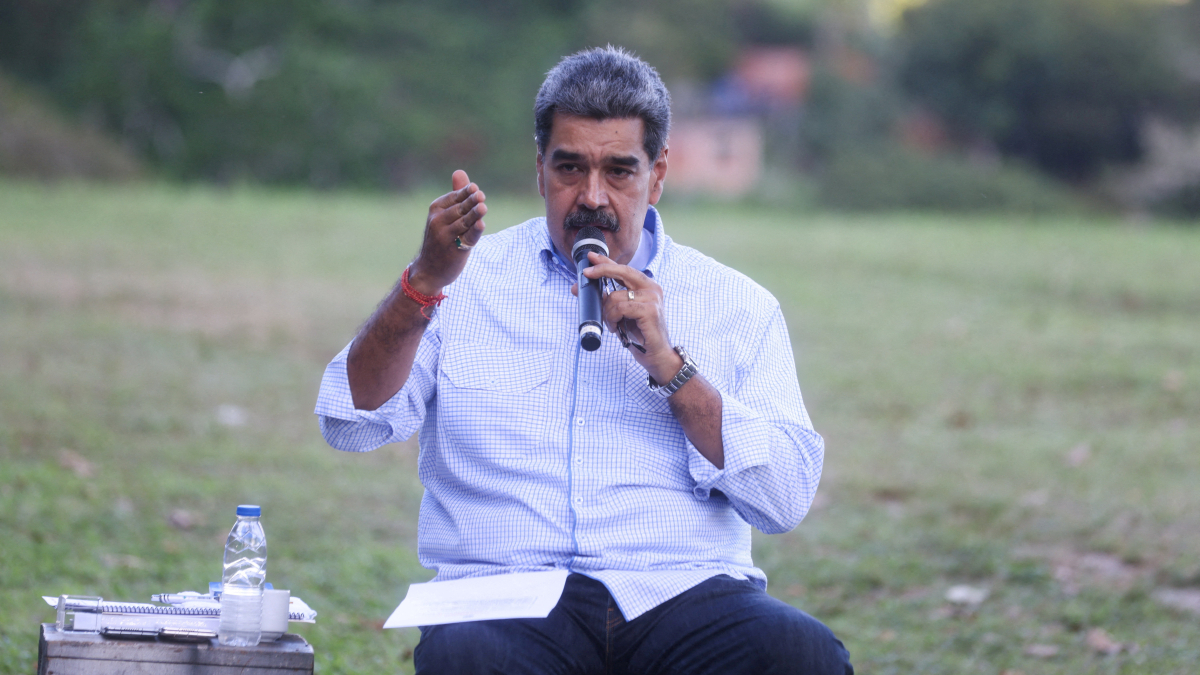
Maduro, who turns 63 on Sunday, has long argued that Washington is trying to oust him and says Venezuelans and the military will resist.
On Saturday night, he appeared at the premiere of a television series based on his life at Caracas’ main theatre.
Military buildup and rising tensions
A steady U.S. military buildup has been underway for months. Trump has authorised covert CIA operations in Venezuela, and the U.S. Navy’s largest aircraft carrier, the Gerald R. Ford, arrived in the Caribbean on 16 November with its strike group, joining at least seven other warships, a nuclear submarine and F-35 aircraft.
While U.S. forces have officially focused on counter-narcotics operations, the scale of firepower far exceeds what is needed. Since September, U.S. troops have carried out 21 strikes on alleged drug boats in the Caribbean and Pacific, killing at least 83 people.
Human rights organisations have condemned the actions as extrajudicial killings, and some U.S. allies have raised concerns about potential violations of international law.
The FAA on Friday warned major airlines of a “potentially hazardous situation” over Venezuelan airspace. Three international carriers cancelled outbound flights on Saturday.
Terrorist designation and new U.S. options
On Monday, the United States plans to designate the Cartel de los Soles as a foreign terrorist organisation, accusing Maduro of leading it—an accusation he rejects.
U.S. Defense Secretary Pete Hegseth said the designation “brings a whole bunch of new options” for Washington.
Trump has said it would allow the United States to strike Maduro’s assets and infrastructure, though he has also signalled openness to potential talks with Caracas.
Two U.S. officials acknowledged there have been conversations between the two governments, but it was unclear whether these could alter the timing or scope of upcoming operations.
Venezuela’s weakened military and possible response
Venezuela’s military is significantly outmatched by U.S. forces, weakened by poor training, low wages and deteriorating equipment. Some commanders have had to negotiate with local food producers to feed troops as government supplies fall short.
Faced with this imbalance, Maduro’s government has explored fallback strategies in the event of a U.S. invasion, including a guerrilla-style “prolonged resistance” response.
The plan—referenced in state media and rooted in older military documents—envisions small units operating from over 280 locations to conduct sabotage and other irregular tactics.










What is your opinion on this topic?
Leave the first comment