




11:16 CET
Nuclear security
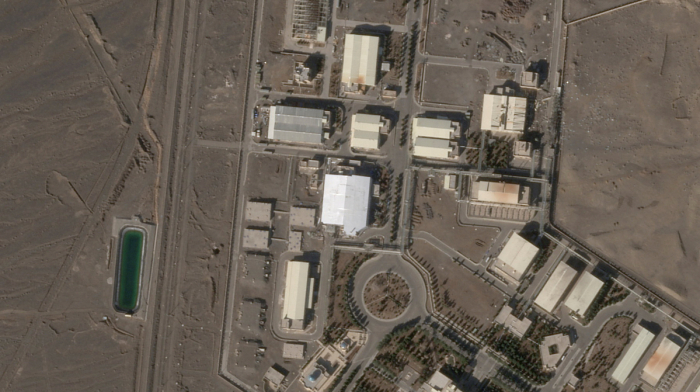
Georgia arrests man over attempted $700,000 uranium sale
Georgia has detained a man ...


Typhoon Bavi, the strongest storm to hit the eastern coast of mainland China this year, brought heavy rain, strong winds, flooding and landslides after making landfall in Zhejiang province on Sunday. More than 2.8 million people were evacuated to safety ahead of the storm.
Bavi made landfall in Yuhuan late on Saturday before a second landfall in nearby Yueqing around midnight. It weakened to a tropical storm on Sunday but is expected to bring prolonged heavy rain across eastern and northern China.
In Yueqing, more than 1,300 trees fell, streets were flooded and a landslide blocked a mountain road. Emergency crews cleared debris and reopened roads.
"The winds were very strong," Yueqing resident Li Liangxing told Reuters. "We could hear roof tiles and tree branches falling. Of course we were scared, but we live by the sea, so we're used to it."
Emergency crews on Sunday deployed excavators and chainsaws to clear waterlogged streets littered with fallen trees.
In the city's mountainous north, footage aired by CCTV showed a landslide that sent large boulders tumbling onto a mountain road, while swollen river waters submerged nearby trees.
In Kanmen, a coastal fishing town in Yuhuan, 72-year-old parcel shop owner Lin Yongjin was counting the cost of Bavi.
His shop, which faces the sea, bore the brunt of the storm. Metal frames supporting the entrance canopy had collapsed, and a window in a neighbouring building had been blown out. Lin estimated the typhoon had caused more than 6,000 yuan ($885) in damage.
"After it came ashore, there was nothing we could do. Rainwater poured into the house. We spent the whole night dealing with it and didn't get to sleep until after 5 a.m.," he said.
Bavi passed northern Taiwan on Saturday, bringing strong winds and driving rain across much of the island. The storm dumped nearly 80 cm (31 inches) of rain in one area in the northern county of Miaoli. Taiwan's fire department said on Sunday that there were 134 people injured. The transport ministry said 137 international flights had been cancelled on Sunday, along with 62 domestic trips.
In eastern China, train services were suspended in Hangzhou at two major stations and 327 flights were cancelled at Xiaoshan International Airport.
In neighbouring Shanghai, a total of 1,620 train trips and 684 flights were cancelled, state-backed The Paper reported.
Bavi moved into Anhui province on Sunday and is forecast to turn northeast towards the Yellow Sea by Tuesday.
Heavy to torrential rain is expected across Hebei, Shandong, Jiangsu, Anhui, Liaoning and Jilin, increasing the risk of flooding in already saturated areas. In Hebei, rescue teams used inflatable boats to reach people stranded by floodwaters.
Experts warned that despite weakening, Bavi could continue generating dangerous weather hundreds of kilometres inland.
Scientists have warned China could face more extreme weather this year with the expected emergence of the El Nino weather pattern, which can drive up temperatures and shift typhoon tracks westward toward the country's coast.

Georgia has detained a man ...

Azerbaijan and the five Central Asian states have signed two key documents at the 8th Consultative Meeting of Heads of State in Turkmenbashi, forma...
U.S. Vice President JD Vance told Reuters on Monday (5 October) that ...


Russia's health watchdog said on Tuesday that no cases of plague had been detected among anyone who had come into contact with a Siberian plague institute laboratory worker who died last week, and locals said their lives had barely been disrupted.

Russia struck Ukraine overnight in one of the biggest attacks of the conflict, killing at least 19 people, Kyiv's Foreign Ministry said on Wednesday. Around 70 missiles were fired at Ukraine during the attack, as well as drones, the Ministry said.

A large Ukrainian drone attack on Moscow and the surrounding region has killed two people, damaged homes and sparked a major fire at a key fuel facility, according to Russian officials and military bloggers.

The German-Azerbaijani Connectivity Conference 2026 commenced on 6 October in Baku under the title “Mobilising Finance for Infrastructure, Transport, Logistics, Green Energy, and Digitalisation along the Middle Corridor.”

The Saudi-led coalition says it has carried out a series of military operations against Houthi targets in Yemen after attacks on two Saudi airports left three people dead and dozens injured.
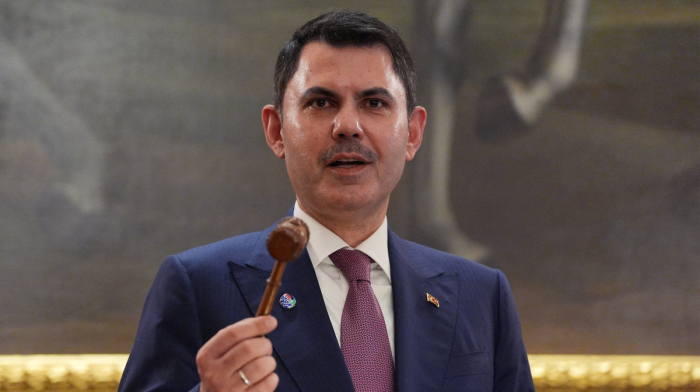
Türkiye’s COP31 presidency has unveiled an action agenda designed to turn climate commitments into concrete projects and measurable results, focusing on clean energy, waste reduction, resilient cities and industrial decarbonisation.

Greenland and Antarctica have shed a combined 11.3 trillion tonnes of ice since 1979, according to the most comprehensive satellite study of the planet's ice sheets to date, with researchers warning the pace of loss has accelerated sharply in recent decades.

The European Union will continue allowing large-scale plastic waste exports to Türkiye despite concerns over recycling rates, environmental damage and the risk of illegal waste trafficking.
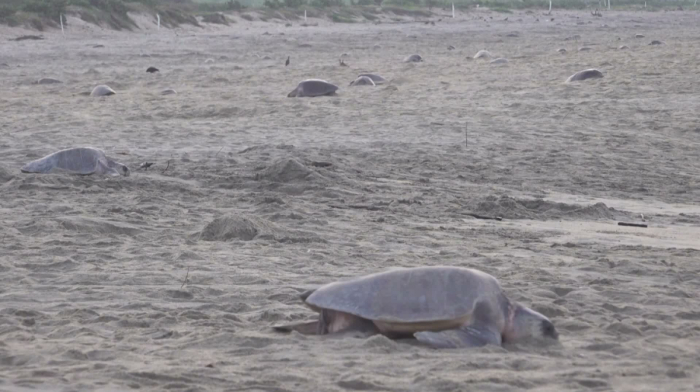
Hundreds of thousands of deep-diving turtles, known as olive ridley sea turtles, have arrived on Mexico’s southern coast for one of nature’s most striking nesting events. But conservation officials warn that climate change is making it increasingly difficult for their eggs to hatch.

August 2026 tied as the hottest month ever recorded globally, pushing average temperatures above the critical 1.5°C threshold as extreme weather swept across several regions, the EU’s Copernicus Climate Change Service said.
You can download the AnewZ application from Play Store and the App Store.




What is your opinion on this topic?
Leave the first comment