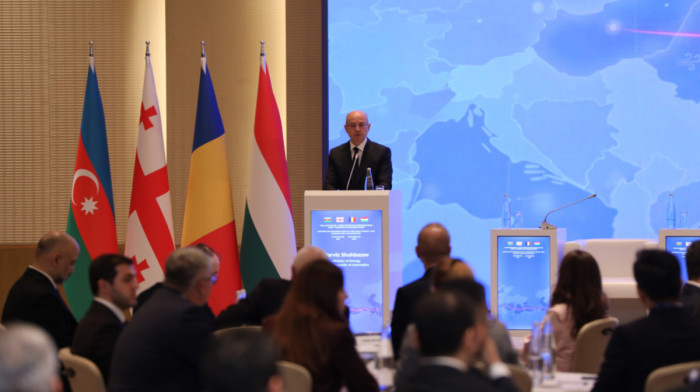
Türkiye and Hungary deepen ties across trade, energy, and defence
Türkiye has reinforced its strategic partnership with Hungary, aiming to expand cooperation in trade, energy, defense, and innovation....
Billionaire investor and philanthropist Bill Gates called on world leaders on Tuesday to adapt to extreme weather and focus on improving health outcomes rather than temperature reduction targets ahead of the COP30 climate talks in Brazil.
COP30 will be held November 10-21 in the port city of Belem in Brazil's lower Amazon region. Countries are due to present updated national climate commitments and assess progress on renewable energy targets agreed at previous summits.
The world has spent the last decade working towards the goals of the Paris Agreement, aiming to limit global warming to well below 2 degrees Celsius above the pre-industrial average by mid-century - something that remains well off-track.
While climate change was serious, it was "not civilization-ending", Gates posted on his personal blog. He wrote that rather than focus on temperature as the best measure of progress, climate resilience would be better built by strengthening health and prosperity.
He called for a shift in focus toward improving human welfare, particularly in vulnerable regions, through investments in energy access, healthcare, and agricultural resilience.
These areas, he argued, offered more equitable benefits than temperature goals and should be central to climate strategies discussed at COP30.
Gates, who has invested billions to accelerate clean technology innovation through his climate-focused venture network, Breakthrough Energy, also challenged policymakers and donors to scrutinise whether climate aid was being spent effectively.
He urged them to use data to maximise impact, and called on investors to back companies developing high-impact clean technologies so they could more quickly lower costs.
He said direct deaths from natural disasters have fallen 90% over the last century to between 40,000 and 50,000 annually, largely due to better warning systems and more resilient infrastructure.
U.N. Secretary-General Antonio Guterres and the World Meteorological Organization last week urged countries to implement disaster warning systems to protect people against extreme weather.
The WMO said that in the past five decades, weather, water and climate-related hazards have killed more than 2 million people, with 90% of those deaths occurring in developing countries.

A coup attempt by a “small group of soldiers” has been foiled in Benin after hours of gunfire struck parts of the economic capital Cotonou, officials said on Sunday.
A delayed local vote in the rural Honduran town of San Antonio de Flores has become a pivotal moment in the country’s tightest presidential contest, with both campaigns watching its results as counting stretches into a second week.
FIFA releases the 2026 World Cup schedule with match dates, venues, and key fixtures. See when host nations USA, Mexico, and Canada play and get an overview of group stage and knockout rounds.
A tsunami of up to three meters (10 feet) could hit Japan’s northeastern coast following a powerful earthquake with an estimated magnitude of 7.6 that occurred offshore on Monday, according to the Japan Meteorological Agency (JMA).
Lava fountains shot from Hawaii’s Kīlauea volcano from dawn to dusk on Saturday, with new footage showing intensifying activity at the north vent.
Indonesia's military stepped up its relief efforts in three provinces on Sumatra island that have been devastated by deadly floods and landslides, and the country's vice president apologised for shortcomings in the response to last week's disaster.
Authorities in Senegal have launched urgent measures to prevent a potential oil spill after water entered the engine room of the Panamanian-flagged oil tanker Mersin off the coast of Dakar, the port authority said on Sunday.
The death toll from devastating floods across Southeast Asia climbed to at least 183 people on Friday (28 November). Authorities in Indonesia, Malaysia, Thailand and Sri Lanka struggle to rescue stranded residents, restore power and communications, and deliver aid to cut-off communities.
At least 47 people have died and another 21 are reported missing following ten days of heavy rainfall, floods, and landslides across Sri Lanka, local media reported on Thursday (27 November).
Rescuers in Thailand readied drones on Thursday to airdrop food parcels, as receding floodwaters in the south and neighbouring Malaysia brightened hopes for the evacuation of those stranded for days, while cyclone havoc in Indonesia killed at least 28.
You can download the AnewZ application from Play Store and the App Store.
What is your opinion on this topic?
Leave the first comment