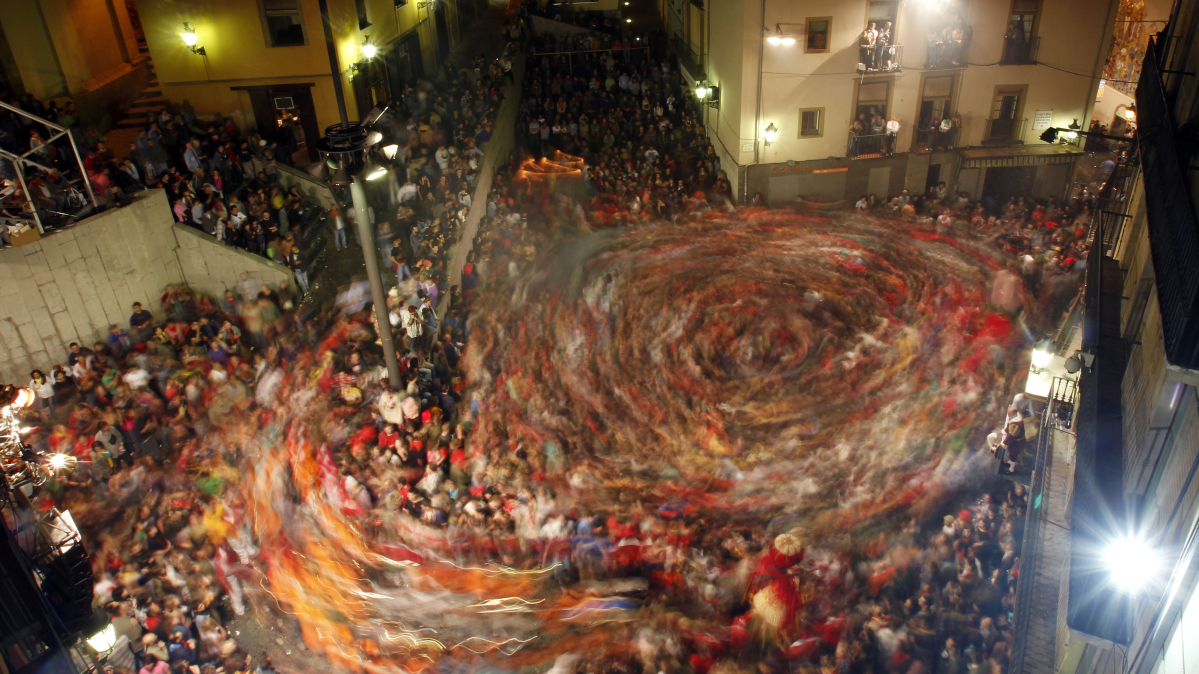
Thousands of revellers packed Berga's main square as fire-devil performers showered the crowd with sparks during Catalonia's UNESCO-listed La Patum festival.
The annual La Patum festival transformed the main square of Berga, a town in the Catalan pre-Pyrenees, into a spectacle of fireworks, flames and thick smoke as the "Plens" - fire-devil performers covered in pyrotechnics - danced among crowds of thousands.
Fire-devil performers take centre stage
Reuters footage captured the festival's most iconic moment as the Plens filled the square, creating a dramatic display of light, smoke and sound while revellers danced beneath cascading sparks. The performers, dressed in costumes adorned with fireworks, moved through the packed square as pyrotechnics erupted around them, turning the historic space into what witnesses described as a sea of fire.
Held each year during the Corpus Christi celebrations, the festival combines medieval traditions, music, giant figures, mythical creatures and pyrotechnic displays. La Patum traces its origins to medieval Corpus Christi festivities and has been recognised by UNESCO as an Intangible Cultural Heritage of Humanity since 2005.
Dating back more than six centuries, the event remains a powerful symbol of Catalan cultural identity, attracting thousands of participants and visitors to Berga each year. The celebration unfolds over several days, with the Plens performance marking one of its most dramatic and visually striking moments.
Six centuries of Catalan identity
Beyond the pyrotechnics, La Patum represents a living link to Catalonia's medieval past. The festival features processions of giant figures depicting historical and mythical characters, traditional music played on local instruments, and dances passed down through generations. Each element carries symbolic significance tied to the region's history and cultural resilience.
UNESCO's recognition highlighted the festival's role in maintaining community cohesion and passing cultural knowledge from one generation to the next. The designation also brought increased international attention to Berga, a town of around 16,000 residents that swells with visitors during the festival.
Local authorities and cultural organisations work throughout the year to prepare the intricate costumes, coordinate performances and implement safety measures for the pyrotechnic displays. The festival's survival, including through periods of political repression, underscores its enduring importance to Catalan identity.
Read more:
















What is your opinion on this topic?
Leave the first comment