Global health organisation CEPI will provide around $60 million to Moderna and two other partners to speed up the development of vaccines targeting the Ebola Bundibugyo strain, which is currently driving an outbreak in eastern Democratic Republic of Congo.
The Coalition for Epidemic Preparedness Innovations (CEPI), which played a key role in financing vaccine development during the COVID-19 pandemic, said it aims to accelerate early-stage testing of candidate vaccines within months, despite the absence of any approved treatment for the strain.
CEPI head Richard Hatchett said it may be possible to prepare Ebola Bundibugyo (BDBV) vaccine candidates for clinical trials within “a couple of months,” though he cautioned that development timelines remain uncertain, particularly given security constraints in eastern Congo.
“There are currently no approved BDBV vaccines or treatments,” Hatchett said, adding that the prospect of vaccines on “a not infinitely distant horizon” could help advance planning on funding and procurement.
Vaccine pipeline expands
CEPI said up to $50 million will support Moderna’s investigational BDBV vaccine candidate, including preclinical and early clinical development, as well as potential manufacturing scale-up and later-stage trials if early results are positive.
The organisation will also allocate up to $8.6 million to a vaccine developed by the University of Oxford and manufactured by the Serum Institute of India, and an initial $3.2 million to a candidate developed by the International AIDS Vaccine Initiative (IAVI).
IAVI’s single-dose candidate uses a platform similar to Merck’s approved Ebola vaccine Ervebo, which targets the Zaire strain. The organisation said early animal studies have shown survival benefits, but it remains unclear who will lead clinical trials.
CEPI said earlier outbreaks, including West Africa’s 2014-2016 epidemic, demonstrated the need for rapid deployment capacity, but warned that financing and logistics remain major challenges.
Funding boost
Separate funding commitments have also been made by Gavi, which pledged up to $50 million for response efforts, while the World Bank’s Pandemic Fund has announced grants of up to $220.6 million.
Hatchett said ensuring equitable access will be the next major challenge once vaccines are developed, noting that hundreds of thousands of doses were required to control previous Ebola outbreaks in the region.
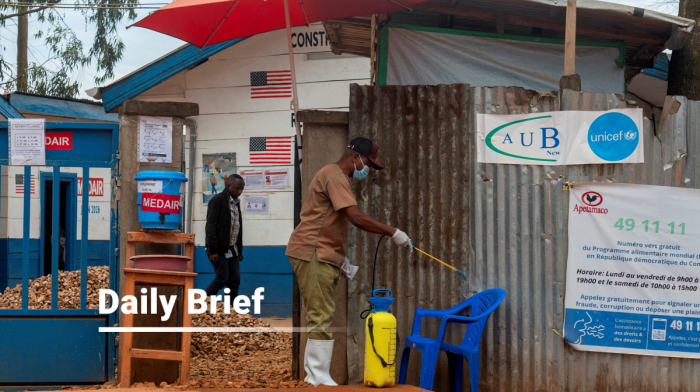
The announcements come as health agencies continue to respond to the Ebola outbreak in Congo, which has so far recorded 282 confirmed cases and 42 deaths, alongside around 1,100 suspected cases under investigation, according to the Africa Centres for Disease Control and Prevention and the World Health Organization (WHO).
Nine additional cases have also been confirmed in Uganda, including one death, raising concerns about cross-border transmission.















What is your opinion on this topic?
Leave the first comment