U.S. Treasury to broaden scope of secondary sanctions on Iran
Only four commodity vessels crossed the Strait of Hormuz on Sunday, following 13 transits a day earlier, as disruptions continue to restrict traffi...
Nov 25 (Reuters) - Oil prices steadied on Monday following 6% gains last week, with mounting tensions between Western powers and major oil producers Russia and Iran raising fears of supply disruptions and keeping a floor under prices.
Brent crude futures fell 0.34%, or 26 cents, to $74.91 a barrel by 0931 GMT, while U.S. West Texas Intermediate crude futures were at $70.89 a barrel, down 35 cents, or 0.49%.
Both contracts last week notched their biggest weekly gains since late September after Russia fired a hypersonic missile at Ukraine in a warning to the United States and Britain following strikes by Kyiv on Russia using U.S. and British weapons.
"Oil prices are starting the new week with some slight cool-off as market participants await more cues from geopolitical developments and the Fed's policy outlook to set the tone," said Yeap Jun Rong, market strategist at IG.
In addition, Iran reacted to a resolution passed by the U.N. nuclear watchdog on Thursday by ordering measures such as activating various new and advanced centrifuges used in enriching uranium.
"The likelihood for removal of some Iranian supplies has increased following the censure of Iran over its nuclear programme and the regime's agreement to hold talks suggests that the U.S. will enforce sanctions – this could remove around 1mmbopd of supply," said Panmure Liberum analyst Ashley Kelty.
The Iranian foreign ministry said on Sunday that it will hold talks about its disputed nuclear programme with three European powers on Nov. 29.
Markets are also expected to move this week ahead of the OPEC+ meeting on Dec.1, where the group may stick with deep oil cuts for longer due to weak demand.
"The OPEC+ summit on December 1, will further postpone the start of the planned production increases until February. Pushing back the start until Q2 or later is another possibility that would add even more support," said Tim Evans, an independent energy analyst.
Investors were also focused on rising crude oil demand in China.
China's crude imports rebounded in November as lower prices drew stockpiling demand. Chinese crude imports are likely to be further lifted by an additional import quota of at least 5.84 million metric tons (116,800 bpd) issued to independent refiners for cargoes arriving into next year, people familiar with the situation said on Monday.

Iran on Saturday denounced U.S. plans to announce new sanctions that could put further strain on the Islamic Republic's economy and have an impact on its most important trading partners including China.
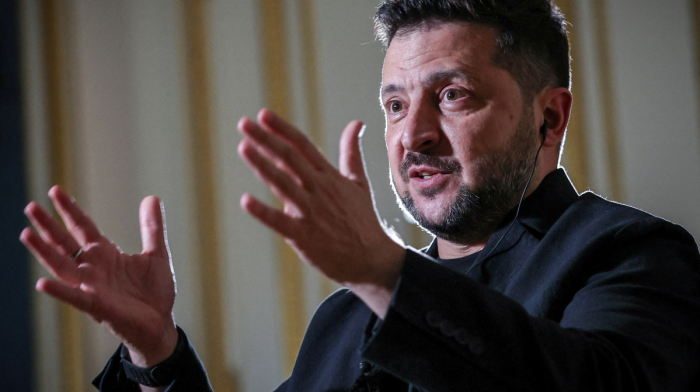
Ukraine’s President Volodymyr Zelenskyy said on Monday that Kyiv wants peace but will not surrender to Russia, as foreign leaders joined Independence Day events marking 35 years since Ukraine’s independence.
A newly created pro-government political party has secured a commanding victory in Kazakhstan's snap parliamentary election, according to exit polls, strengthening President Kassym-Jomart Tokayev's influence at a pivotal moment in the country's political transition.
Only four commodity vessels crossed the Strait of Hormuz on Sunday, following 13 transits a day earlier, as disruptions continue to restrict traffic through the key energy chokepoint.
Ukrainian President Volodymyr Zelenskyy has rejected calls for a wartime election, arguing that holding a vote while Russia's full-scale invasion continues would divide the country and undermine national unity.
Kazakhstan has received a fresh vote of confidence in its economy after S&P Global Ratings upgraded the country’s credit rating, citing stronger public finances, solid reserves and steady economic growth.
AnewZ Business Europe, a new weekday programme, takes viewers inside companies driving growth and innovation across the continent, with Brickken CEO Edwin Mata joining the programme for its first episode with host Chief Global Editor Guy Shone. The show airs every Friday.
Once associated mainly with Muslim-majority countries, Islamic finance has become a global industry. Its assets reached around $5.98 trillion in 2024, according to ICD-LSEG, as more countries explore Shariah-compliant finance.
Fuel restrictions have returned to parts of Moscow and the surrounding region, adding another strain to Russia’s economy as refinery outages and rising imports weigh on the rouble.
Azerbaijan exported goods worth $17.372 million to Armenia between January and July 2026, according to data from the State Customs Committee, as commercial ties between the two South Caucasus neighbours showed signs of expansion.
You can download the AnewZ application from Play Store and the App Store.
What is your opinion on this topic?
Leave the first comment