Argentina and U.S. sign critical minerals deal to strengthen supply chains
The United States and Argentina have signed a framework agreement to strengthen cooperation on critical minerals on Thursday (4 February), reaffirming...
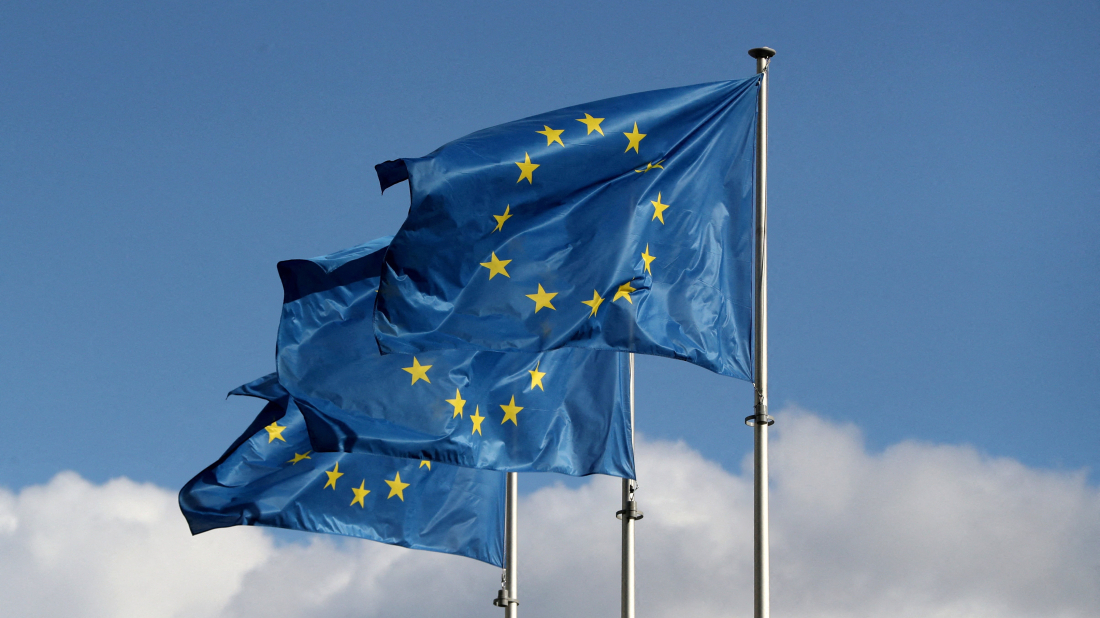
The European Union will impose counter tariffs on 26 billion euros ($28 billion) worth of U.S. goods from next month, the European Commission said on Wednesday, ramping up a global trade war in response to blanket U.S. tariffs on steel and aluminium.
The EU executive said, however, that it remained open to negotiations and considered higher tariffs in no one's interest.
U.S. President Donald Trump's increased tariffs of 25% on all steel and aluminium imports took effect on Wednesday as prior exemptions, duty free quotas and product exclusions expired.
The European Commission said it will end its current suspension of tariffs on U.S. products on April 1 and that its tariffs will be fully in place by April 13.
"The counter measures we take today are strong but proportionate. As the United States are applying tariffs worth $28 billion we are responding with counter measures worth 26 billion euros," European Commission chief Ursula von der Leyen told reporters.
"The EU must act to protect its consumers and business."
The suspended tariffs apply to products ranging from boats to bourbon to motorbikes, and the EU said it would now start a two-week consultation to pick other product categories.
The new measures will target around 18 billion euros in goods, with the overall objective to ensure that the total value of the EU measures corresponds to the increased value of trade impacted by the new U.S. tariffs, the EU said.
"In the meantime we will always remain open to negotiations," von der Leyen said.
"We firmly believe that in a world fraught with geoeconomic and political uncertainties, it is not in our common interest to burden our economies with such tariffs. We are ready to engage in a meaningful dialogue."
The proposed target products include industrial and agricultural products, such as steel and aluminium, textiles, home appliances, plastics, poultry, beef, eggs, dairy, sugar and vegetables.

Cuba’s Deputy Foreign Minister Carlos Fernández de Cossío has denied that Havana and Washington have entered formal negotiations, countering recent assertions by U.S. President Donald Trump, while saying the island is open to dialogue under certain conditions.
Talks with the U.S. should be pursued to secure national interests as long as "threats and unreasonable expectations" are avoided, President Masoud Pezeshkian posted on X on Tuesday (3 February).
Mexico said it will stop sending oil to Cuba as U.S. President Donald Trump ramped up pressure on the Caribbean nation.
Ukrainian President Volodymyr Zelenskyy accused Russia on Tuesday (3 February) of exploiting a U.S.-backed energy ceasefire to stockpile weapons and launch large-scale drone and missile attacks on Ukraine ahead of peace talks.
Paris prosecutors have summoned X chairman Elon Musk and former chief executive Linda Yaccarino for questioning in April as part of their probe into the X social media network, they said on Tuesday.
Wall Street ended sharply lower on Tuesday as investors worried about artificial intelligence (AI) creating more competition for software makers, keeping them on edge ahead of quarterly reports from Alphabet and Amazon later this week.
U.S. stock markets finished mixed on Wednesday (28 January) as investors reacted calmly after the Federal Reserve left interest rates unchanged, a decision that had been widely expected and largely priced in.
The S&P 500 edged to a record closing high on Tuesday, marking its fifth consecutive day of gains, as strong advances in technology stocks offset a sharp selloff in healthcare shares and a mixed batch of corporate earnings.
Chevron is in talks with Iraq’s oil ministry over potential changes to the commercial framework governing the West Qurna 2 oilfield, one of the world’s largest producing assets, after Baghdad nationalised the field earlier this month following U.S. sanctions imposed on Russia’s Lukoil.
Argentina's economic activity shrunk 0.3% in November compared with the same month last year, marking the first monthly contraction of 2025, data from Argentina's national statistics agency showed on Wednesday.
You can download the AnewZ application from Play Store and the App Store.
What is your opinion on this topic?
Leave the first comment