live Trump says U.S. could strike Iran ‘hard’ as Tehran warns of economic fallout- Middle East conflict
U.S. President Donald Trump said Washington could destroy Iran’s infrastructure “in two days,” while Tehran warned the U.S. would...
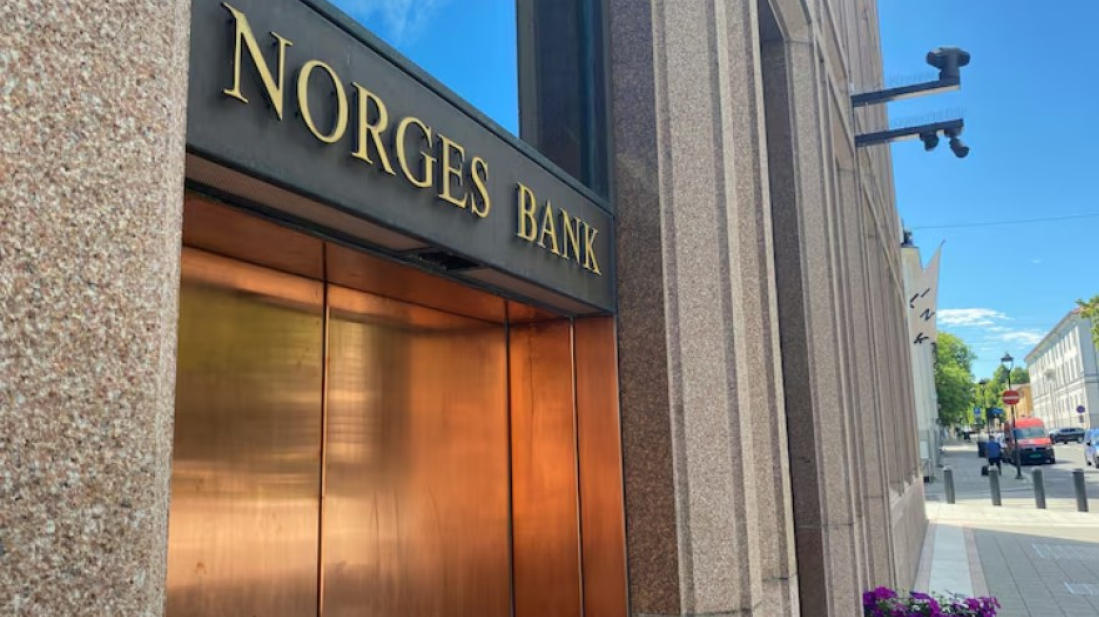
Norway's $2 trillion sovereign wealth fund said on Monday it is terminating contracts with asset managers handling its Israeli investments and has divested parts of its portfolio in the country over the situation in Gaza and the West Bank.
The announcement follows an urgent review launched last week following media reports that the fund had built a stake in an Israeli jet engine group that provides services to Israel's armed forces, including the maintenance of fighter jets.
"All investments in Israeli companies that have been managed by external managers will be moved in-house and managed internally," the fund said.
The fund, an arm of Norway's central bank, which held stakes in 61 Israeli companies as of 30 June, in recent days divested stakes in 11 of these, it said in a statement, without naming the groups.
The fund is now taking a closer look at the remaining 50 Israeli companies in the portfolio and will report back to the finance ministry by a deadline of 20 August.
"There is good reason to believe that there will be further sell-outs," Deputy CEO Trond Grande told Reuters, without saying how many companies could be affected.
The review will also lead to improved due diligence, it added.
"The fund's investments in Israel will now be limited to companies that are in the equity benchmark index. However, we will not be invested in all Israeli companies in the index," it said.
The fund, which owns stakes in 8,700 companies worldwide, held shares in 65 Israeli companies at the end of 2024, valued at $1.95 billion, its records show.
In the last year it sold its stakes in an Israeli energy company and a telecoms group over ethics concerns, and its ethics watchdog has said it is reviewing whether to divest holdings in five banks.
Norway's parliament in June rejected a proposal for the fund to divest from all companies with activities in the occupied Palestinian territories.

The U.S.-Israeli war with Iran loomed over U.S. President Donald Trump's visit to China, as signs emerged that the conflict is causing a shift in alliances across the Middle East.
Iran’s Foreign Minister Abbas Araghchi said Tehran has “no trust” in the United States and will only consider negotiations if Washington shows seriousness. His remarks came as talks on Iran’s nuclear programme continued, with Trump and Xi also opposing Iran acquiring nuclear weapons.
Thousands of fans turned out in Iran's capital Tehran for a massive farewell ceremony on Wednesday night for their national football team, wishing them success before their departure for the World Cup 2026 matches co-hosted by the United States and Mexico.
British Prime Minister Keir Starmer was fighting for his political survival on Thursday (14 May) after Health Secretary Wes Streeting resigned, saying he had “lost confidence” in Starmer’s leadership.
Chinese President Xi Jinping and U.S. President Donald Trump are holding high-level talks in Beijing on Thursday, following a ceremonial welcome, with both leaders highlighting cooperation despite ongoing tensions.
Negotiations between Samsung Electronics and its workforce on Wednesday have broken down, officials said, raising fresh concerns over potential disruption to South Korea’s export-heavy economy.
By the time American shoppers began noticing higher prices on everything from trainers to televisions, the world's two largest economies were already deep in a trade war that left the world wondering how it would end.
The Strait of Hormuz remains a vital maritime chokepoint and serves as the primary artery linking the Persian Gulf to international energy markets. With approximately 20% of global oil and gas shipments transiting this waterway, it is the backbone of energy security for Asia, Europe, and beyond.
China’s exports grew faster than expected in April, as overseas buyers moved quickly to secure supplies amid fears that the conflict involving Iran could drive up global energy and transport costs.
Asian stocks surged to record highs on 7 May as investors priced in growing hopes of a potential Middle East peace deal, while oil prices eased and the U.S. dollar weakened amid shifting global risk sentiment.
You can download the AnewZ application from Play Store and the App Store.
What is your opinion on this topic?
Leave the first comment