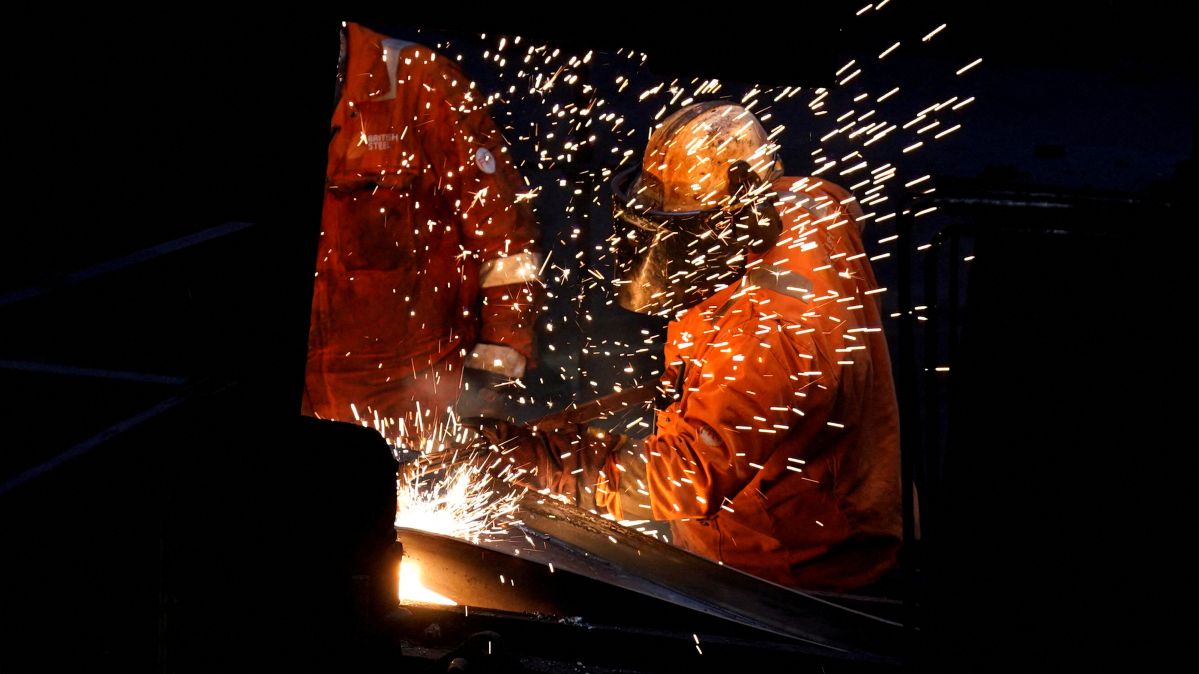
The UK government has nationalised British Steel, taking full ownership of the country's only primary steelmaker from its Chinese owners to safeguard the future of the UK's steel industry.
The UK government has nationalised British Steel, the country's only primary steelmaker, taking full ownership of the lossmaking company from its Chinese owners in a move to safeguard the future of the UK's steel industry.
Ministers confirmed the move on Thursday, describing it as an act in the national interest to preserve domestic production of virgin steel, which is made from newly mined raw materials, primarily iron ore, rather than recycled scrap metal.
Outgoing Prime Minister Keir Starmer said the decision secured the future of steelmaking in the UK, protected skilled jobs and safeguarded a vital national capability.
The government had previously taken operational control from Chinese firm Jingye in April 2025 to prevent the immediate closure of the Scunthorpe steelworks in northern England. The plant is the country's last remaining primary steelmaking site and supplies critical materials to the UK rail, construction and automotive sectors. Its collapse would have put 2,700 direct jobs at risk, along with thousands more across the supply chain.
Cost of keeping the plant open
UK Business Secretary Peter Kyle revealed that the government has been spending more than £1 million a day to keep the site operating. He told Times Radio the total cost so far had reached £640 million (US$866.1 million), but argued the expenditure was justified.
"We need that virgin steel production because if this were to disappear, we would become at the mercy of international markets," he said, adding that the intervention represented "value for money for the British public."
Parliament approves full takeover
Legislation authorising the full takeover received final parliamentary approval on Wednesday after the government failed to find a private buyer for the business, which was originally privatised under Margaret Thatcher in 1988.
The nationalisation is the latest in a series of state interventions to support the sector. In recent months, the UK has introduced new tariffs and quotas to counter the dumping of cheap steel on global markets, and has also reached a separate tariff agreement with the U.S.
Industry welcomes move
The industry has been hit by soaring energy costs and a persistent global oversupply of steel, which has squeezed margins and left British Steel losing money. Industry body UK Steel welcomed the takeover, describing it as the "right move", but cautioned that the sector now required "a long-term plan that restores British Steel to commercial sustainability".














What is your opinion on this topic?
Leave the first comment