Kazakhstan concludes first Kurultai election with turnout at 74.19%
Kazakhstan has concluded its first election to the new unicameral Kurultai, with turnout reaching 74.19 per cent, as vote counting begins following...
The European Bank for Reconstruction and Development (EBRD) has announced a loan of up to $25 million to support energy-efficiency upgrades at Tashkent Pipe Plant (TPP), one of Uzbekistan’s leading private steel producers.
The financing will enable the company to replace and modernise key production equipment, including the drawing mill used to manufacture long steel products such as wire rods. TPP will also install energy-efficient technologies at its pipe insulation workshop, including a medium-frequency induction heating system used in metal hardening and forging processes.
According to the EBRD, the project will support the continued modernisation of the company’s steel manufacturing operations while expanding production capacity for insulated large-diameter pipes used in infrastructure and industrial projects.
The upgrades are expected to reduce the plant’s annual natural gas consumption by 22 per cent and cut electricity use by up to 35 per cent, helping to improve operational efficiency and reduce emissions.
The investment is expected to strengthen TPP’s competitiveness and help meet growing demand for steel products in Uzbekistan’s construction and infrastructure sectors.
The project is being supported through the Japan-EBRD Cooperation Fund and the EBRD’s Finance and Technology Transfer Centre for Climate Change programme, which promotes the adoption of resource-efficient technologies.
The EBRD remains one of Uzbekistan’s largest international investors. To date, the bank has invested nearly $6.9 billion across 210 projects in the country, with most of the funding directed towards private sector development.
Uzbekistan has also remained the largest recipient of EBRD financing in Central Asia for the past six consecutive years.

Iran on Saturday denounced U.S. plans to announce new sanctions that could put further strain on the Islamic Republic's economy and have an impact on its most important trading partners including China.
A large-scale drone attack has hit Russia's Samara region, damaging facilities and disrupting operations at an Ozon logistics complex, according to regional authorities and the company.
Ukrainian President Volodymyr Zelenskyy has rejected calls for a wartime election, arguing that holding a vote while Russia's full-scale invasion continues would divide the country and undermine national unity.
U.S. President Donald Trump said Iran was not ready to make what he called the "right deal" with Washington as tensions persisted over the war and the Strait of Hormuz.
Start your day informed with AnewZ Morning Brief. Here are the top news stories for the 22nd of August, covering the latest developments.
Kazakhstan has concluded its first election to the new unicameral Kurultai, with turnout reaching 74.19 per cent, as vote counting begins following a major overhaul of the country’s parliamentary system.
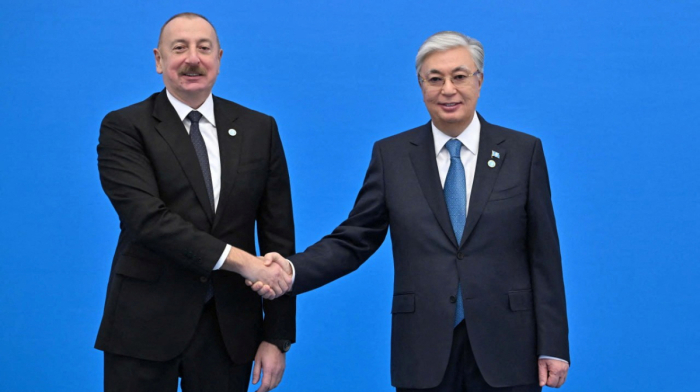
Azerbaijan and Uzbekistan have elevated bilateral ties with a Treaty on Eternal Friendship signed by Presidents Ilham Aliyev and Shavkat Mirziyoyev in Tashkent on 23 August. The leaders also agreed to expand trade, investment, transport, and regional cooperation.
Syria has called for international action after an Israeli drone strike hit a civilian vehicle near Damascus, warning that continued Israeli attacks could deepen instability and put civilians at greater risk.
Pakistan says it has added 12 sites to its UNESCO World Heritage Tentative List, taking the total from 25 to 37 and widening the country's roster of potential future nominations.
Uzbekistan and Georgia have launched an electronic permit system for international road freight, replacing paper documents in a move aimed at speeding up cross-border transport and cutting bureaucracy.
You can download the AnewZ application from Play Store and the App Store.
What is your opinion on this topic?
Leave the first comment