Georgia and Uzbekistan target $1 billion in annual trade
Georgia and Uzbekistan are aiming to nearly quadruple annual trade to $1 billion, up from $267.6 million in 2025, as the two countries seek to stre...
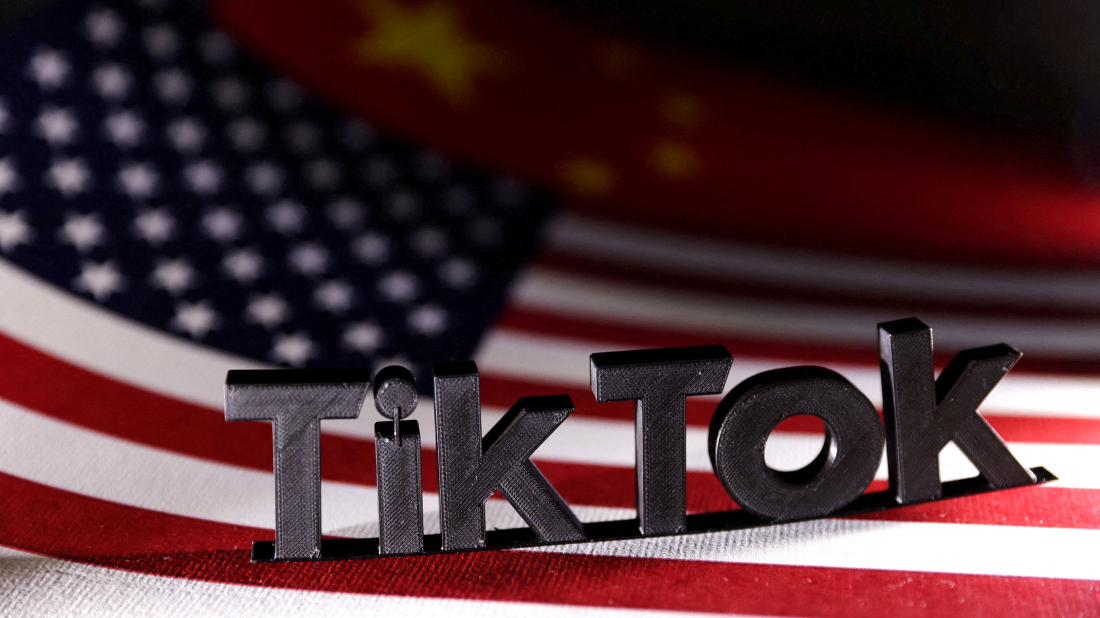
The U.S. DOJ urges the Supreme Court to reject Trump’s request to delay TikTok’s potential ban or forced sale by Jan. 19, citing national security concerns and data privacy issues.
The U.S. Department of Justice (DOJ) filed a request with the Supreme Court late on Friday to deny President-elect Donald Trump's request to delay a law requiring the popular social media app TikTok to either be sold or banned by January 19.
Trump had filed a legal brief last week, seeking time after his inauguration on January 20 to pursue a "political resolution" on the matter. The Supreme Court is scheduled to hear the case on January 10.
The law, enacted in April, mandates that TikTok's Chinese owner, ByteDance, divest its U.S. assets or face a ban. TikTok has yet to comment on the matter.
The DOJ argued in its filing that Trump’s request could only be granted if ByteDance could demonstrate a strong likelihood of success in the case, which the company has not done. The government stated that China’s attempts to undermine U.S. interests through data collection and covert influence operations are widely acknowledged.
The government also argued that ByteDance’s control of TikTok poses a significant national security threat, pointing to the vast amount of sensitive data TikTok collects from 170 million Americans, which could be used for espionage.
Trump's lawyer, D. John Sauer, argued that the incoming administration should be allowed time to negotiate a political resolution and requested that the Court postpone the divestment deadline.
TikTok, on the other hand, asked the Supreme Court to block the law on the grounds of free speech under the First Amendment. It pointed out that Congress had not taken action against other Chinese-owned apps like Shein or Temu, suggesting TikTok was being targeted due to its content, not its data practices.
If the law is not blocked by January 19, new downloads of TikTok would be banned on app stores like Apple and Google, although existing users could still access the app. Over time, however, the app’s functionality would degrade as companies would be prohibited from providing support.
President Biden could extend the deadline by 90 days if ByteDance makes significant progress toward divesting TikTok’s U.S. assets.
Trump's stance on TikTok has shifted since 2020, when he attempted to block the app and push for its sale due to concerns over its Chinese ownership.
One person was killed and nearly a dozen hurt in a fresh attack on Riyadh's international airport on Sunday, Saudi authorities reported, a day after a strike claimed by Yemen's Houthis killed 13 people and wounded more than 300.
The Saudi-led coalition in Yemen said late Monday that it intercepted and destroyed two ballistic missiles launched by the Houthi group toward Khamis Mushait in southwestern Saudi Arabia.
The Houthi movement has escalated their attacks on Saudi Arabia, targeting the airport in Riyadh and other cities, killing more than a dozen people.
The Kremlin on Monday rejected a 60-day ceasefire idea proposed by Ukrainian President Volodymyr Zelenskyy to allow his country to hold presidential elections, saying it wanted an overall peace deal instead.
Ukrainian President Volodymyr Zelenskyy says Russia hit at least six energy targets in deadly strikes across Ukraine, showing Moscow is unwilling to accept the energy ceasefire announced by U.S. President Donald Trump.
Asian stocks plunged to their lowest level in more than two months on Tuesday as advances by Chinese chipmakers rattled investor confidence in the artificial intelligence boom, despite soaring global semiconductor sales.
Artificial intelligence investment is helping sustain global growth at around 3 per cent, with Asia poised to reap major benefits. But soaring energy costs, unequal investment and growing pressure on young workers threaten to leave some economies behind.
Uzbekistan and Russia have a portfolio of more than 200 joint projects worth almost $6 billion, as the two countries continue to expand regional and business ties. The projects were discussed during the third meeting of the Council of Regions of Russia and Uzbekistan, held in Fergana, Uzbekistan.
In the marshlands of Malluba in southern Azerbaijan, Kamil Mammadov follows a routine that has been passed down through generations. His family has worked with medicinal leeches for centuries, harvesting and breeding a species known as Hirudo orientalis, or the Caucasian medicinal leech.
Baku is hosting the second Azerbaijan International Investment Forum (AIIF 2026) and it’s attracting more interest this year, Azerbaijan’s Deputy Prime Minister told AnewZ. “The agenda is very impressive. More guests, more interest,” he said.
You can download the AnewZ application from Play Store and the App Store.
What is your opinion on this topic?
Leave the first comment