America’s unfinished argument over Azerbaijan
From a dam on the Euphrates to the gasfields of Texas, Baku has given successive American presidents reasons to work with it. Congress has a question of its own.
Six countries are willing to chair the Organization for Security and Co-operation in Europe. With barely a month to go before Switzerland hands over, none has been chosen for 2027. The trouble is an unusual feature of the job: 56 governments can back a candidate and the 57th can still block it.
Suppose a freight train bound for Nakhchivan is held up in southern Armenia because two customs officers read the same rule differently. Who settles it? If the answer is the prime minister in Yerevan and the president in Baku, peace still has some way to go.
A road can be built through a public contract. A functioning market cannot. It requires businesses willing to invest, customers willing to buy and people confident enough to build their lives around both.
Marine Le Pen benefits from a fragmented opposition. The consequences could reach beyond the presidency, into Ukraine, NATO and the commitments that hold European security together.
The opening debates of the 81st General Assembly exposed the distance between collective promises and enforceable decisions. The question is what the UN can deliver when the states with the power to act cannot agree.
A new U.S.–Denmark–Greenland security deal expands Washington’s military access in Greenland but does not transfer sovereignty to the United States, with the agreement reaffirming Denmark’s territorial integrity and Greenlanders’ right to self-determination.
BRICS has a scale problem. Not because it is too small, but because its political ambitions are growing faster than its ability to turn them into common action.
Opening the Türkiye-Armenia frontier could cut costs, revive rail links and bring visitors through Kars. But traffic is not prosperity. Unless goods stop, businesses grow and jobs remain, Kars may become a corridor from which others profit.
Ankara marked a genuine transfer of conventional responsibility from Washington to its allies. But budgets are rising faster than command, integration and strategic enablers. Europe can carry more of NATO. It still cannot replace America.
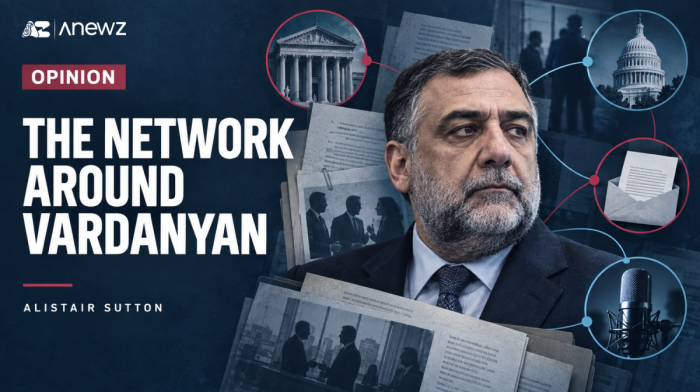
Public records reveal a layered effort spanning a foundation-provided campaign hub, international lawyers, registered lobbyists, diaspora advocates and professional communications firms. The network is not secret, and its existence is not the scandal. The missing provenance often is.
The collective-defence agreement between Türkiye, Saudi Arabia and Pakistan signals that regional powers no longer want to rely solely on external security guarantees. Whether it becomes a stabilising deterrent or another axis of rivalry remains unresolved.
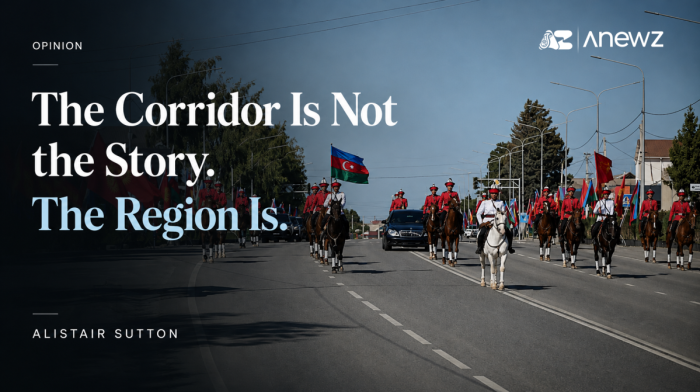
Azerbaijan's entry into the regional consultative format gives Central Asia reach across the Caspian. But turning geography into power will require more than summits and corridors.
You can download the AnewZ application from Play Store and the App Store.