live Massive crowds attend Ali Khamenei funeral procession in week-long farewell
Massive crowds are gathering in the streets of Tehran on Monday for the funeral procession of Iran's slain former supreme leader, Ali Khamenei, as ...
Scientists have identified a long-lost group of hunter-gatherers who vanished from Colombia’s highlands 2,000 years ago, reshaping our understanding of ancient human migrations in South America.
A groundbreaking DNA analysis has revealed traces of a previously unknown indigenous population that lived in what is now Colombia—and vanished thousands of years ago without leaving a genetic legacy. The findings, published in Science Advances, suggest a complete population turnover in the Colombian Andes, where today’s capital, Bogotá, now stands.
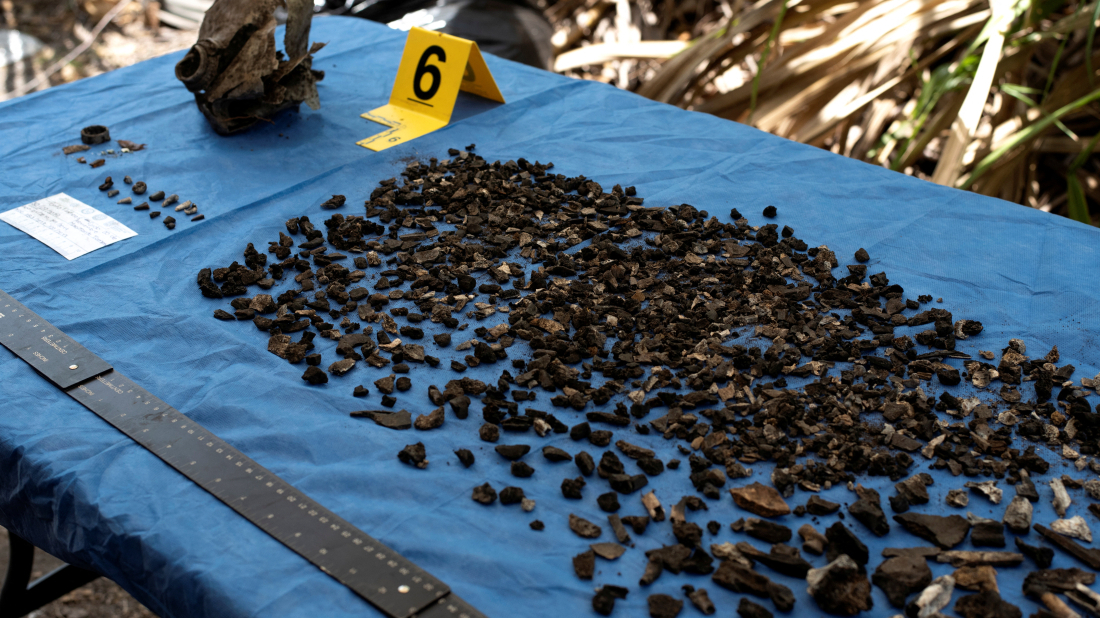
Researchers analyzed ancient DNA from 21 human skeletons unearthed at five archaeological sites on the Altiplano Cundiboyacense, a high plateau in central Colombia. These included samples from different time periods, ranging from early hunter-gatherers who lived 6,000 years ago to more recent indigenous groups from just over 500 years ago.
The study found that the earliest group—hunter-gatherers who inhabited the Checua site 6,000 years ago—had unique genetic signatures that disappeared entirely around 4,000 years ago. “We have not been able to find any descendants of these early hunter-gatherers from the Colombian Highlands,” researchers noted. “That means there has been a complete population exchange around Bogotá.”
Later populations, including those from the Herrera and Muisca cultures, show genetic ties to groups that likely migrated from Central America, bringing with them new technologies such as ceramics. This suggests a major cultural and demographic shift took place between 6,000 and 2,000 years ago.
The Herrera period, beginning around 2,800 years ago, saw the rise of pottery and more complex settlement patterns. However, how these innovations reached the highlands had remained unclear until now. The genetic evidence strongly supports the theory that migrating populations introduced these cultural changes—replacing the earlier indigenous group entirely.
This study not only uncovers a lost chapter of human history in South America but also challenges long-held assumptions about cultural continuity among indigenous communities in the Andes.

The death toll from Venezuela's devastating twin earthquakes has risen to 3,342, according to the country's information ministry, as rescue teams continue searching affected areas and survivors face an uncertain recovery.
Mexico's national football team has returned luxury Rolex watches gifted by American content creator Stevewilldoit after concerns that they could conflict with FIFA's ethics rules.
Governments are tightening restrictions on teenagers’ use of social media amid growing concerns over mental health, online safety and platform design, but questions remain over enforcement and whether bans can meaningfully change behaviour.
President Donald Trump said Iran is keen to reach a deal with the United States, claiming Washington had paused engagement to allow funeral ceremonies for late Iranian Supreme Leader Ali Khamenei.
Thousands of mourners gathered in Tehran on Sunday as Iran held funeral prayers for Ayatollah Ali Khamenei and four members of his family on the second day of mass processions. Three of Khamenei's sons attended the ceremony, while his successor, Mojtaba Khamenei, made no public appearance.
Humanoid robots stumbled, collided and recovered as they battled for the RoboCup 2026 football title on Sunday (5 July), showcasing the latest advances in robotics and artificial intelligence at the world's largest competition of its kind.
India is investigating a data breach at Tata Electronics that exposed sensitive documents linked to Apple's unreleased iPhone 18 Pro, marking the government's first public comments on the incident.
Humanity’s return to the Moon is about far more than planting flags and collecting samples. Under NASA’s Artemis programme, the goal is to establish a lasting human presence, with lunar rovers set to play a vital role in making that vision possible.
American technology company Snap has launched its first augmented-reality (AR) glasses for consumers, marking a major push into wearable computing as tech firms race to redefine personal devices in the AI era.
The Canadian government has introduced a digital safety bill that would ban children under the age of 16 from using social media, unless platforms meet specific safety standards.
You can download the AnewZ application from Play Store and the App Store.
What is your opinion on this topic?
Leave the first comment