Researchers say the remains belong to an adult member of an extinct species that lived up to 1.4 million years ago.
Researchers have uncovered bone fragments from an ancient cave in Spain, revealing the oldest known human face in Western Europe. The fossilized r
emains, consisting of the left cheek and upper jaw of an adult, belong to an extinct human species that lived between 1.1 million and 1.4 million years ago on the Iberian Peninsula.
This groundbreaking discovery provides new insights into early human history, suggesting that two distinct human species may have inhabited the region during the early Pleistocene. At the time, the cave, now known as the Sima del Elefante (Pit of the Elephant) cave near Atapuerca in Burgos, was surrounded by a lush landscape of humid woodlands, rivers, and streams rich in wildlife.
Dr. Rosa Huguet from the University of Rovira i Virgili in southern Catalonia, who contributed to the excavation, described the discovery as a crucial step in understanding human evolution in Europe. She said, "This paper introduces a new actor in the story of human evolution in Europe."
Until now, the oldest human remains in Western Europe were jawbones and teeth dating back to 1.1 million to 1.2 million years ago. Earlier discoveries from nearby caves, such as the Gran Dolina cavern, also uncovered human remains around 800,000 years old, which were attributed to Homo antecessor, or "pioneer man." However, th
e newly discovered remains at Sima del Elefante are more primitive and closely resemble Homo erectus, the first human species to leave Africa.
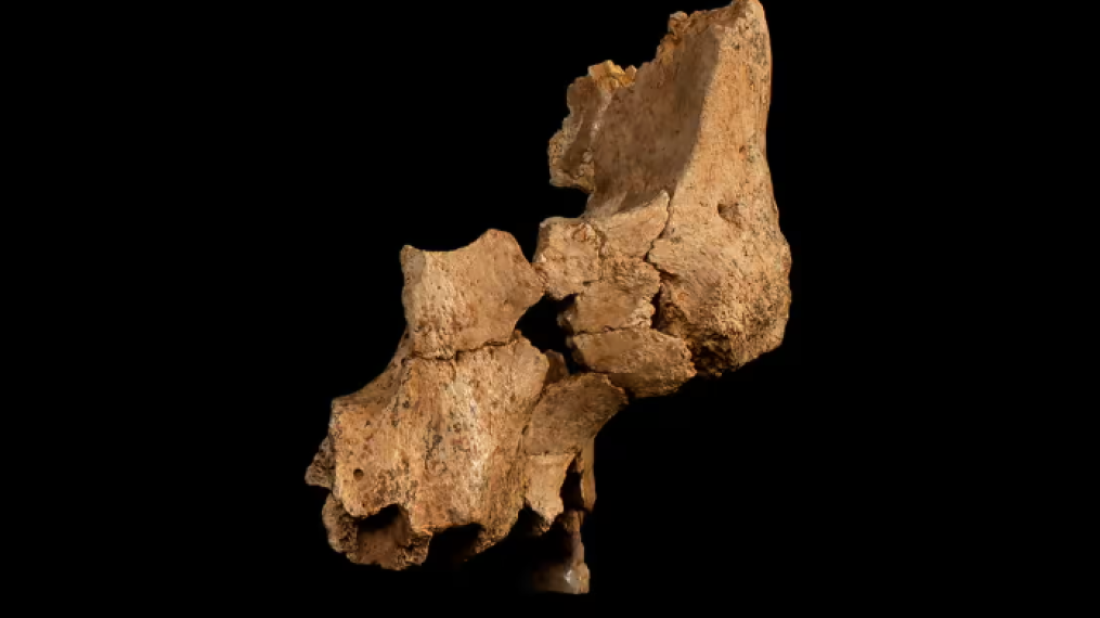
Due to the uncertainty of the fossil’s exact identity, researchers have coined the species Homo affinis erectus, indicating its close relationship with Homo erectus. Informally, the researchers have nicknamed the fossil “Pink,” after Pink Floyd’s iconic album The Dark Side of the Moon, symbolizing the "hidden face" of early humans.
Dr. María Martinón-Torres, director of the National Centre for Research on Human Evolution in Burgos, highlighted some key differences between the new fossil and earlier species. Pink’s flatter nasal structure sets it apart from Homo antecessor, which had a more modern-looking face and prominent nasal bones similar to Homo sapiens.
Chris Stringer, a leading researcher on human evolution at the Natural History Museum in London, called the find “a very important discovery.” The fossil’s age aligns with a period of extreme cooling around 1.1 million years ago, which might have pushed early human populations out of Western Europe, possibly explaining the shift in the types of humans found at Sima del Elefante.
The site itself paints a picture of the environment in which these early humans lived—a rich landscape with oaks, pines, and hazel trees, and rivers teeming with animals such as hippos, bison, and deer. Tools made of quartz and flint were also found, alongside animal bones showing evidence of butchering.
Among the most fascinating findings is a groove on the partial crown of Pink’s tooth, believed to be a wear mark from a rudimentary toothpick, hinting at the early humans' daily habits and tool use.
Dr. José María Bermúdez de Castro, co-director of the Atapuerca Project, explained, "This is another step towards understanding the first Europeans." He added that more fossils from contemporary sites are needed to better understand the unique characteristics of this species.
This discovery at Sima del Elefante offers a window into the distant past, expanding our knowledge of human evolution in Europe and the diverse forms of early humans that once roamed the continent.























What is your opinion on this topic?
Leave the first comment