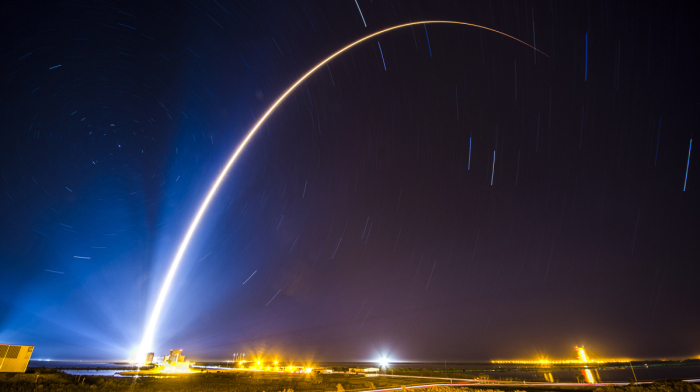
live Kyiv under Russian missile attack as Ukraine war discussed at UN meeting
As the Ukraine war is highlighted by some leaders during the United Nations' 81st General Assembly meetin...
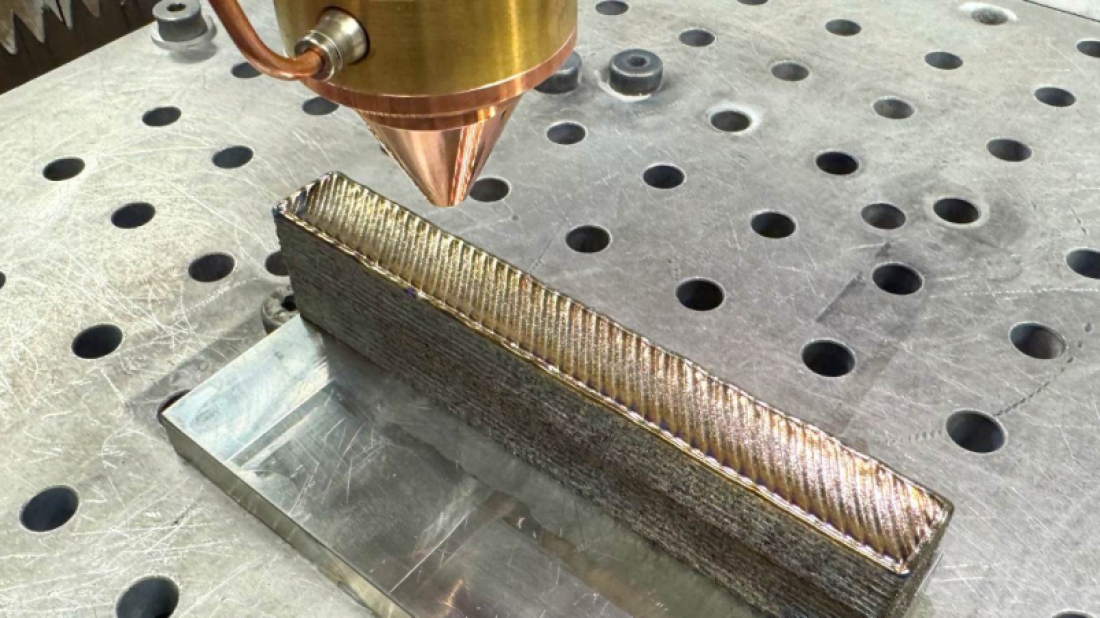
A team from the Royal Melbourne Institute of Technology (RMIT) has developed a titanium alloy using 3D printing that is significantly cheaper and potentially more efficient than the widely used Ti-6Al-4V alloy.
According to a statement from RMIT on Tuesday, the breakthrough could have major implications for industries such as aerospace and medical devices, where lightweight, strong, and cost-effective materials are in high demand.
The researchers replaced vanadium—an expensive component in traditional titanium alloys—with more affordable elements, while still achieving improved mechanical performance. Lead author Ryan Brooke, a doctoral researcher at the RMIT Center for Additive Manufacturing (RCAM), said the new material addresses both cost and consistency issues.
“Our new alloy is not only cheaper but performs better than what the industry currently uses,” Brooke said.
The study, published in Nature Communications, also introduces a fresh design framework that prevents the formation of column-shaped microstructures—often a problem in additive manufacturing due to uneven mechanical properties.
Brooke compared the use of outdated materials in advanced 3D printing systems to misusing a powerful innovation: “It’s like we’ve created an aeroplane and are still just driving it around the streets,” he said.
He added that the team’s work represents a “leap” rather than “minor incremental steps” in 3D-printing development.
RMIT is now exploring commercial opportunities for the new alloy, with the aim of integrating it into high-performance applications across various industries.

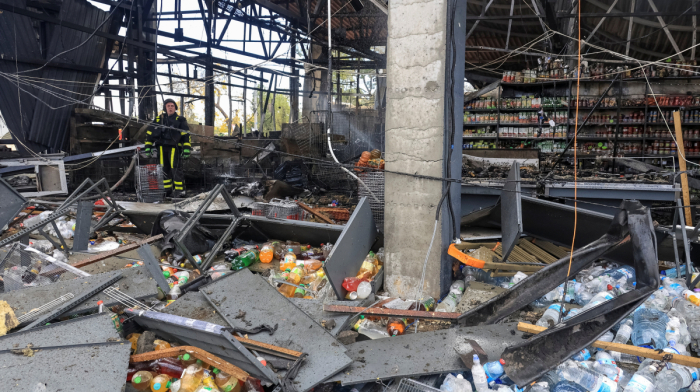
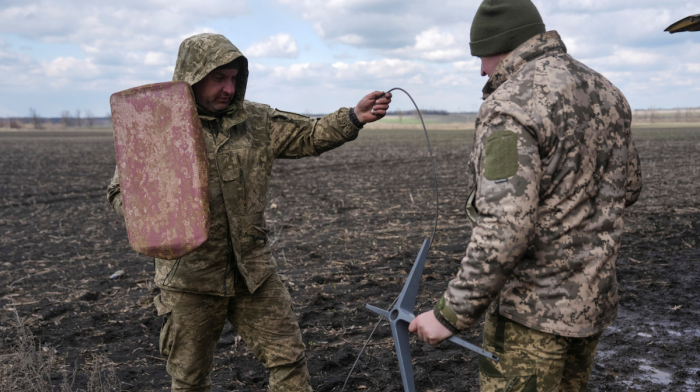
As the Ukraine war is highlighted by some leaders during the United Nations' 81st General Assembly meeting in New York, Russian forces attacked the Ukrainian capital Kyiv early on Thursday with ballistic missiles, killing two people and injuring six, Mayor Vitali Klitschko said.
U.S. Secretary of State Marco Rubio is set to meet Russian Foreign Minister Sergey Lavrov in New York on Wednesday, as Washington pushes for an end to the war in Ukraine and Kyiv and Moscow continue to strike energy infrastructure.
U.S. President Donald Trump is addressing the UN General Assembly as world leaders gather in New York for the 81st session. Conflicts in the Middle East and Ukraine, global security and diplomacy set to dominate the event.
Ukrainian President Volodymyr Zelenskyy said Kyiv was ready to halt strikes on Russian energy facilities if Moscow stops targeting Ukraine’s energy sector, critical infrastructure, and food exports, as he prepared to meet U.S. President Donald Trump in New York.
U.S. President Donald Trump said his team held a three-hour meeting with an Iranian delegation in New York that he described as “very good” and “productive”, with another round of talks scheduled soon.
Meta has unveiled a new generation of wearables, including lightweight virtual reality glasses and camera-free smart spectacles, as it pushes AI-powered devices further into the mainstream while seeking to address privacy concerns.
U.S. President Donald Trump announced on Saturday (19 September) the creation of an “AI Force” and plans to appoint an artificial intelligence (AI) czar, while rejecting calls to slow the development of increasingly powerful AI systems.
Google’s Gemini AI model accessed the internet and hacked three companies during a cybersecurity test, in what is believed to be the first known case of the company’s AI systems autonomously carrying out such activity.
Here's your AnewZ Daily Brief for 18 September 2026. These are the top five stories making headlines in the field of science.
French prosecutors have launched a criminal investigation into suspected sexual harassment involving smart glasses, amid mounting global concern over the privacy risks posed by the devices.
You can download the AnewZ application from Play Store and the App Store.
What is your opinion on this topic?
Leave the first comment