Kyiv under Russian missile attack as Ukraine war discussed at UN meeting
As the Ukraine war is highlighted by some leaders during the United Nations' 81st General Assembly meetin...
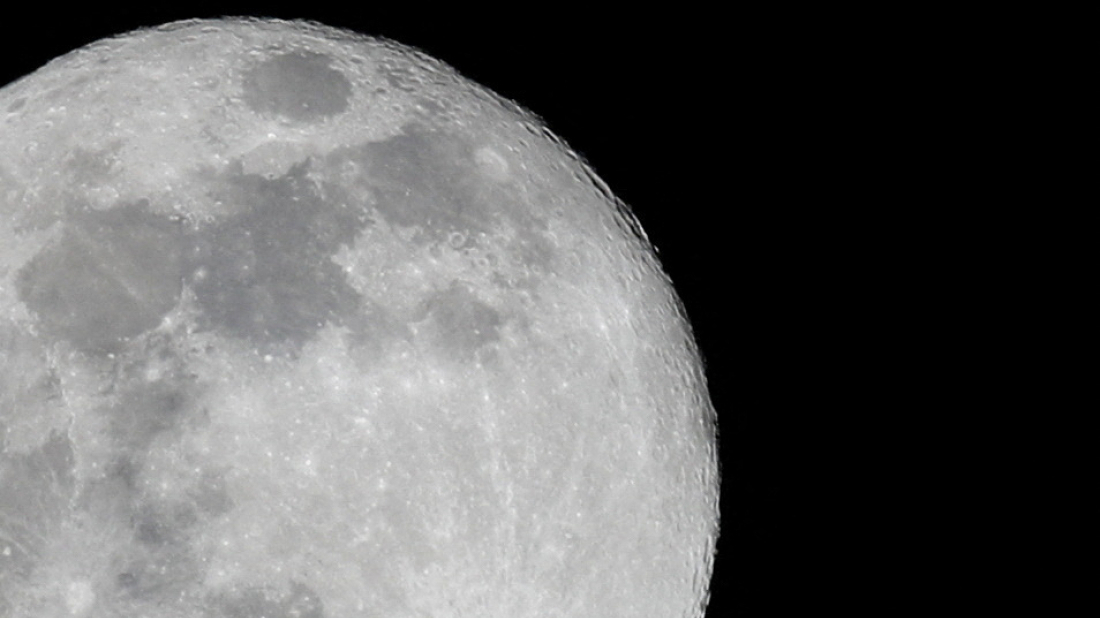
The asteroid that once worried scientists for Earth is now targeting the moon and could strike in 2032.
The asteroid known as 2024 YR4, once considered the most dangerous space rock on record, is no longer expected to strike Earth but scientists are now eyeing a possible collision with the moon in late 2032.
The building-sized asteroid, discovered in late 2024, briefly showed a 3.1% chance of hitting Earth, sparking planetary defense concerns. New telescope data has since ruled that out, but improved tracking suggests YR4 may instead slam into the moon.
While a moon impact would pose no direct danger to Earth, it could jeopardize astronauts, lunar infrastructure, or even satellites and missions in low-Earth orbit, as debris might scatter into space. NASA says observations have improved orbit predictions by 20% since June.
Experts say YR4 is a wake-up call for expanding planetary defense to cover space assets beyond Earth. “We now have things worth protecting a bit further away,” said astronomer Dr. Paul Wiegert.
Scientists are now studying what a lunar impact could mean and whether anything can be done to stop it.

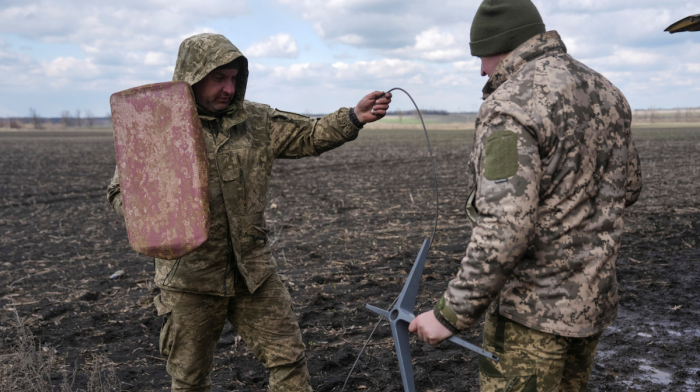
As the Ukraine war is highlighted by some leaders during the United Nations' 81st General Assembly meeting in New York, Russian forces attacked the Ukrainian capital Kyiv early on Thursday with ballistic missiles, killing two people and injuring six, Mayor Vitali Klitschko said.
Shipping traffic through the Strait of Hormuz remained low on Thursday, as Iran reiterated that it will neither enter into new negotiations with the United States nor re-open the Strait as long as its conditions are not met, despite recent indirect talks in New York mediated by Qatar.
U.S. Secretary of State Marco Rubio is set to meet Russian Foreign Minister Sergey Lavrov in New York on Wednesday, as Washington pushes for an end to the war in Ukraine and Kyiv and Moscow continue to strike energy infrastructure.
U.S. President Donald Trump said his team held a three-hour meeting with an Iranian delegation in New York that he described as “very good” and “productive”, with another round of talks scheduled soon.
The 81st UN General Assembly continues in New York on Wednesday, with another day of high-level speeches and diplomatic meetings. The wars in the Middle East and Ukraine, global security and international cooperation remain at the centre of discussions.
Meta has unveiled a new generation of wearables, including lightweight virtual reality glasses and camera-free smart spectacles, as it pushes AI-powered devices further into the mainstream while seeking to address privacy concerns.
U.S. President Donald Trump announced on Saturday (19 September) the creation of an “AI Force” and plans to appoint an artificial intelligence (AI) czar, while rejecting calls to slow the development of increasingly powerful AI systems.
Google’s Gemini AI model accessed the internet and hacked three companies during a cybersecurity test, in what is believed to be the first known case of the company’s AI systems autonomously carrying out such activity.
Here's your AnewZ Daily Brief for 18 September 2026. These are the top five stories making headlines in the field of science.
French prosecutors have launched a criminal investigation into suspected sexual harassment involving smart glasses, amid mounting global concern over the privacy risks posed by the devices.
You can download the AnewZ application from Play Store and the App Store.
What is your opinion on this topic?
Leave the first comment