Kazakhstan drives Central Asia transport investment with $32.3 billion
Kazakhstan accounts for 45% of Central Asia’s road and rail infrastructure investment, with around $32.3 billion committed as the region expa...
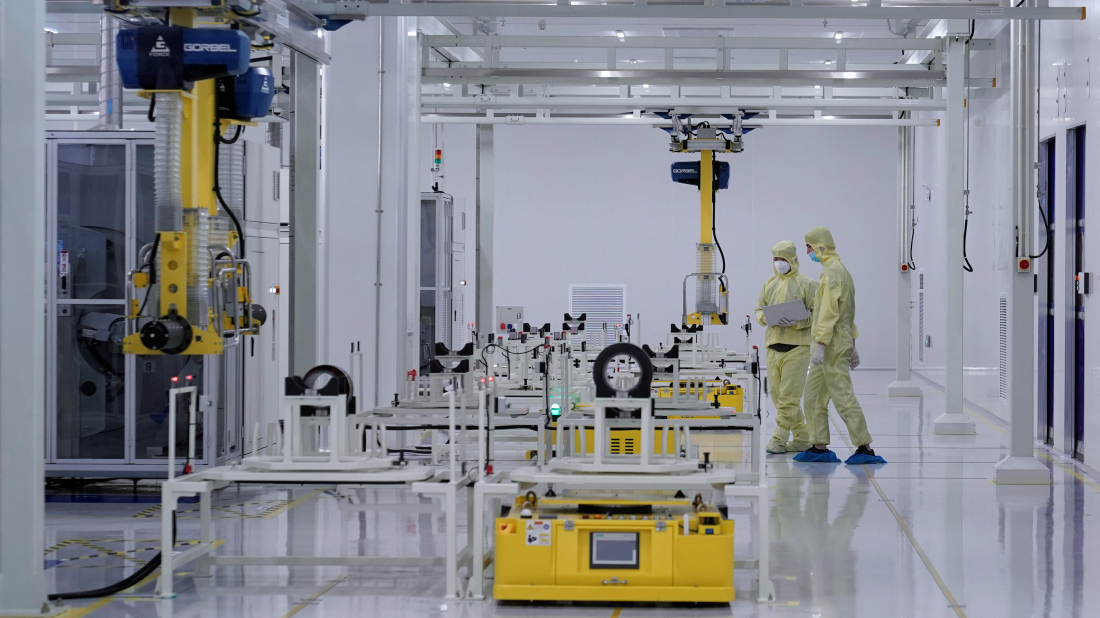
A major Japanese battery maker has stopped construction on a $1.6 billion plant in South Carolina, citing “policy and market uncertainty” tied to electric vehicles and global trade.
Automotive Energy Supply Corp. (AESC) said Thursday it’s temporarily halting work on the factory in Florence, which is meant to supply batteries for electric BMWs made in the state.
The company didn’t list specific concerns, but South Carolina Governor Henry McMaster pointed to worries over changes to federal EV tax credits, incentives for clean energy businesses, and potential new tariffs under President Donald Trump.
“We’re urging caution,” McMaster said. “Let things play out — all these changes are happening at once.”
AESC has pledged to restart construction, though it hasn’t given a timeline. It says it will still meet its promise to hire 1,600 workers and invest $1.6 billion, and has already spent $1 billion on the site.
The Florence plant is meant to supply battery cells to BMW, which is building its own assembly plant nearby. BMW says the AESC delay won’t affect its timeline to open in 2026.
South Carolina had previously pulled back $111 million in planned incentives after AESC scaled down its original plans. But the company is still set to receive $135 million in grants and $121 million in state bonds.
The pause comes as other clean energy projects in the U.S. are also facing uncertainty tied to Trump’s trade stance. An earlier analysis found $14 billion worth of clean energy projects have been canceled nationwide.
Still, South Carolina continues to bet big on EVs. Scout Motors, owned by Volkswagen, plans to open a $2 billion plant in the state in 2027 to build electric SUVs.

Shipping traffic through the Strait of Hormuz remains limited on Thursday, with no increase in vessel crossings as U.S.-Iran talks to resolve the conflict remained stalled. Nine commodity vessels transited the key waterway on Wednesday, unchanged from the previous day, according to Kpler data.
Shipping through the Strait of Hormuz has slowed, according to the latest data, as uncertainty over the waterway’s reopening kept most shipowners away. Six commodity vessels crossed the strait on Tuesday, down from nine the day before and below the 10-day daily average of 11.
Russia is open to listening to new proposals on how to reach a settlement on the Ukraine conflict, a senior Russian diplomat said, but any proposals should reflect the "realities on the ground".
Start your day informed with AnewZ Morning Brief. Here are the top news stories for the 20th of August, covering the latest developments.
Five years after Evergrande's debt crisis rattled global markets, founder Hui Ka Yan has been sentenced to life in prison, marking a dramatic new chapter in the downfall of China's former property giant.
An artificial intelligence agent running an experimental store in San Francisco has recommended dismissing a human employee after the worker repeatedly arrived late for shifts.
Nvidia is teaming up with some of the biggest names in global finance in a move that underscores how artificial intelligence is rapidly becoming one of the world's most sought-after investment themes.
Parts of Europe and the Arctic will briefly fall into darkness on Wednesday, 12 August, as the Moon passes between Earth and the Sun in a total solar eclipse.
Meta said one of its AI models hacked another company's systems during cybersecurity testing, intensifying concerns about how developers can contain increasingly capable AI systems following similar incidents involving Anthropic and OpenAI.
Scientists say the accidental crash of a discarded SpaceX rocket stage into the moon has provided valuable data on impact cratering while posing no threat to Earth or lunar hardware.
You can download the AnewZ application from Play Store and the App Store.
What is your opinion on this topic?
Leave the first comment