Uzbekistan’s grape exports have grown rapidly. In January-August 2025, the country exported 86,200 tonnes of fresh grapes worth $78.3 million to 19 countries but can it turn these crops into a recognisable international product?
Fergana is one of Uzbekistan’s biggest agricultural regions, with fruit and vegetable exports reaching $403 million in 2025. Within the region, Oltiariq has developed a particular reputation for grape production.
The district is now supplying traditional markets across the CIS while increasingly reaching consumers further afield.
In 2025, countrywide grape exports recorded a 64 per cent increase in volume compared with the same period of 2024.
Russia remained by far the largest destination, receiving 63,400 tonnes, followed by Kazakhstan with 15,200 tonnes and Kyrgyzstan with 4,500 tonnes.
But the export map is gradually becoming more diverse. Uzbekistan has already sent grapes to markets in Europe, the Middle East and the United States.
In 2023, a one-tonne trial shipment of Husayni grapes to New York reportedly sold out in two days. A subsequent contract provided for 250 tonnes to be air-freighted to New York for sale through NetCost food stores.
Trade data also shows that the UK imported about $2.05 million worth of grapes, fresh or dried, from Uzbekistan in 2025.
What makes the export possible?
The challenge with table grapes is not simply growing them. Fresh fruit has a limited shelf life, meaning storage, packaging and transport can determine whether a distant market is commercially viable.
That is particularly important in Oltiariq, where grapes are increasingly being prepared for sale outside the immediate harvest season.
According to a local grower who spoke to AnewZ, different varieties are placed in cold storage and can be preserved for up to six months. The grapes are treated and packed using specialised film and absorbent material before being sealed and stored.
Oltiariq has developed significant infrastructure around this trade. Fergana has around 4,500 hectares of vineyards, including approximately 3,400 hectares in Oltiariq.
In 2024, producers in the district shipped around 70,000 tonnes of grapes to markets in the CIS, Asia, Europe, Arab countries and the United States.
The wider market is also expanding. Mordor Intelligence estimates Uzbekistan’s table-grape market at $415.16 million in 2026, with the market projected to reach $537.47 million by 2031. The report links this development partly to investment in cold storage, pre-cooling, packaging and other post-harvest infrastructure.
Grape varieties
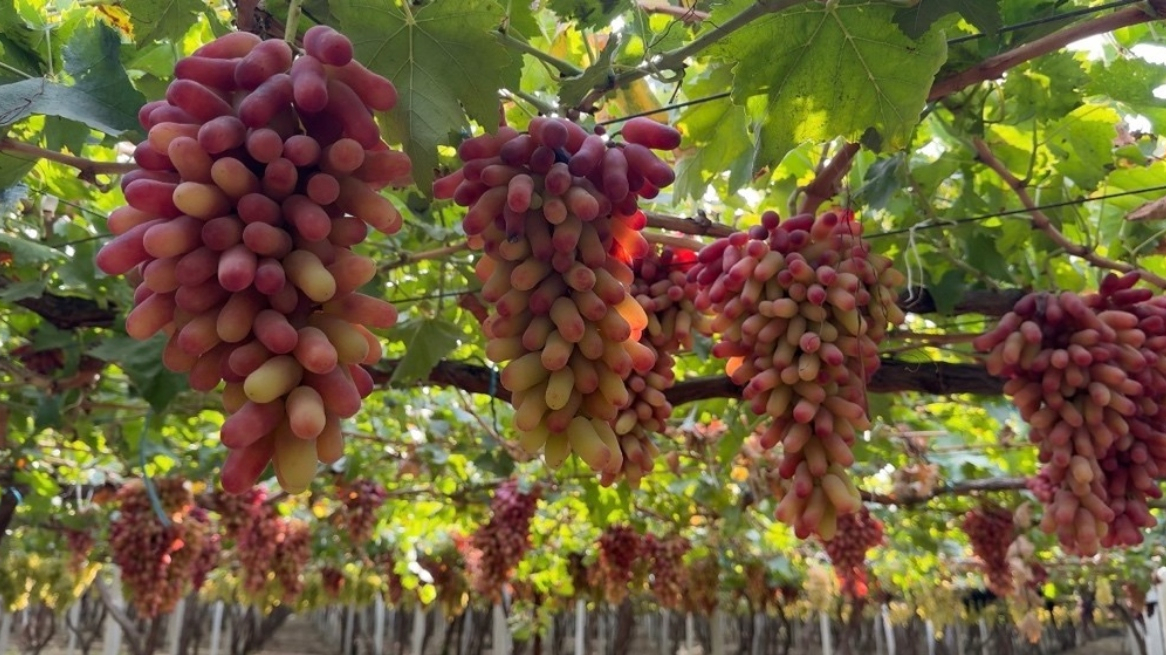
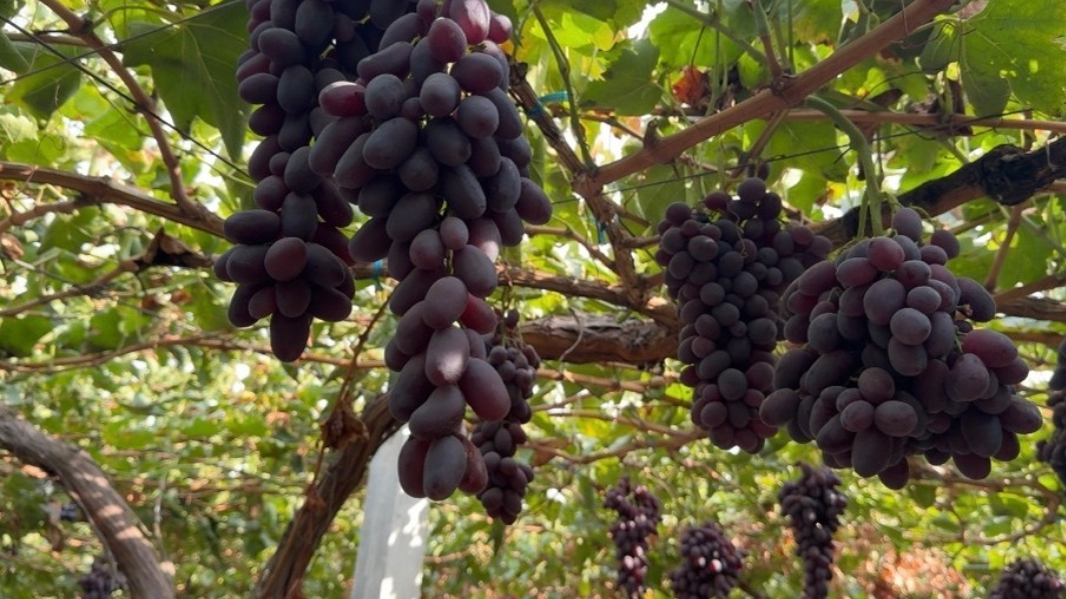
Uzbekistan has a rich selection of more than 300 types of grapes, that are divided into popular fresh grapes, raisins and varieties used for wine-making. One of the most popular variety is Rizamat – a famous local hybrid with enlarged, sweet, pinkish-red berries.
Khusayne, also known as lady’s finger (Kelin barmoq) are crispy green berries. While Kishmish is mostly known for its highly prizes seedless varieties used fresh or dries into sweet raisins.
For Uzbekistan, grapes sit at the intersection of agriculture, trade and cultural identity. The country is not replacing its established regional buyers in the near future.
Russia and neighbouring Central Asian markets still account for most exports. Instead, producers are adding new destinations where longer storage, specialised packaging and faster transport can make Uzbek grapes commercially viable.
The question is whether this expansion can turn varieties grown for generations in places such as Oltiariq into a product recognised not only as “Uzbek” in origin, but as a distinctive brand in international markets.
Read more:





















What is your opinion on this topic?
Leave the first comment