Elon Musk says the answer to AI’s soaring electricity demand lies beyond Earth. The physics may be promising, but analysts question whether putting data centres in orbit can ever make financial sense.
Artificial intelligence needs vast amounts of electricity, and the technology industry is struggling to find enough power to meet demand. Elon Musk has a proposal: stop building power-hungry data centres on Earth and put them in orbit, where the Sun never sets.
The idea has moved from conference speculation to regulatory filings. But many experts doubt it can work on the timescale Mr Musk suggests - or at a competitive price.
What is being proposed?
Speaking at the World Economic Forum in Davos in January, alongside BlackRock chief executive Larry Fink, Mr Musk argued that energy, rather than computer chips, is now the main constraint on AI. He said solar-powered AI data centres in orbit could become economically viable within a few years, according to the forum's account of the session. Reporting by pv magazine put his timeline at two to three years.
Days later, SpaceX applied to U.S. regulators for permission to launch up to one million satellites, according to the BBC. The filing argued that “orbital data centres” would be the most cost-and energy-efficient way to meet rising demand for AI computing. Reuters reported that the company was seeking approval for solar-powered satellites designed for the purpose. It later reported on the merger of SpaceX and Mr Musk's AI company, xAI, describing the move as a bet on data centres in space.
In June, ahead of a planned SpaceX share offering, Mr Musk said the AI satellites would use mostly existing technology, Reuters reported, citing a design outline from SpaceX engineer Ian Dahl.
Why space?
Mr Musk's case rests on several physical advantages.
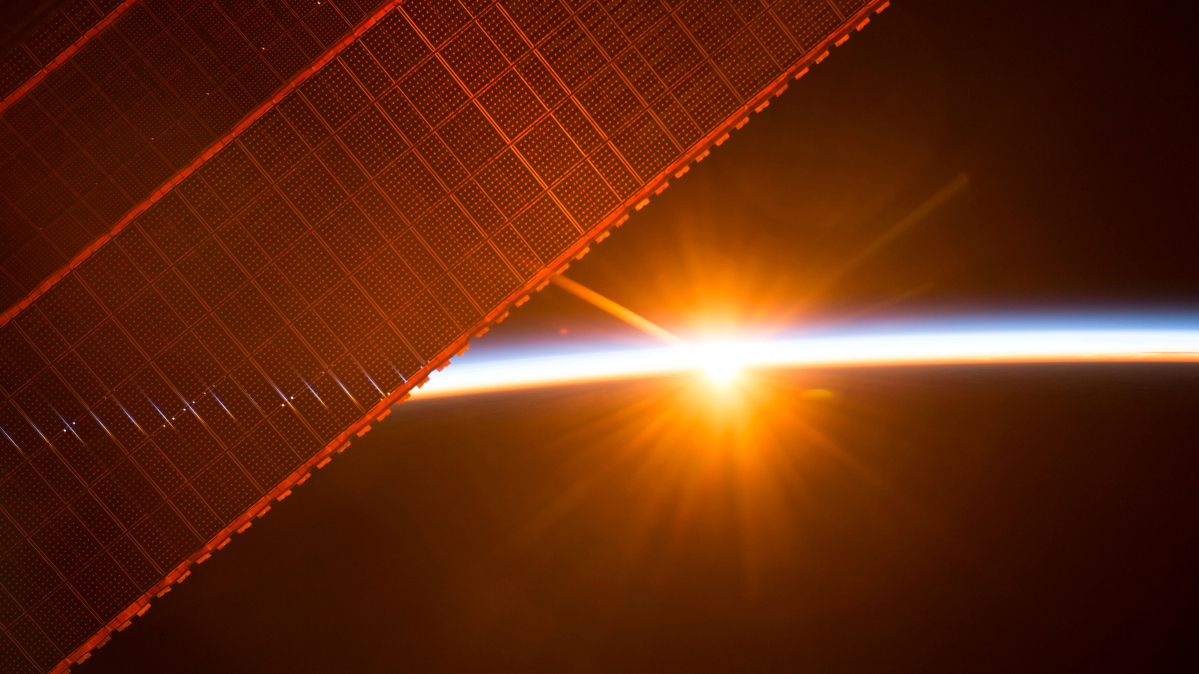
The first is sunlight. In the right orbit, a solar panel is almost constantly illuminated. There is no night, no cloud cover and less atmospheric interference. Mr Musk has said a panel can produce roughly five times as much energy in space as on the ground. On 29 September in Washington, he said that on Earth a panel typically delivers between a fifth and an eighth of its rated output, while ground-based solar also needs enormous batteries. “Always sunny in space,” he said.
The second is cooling. Chips generate heat, and cooling is a major cost for terrestrial data centres. Mr Musk has noted that the background temperature of space is about three kelvin (around -270°C), which he suggests makes radiative cooling nearly free.
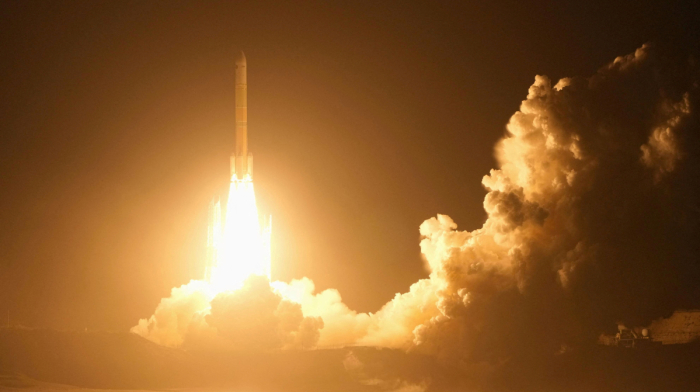
Then there is the cost of getting equipment into orbit. Mr Musk says the full reusability of SpaceX's Starship rocket could cut the price of reaching orbit “by a factor of 100”. At the same Washington event, he said he expects Starship to fly at least weekly next year. He also said he wants SpaceX and Tesla to reach 200 gigawatts of solar production a year. He has spoken of eventually scaling to “hundreds of terawatts” annually, starting with solar-powered AI satellites.
The problems
Independent analysts accept some of the physics. Far fewer are convinced by the economics.
The most-cited benchmark is a 2024 feasibility study by NASA's Office of Technology, Policy and Strategy. It examined space-based solar power, in which energy is collected in orbit and beamed to Earth, and found that two two-gigawattdesigns would cost 12 to 80 times more per kilowatt-hour than terrestrial renewables. It concluded that the designs would not be competitive even if access to space were free. A best-case combination of cheaper launches, 50 per cent-efficient solar cells and electric-propulsion transfers could cut costs by around 95 per cent.
More recent estimates are less severe, but still unfavourable. According to analysis summarised by Latitude Media in September, Bank of America puts the cost of a one-gigawatt orbital data centre at about $170 billion, roughly three times that of a ground-based equivalent. Boston Consulting Group says launch costs would need to fall from around $1,500 per kilogram to about $100.
SemiAnalysis, an independent research firm, published a model in June suggesting orbital computing is more than four times as expensive as terrestrial computing today. It sees costs converging around 2040, far beyond Mr Musk's two-to-three-year horizon.
The engineering challenges
Cost is not the only obstacle -
1) Heat: Space is cold, but a vacuum is an insulator rather than a coolant, so a spacecraft can only shed heat by radiating it away. Andrew Cavalier of ABI Research calculated, in a cover story for IEEE Spectrum, that a single Nvidia H100 chip would need 1.4 square metres of radiator at 60°C, while a 40-kilowatt rack of servers would need an 80-square-metre radiator.
That is roughly the size of a pickleball court. A 100-megawatt data centre could require at least 2,500 of them. Some engineers argue the problem is more manageable than it sounds. Analysis by Mach33 found that radiators would account for only 10 per cent to 20 per cent of a larger satellite's mass if the platform already carried enough solar panels.
2) Radiation: Cosmic rays and charged particles can flip bits in memory and damage chips. IEEE Spectrum's reporting on an orbital inference start-up identified this as a central concern for GPUs not designed for space.
3) Repair: Hardware on Earth can be swapped out. In orbit, it generally cannot, a point IEEE Spectrum also raised. Reuters reported in April that analysts compared the plan with Microsoft's abandoned undersea data-centre project, citing hardware that could be neither repaired nor upgraded.
The think tank Forethought assumes an annual failure rate of about 9 per cent, based on figures from Meta, which would leave a space data centre with roughly 38 per cent less of its initial computing power after five years. It cautions that real failure rates in orbit are unknown and could be much worse.
4) Debris: A constellation of up to a million satellites, as SpaceX has asked U.S. regulators to approve, would greatly increase congestion in orbit. A modelling study reported by Science in August found that planned mega constellations could reach the Kessler syndrome threshold, triggering a runaway build-up of debris that would make the swarms unsustainable. The syndrome was proposed in 1978 by the NASA astrophysicist Donald Kessler. Science identified SpaceX's one-million-satellite data-centre plan as perhaps the most notable potential source of debris.
5) Latency: According to IEEE Spectrum, only some workloads can tolerate delays of tens of milliseconds. Orbital computing is likely to be better suited to AI training and batch processing rather than real-time services.
Beaming power versus beaming data
Mr Musk's proposal differs from the older idea of space-based solar power, which sends energy to Earth via microwaves or lasers. His plan would use the electricity where it is generated — in orbit — and send only the results back via optical links. Analysts cited by Latitude Media see that as the more plausible architecture for the AI era because transmitting data is far easier than transmitting gigawatts of power.
The older idea is still being explored. The European Space Agency's Solaris programme is studying two concepts: a radio-frequency design developed with Thales Alenia Space and Italian energy company Enel, and a mirror-based design from Arthur D. Little and French energy company Engie, which would reflect sunlight onto existing solar farms.
A 2025 peer-reviewed study in the journal Joule, linked to the ESA research, offers a qualified endorsement. Even at six to nine times the cost of ground-based solar, it found that the mirror design could replace 80 per cent of wind and solar capacity in a 2050 European grid and cut battery needs by 70 per cent, because it would supply power when ground-based sources cannot.
What happens next?
Analysts broadly agree on the fundamental physics: sunlight is plentiful in orbit, and radiative cooling is possible. The disagreement is over whether those advantages can outweigh the enormous costs - and how soon.
The decisive factor may be Starship. If SpaceX can fly it frequently and bring launch costs down towards the levels analysts say are needed, the economics could shift dramatically. If not, orbital data centres may remain an expensive niche.
For now, AI's immediate energy challenge is likely to remain firmly grounded on Earth.
Read more:



















What is your opinion on this topic?
Leave the first comment