The United States and China should have “no illusions” about their differences on artificial intelligence, even as they work together to manage the technology’s risks, U.S. Treasury Secretary Scott Bessent has said.
Speaking to the National Committee on U.S.-China Relations in New York on Tuesday, Bessent said Washington wanted to “build a constructive relationship on the basis of balance and reciprocity” with Beijing.
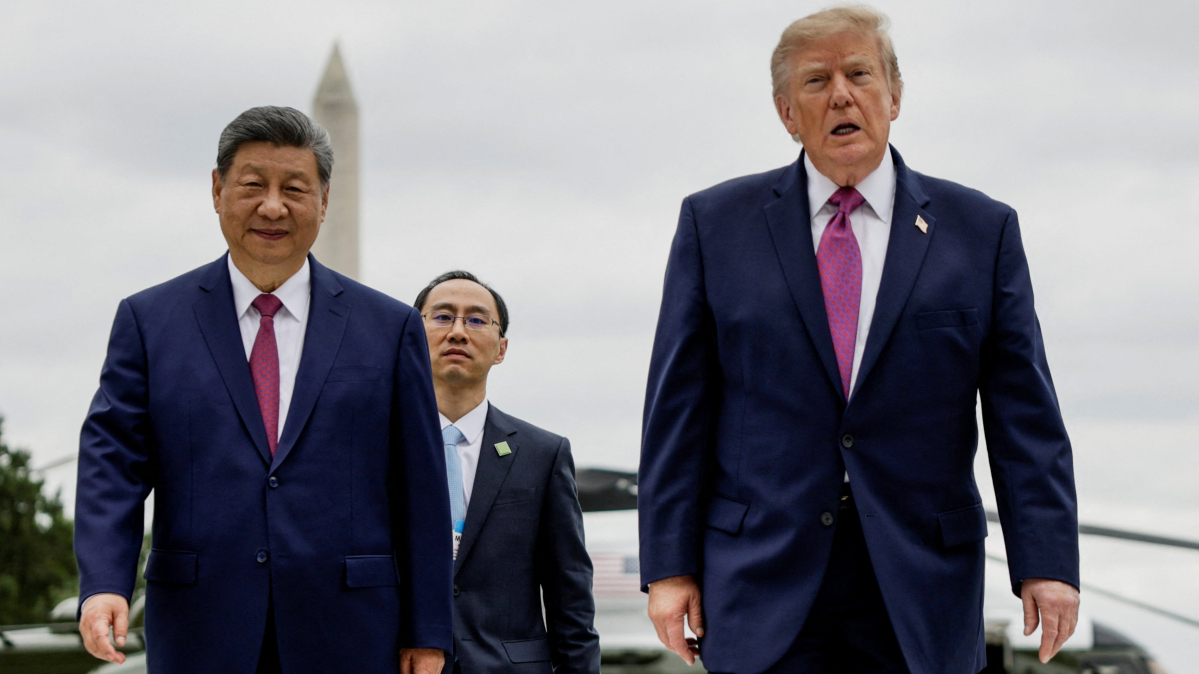
Bessent will travel to China next week for U.S. President Donald Trump’s third meeting this year with Chinese counterpart Xi Jinping. The talks are set to hold in Shenzhen on the sidelines of the Asia-Pacific Economic Cooperation (APEC) leaders’ summit on 18–19 November.
Bessent said the meeting would advance a new bilateral dialogue on “superintelligence”, the Trump administration’s preferred term for advanced AI. He said the aim was to guard against shared risks and “prevent a misunderstanding between our two systems”.
“We also expect to exchange best practices for evaluating and testing advanced models before their release, and for keeping human judgment firmly in command of this technology,” he said.
He added that the two sides had agreed to set up a direct channel to alert each other to serious AI incidents. Trump and Xi agreed on the alert system when they met at the White House in September, although Trump said at the time he was reluctant to add new guardrails because he wanted to protect U.S. leadership in the field.
“As we do so, we should harbour no illusions about the differences between the United States and China,” Bessent said. “Our interests will not always coincide.”
Nvidia controversy left out
Bessent did not mention the controversy around Nvidia chief executive Jensen Huang. The chipmaker’s board is investigating Huang after a New York Times report that he had an affair with a businesswoman suspected by U.S. security services of being a Chinese intelligence asset.
China’s foreign ministry has dismissed the spying accusations as “groundless” and “a smear”. Nvidia has said its board has no reason to believe national security or company secrets were compromised.
Huang attended the Trump-Xi summits in Beijing in May and in Washington in September. It is not clear whether he will join Trump in Shenzhen.
Bessent also pointed to trade measures agreed at the two earlier summits. They include a “Board of Trade” to set mutual tariff cuts on $30 billion of non-sensitive goods in each direction, and Chinese pledges to buy U.S. farm products.
A similar “Board of Investment” will handle issues such as market access for American companies in China, he said.
He acknowledged that the U.S. trade deficit with China remains a source of friction, but said Washington’s goal was to “de-risk, not to decouple” from trade with Beijing.
A fourth Trump-Xi meeting is expected in December at the G20 summit, which the U.S. is hosting in Miami.
Read more:












What is your opinion on this topic?
Leave the first comment