Despite its dominance in industrial robotics, China faces challenges in the race for humanoid robots due to its reliance on foreign technology and U.S. trade restrictions.
In January, Chinese President Xi Jinping convened top business leaders, including Huawei’s Ren Zhengfei and Alibaba’s Jack Ma, for a widely publicized meeting. Among them was Wang Xingxing, CEO of robotics startup Unitree Robotics, signaling China’s commitment to advancing its robotics sector within its $19 trillion economy.
China’s push for automation is driven by demographic shifts, including a shrinking workforce. Officials estimate a shortfall of nearly 30 million manufacturing workers by 2025, with projections indicating that by 2045, the workforce will decline to 645 million—well below its 2013 peak of 794 million. With an export-dependent economy, these trends threaten President Xi’s goal of doubling per capita GDP by 2035.
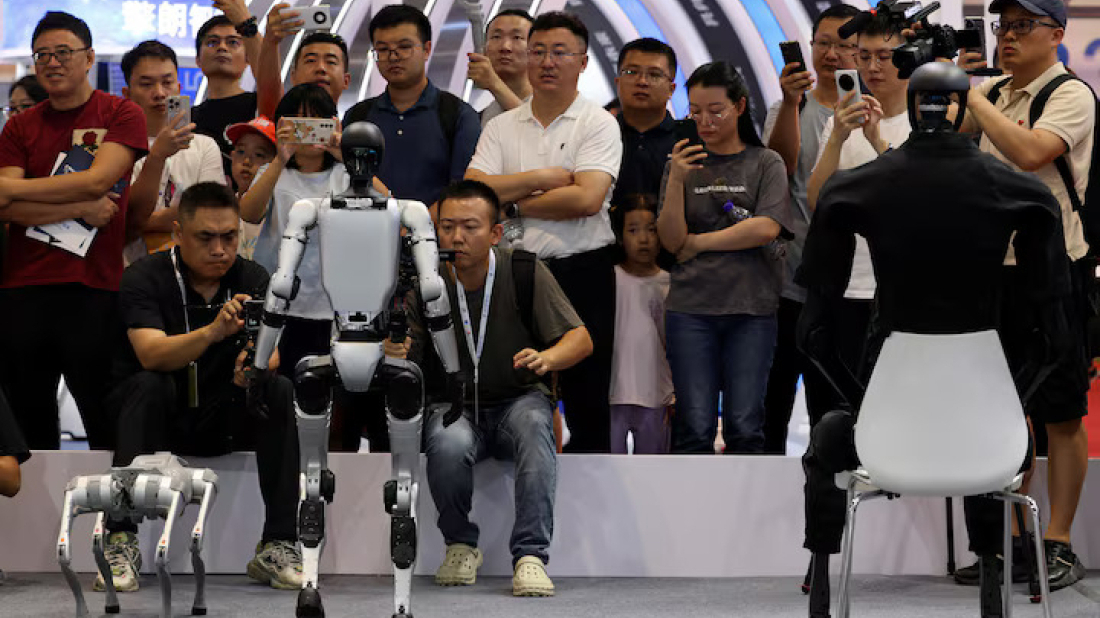
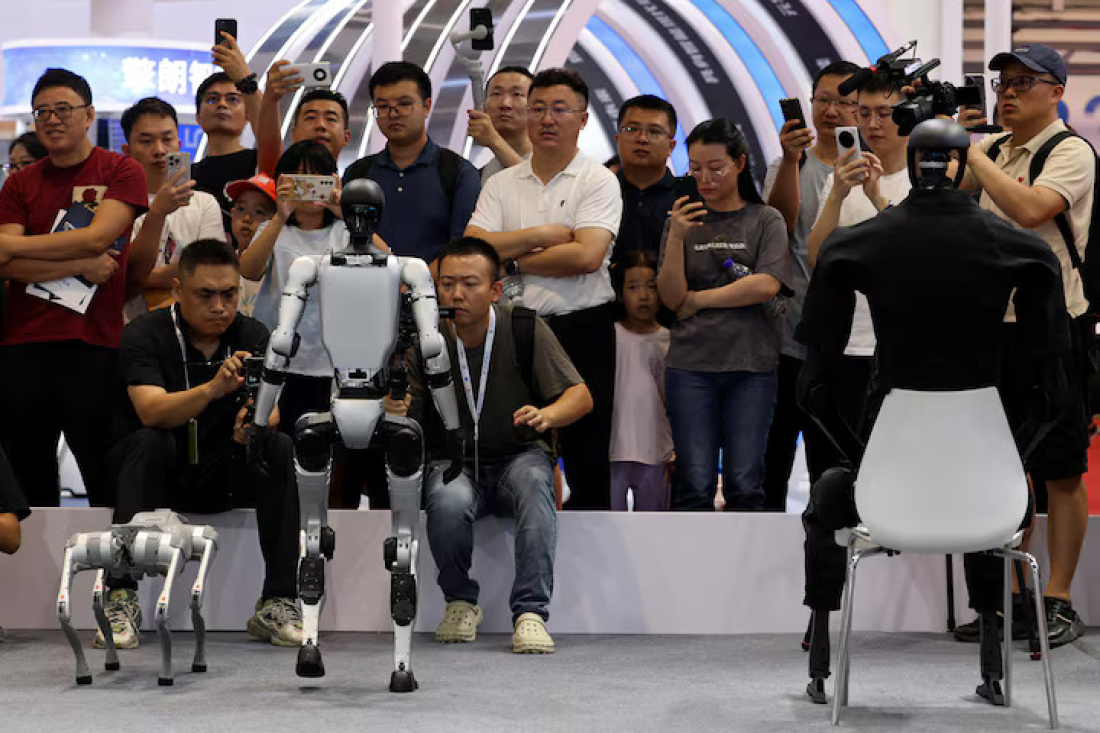
Chinese firms like BYD and Xiaomi are rapidly automating production lines, and the country leads in industrial robot installations. However, much of its robotics sector remains focused on low-tech applications such as welding and assembly, a market dominated by Japan, Germany, and Switzerland. Advances in artificial intelligence and hardware are now accelerating efforts to develop more sophisticated humanoid robots capable of functioning in diverse environments.
Analysts predict a surge in humanoid robot adoption, with Bank of America estimating annual global shipments will reach one million units by 2030, creating a $20 billion market. While Tesla and Nvidia are making strides in the U.S., Chinese companies like Unitree and UBTech Robotics are gaining ground. Unitree launched an affordable humanoid model for under $20,000, while UBTech’s Walker bots are already working alongside humans in car factories.
China benefits from its leadership in electric vehicles (EVs), where synergies in battery, sensor, and vision system technology aid robotics development. Companies such as Xpeng are leveraging their expertise in EVs to expand into humanoid robotics. However, China remains dependent on foreign suppliers for critical components like reducers, essential for motor speed control. Local firms like Leaderdrive are catching up, but technological gaps persist.
One of the biggest obstacles China faces is its reliance on U.S. technology for AI and semiconductor components. Unitree, for instance, depends on Nvidia chips, leaving it vulnerable to potential U.S. export restrictions. Given the military applications of advanced robotics, U.S. lawmakers have already raised concerns about Chinese developments, warning that they could pose a future security threat.
Despite rapid progress and strong government support, China’s robotics industry faces an uncertain future. While it has made strides in mass-producing industrial and humanoid robots, its dependence on U.S. technology and the risk of geopolitical trade restrictions could hinder its ambitions to lead the global robotics race.
























What is your opinion on this topic?
Leave the first comment