Why Tashkent's summer storms are becoming more intense
Unusually heavy rain, thunderstorms and hail during Uzbekistan's hottest season have sparked widespread debate over the causes. While some blame clima...
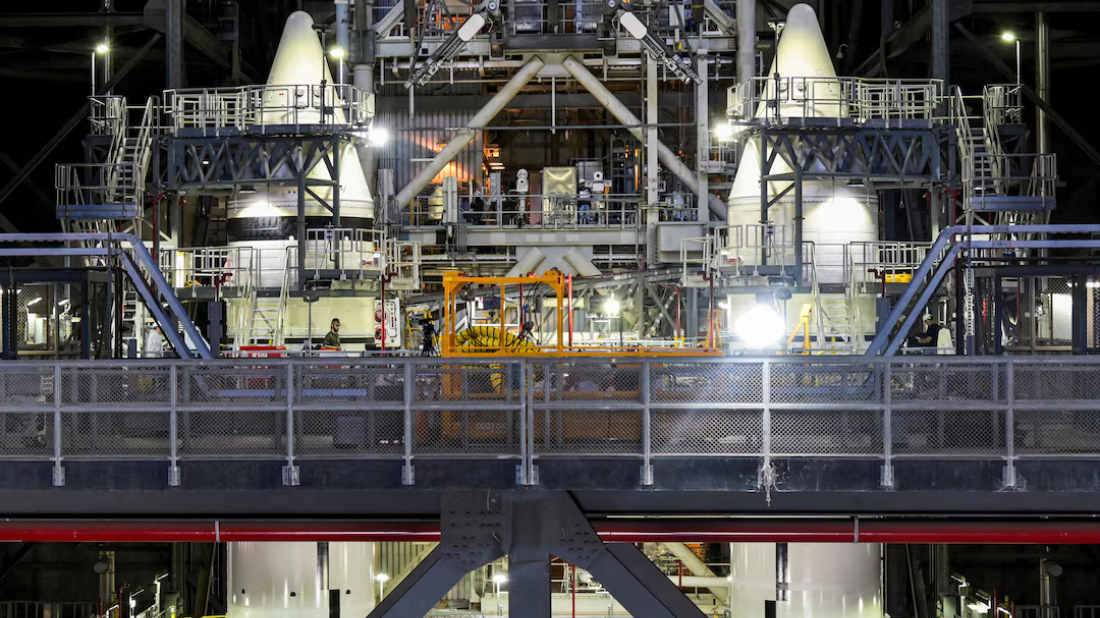
NASA has announced that it will reopen bidding for its flagship U.S. moon landing contract, citing mounting delays in Elon Musk’s SpaceX Starship lunar lander project.
The decision clears the way for competitors such as Jeff Bezos’ Blue Origin to compete for the high-profile mission to return astronauts to the Moon for the first time in over 50 years.
NASA’s acting chief, Sean Duffy who also serves as U.S. Transportation Secretary told Fox News that the agency would “open the contract up,” saying, “I think we’ll see companies like Blue get involved, and maybe others.”
The decision follows months of internal pressure to accelerate the Artemis lunar programme and push SpaceX to make greater progress, especially as China advances towards its goal of sending humans to the Moon by 2030. The move marks a major shift in NASA’s lunar strategy, launching a new competitive phase for the crewed lander programme just two years before the scheduled mission.
Starship, initially selected in 2021 under a $4.4 billion contract, faces a 2027 landing deadline, one that NASA advisers fear could slip by several years due to competing priorities. While SpaceX’s vehicle is also central to Musk’s wider ambitions, including expanding the Starlink satellite network and future Mars missions, NASA has reportedly grown concerned about the lack of lunar-specific progress.
Duffy acknowledged SpaceX’s achievements but noted that the company is behind schedule, adding that President Donald Trump wants the mission completed before his term ends in January 2029. NASA has now asked both SpaceX and Blue Origin to submit accelerated moon landing plans by 29 October and is inviting proposals from other commercial space firms to increase the pace of lunar missions.
Blue Origin, which was awarded a separate $3 billion contract in 2023 for later Artemis missions, is expected to be a key contender. Lockheed Martin has also confirmed that it is analysing technical and programmatic options for human lunar landers in collaboration with other industry partners.
NASA’s Artemis programme aims to establish a sustained human presence on the Moon, with Artemis 2, a 10-day lunar flyby on track for early 2026 and Artemis 3 targeting a 2027 landing.

The death toll from Venezuela's devastating twin earthquakes has risen to 3,342, according to the country's information ministry, as rescue teams continue searching affected areas and survivors face an uncertain recovery.
Russia's Defence Ministry has said its forces are clearing the town of Lyman in Donetsk of Ukrainian forces, Moscow's state news agency Tass reported. Meanwhile, Russian attacks killed at least six people across three Ukrainian regions on Friday, regional officials said.
Governments are tightening restrictions on teenagers’ use of social media amid growing concerns over mental health, online safety and platform design, but questions remain over enforcement and whether bans can meaningfully change behaviour.
President Donald Trump said Iran is keen to reach a deal with the United States, claiming Washington had paused engagement to allow funeral ceremonies for late Iranian Supreme Leader Ali Khamenei.
Mexico's national football team has returned luxury Rolex watches gifted by American content creator Stevewilldoit after concerns that they could conflict with FIFA's ethics rules.
Humanoid robots stumbled, collided and recovered as they battled for the RoboCup 2026 football title on Sunday (5 July), showcasing the latest advances in robotics and artificial intelligence at the world's largest competition of its kind.
India is investigating a data breach at Tata Electronics that exposed sensitive documents linked to Apple's unreleased iPhone 18 Pro, marking the government's first public comments on the incident.
Humanity’s return to the Moon is about far more than planting flags and collecting samples. Under NASA’s Artemis programme, the goal is to establish a lasting human presence, with lunar rovers set to play a vital role in making that vision possible.
American technology company Snap has launched its first augmented-reality (AR) glasses for consumers, marking a major push into wearable computing as tech firms race to redefine personal devices in the AI era.
The Canadian government has introduced a digital safety bill that would ban children under the age of 16 from using social media, unless platforms meet specific safety standards.
You can download the AnewZ application from Play Store and the App Store.
What is your opinion on this topic?
Leave the first comment